Taste Yarra Valley: wine tasting options and visitor information
· Yarra Valley Pass
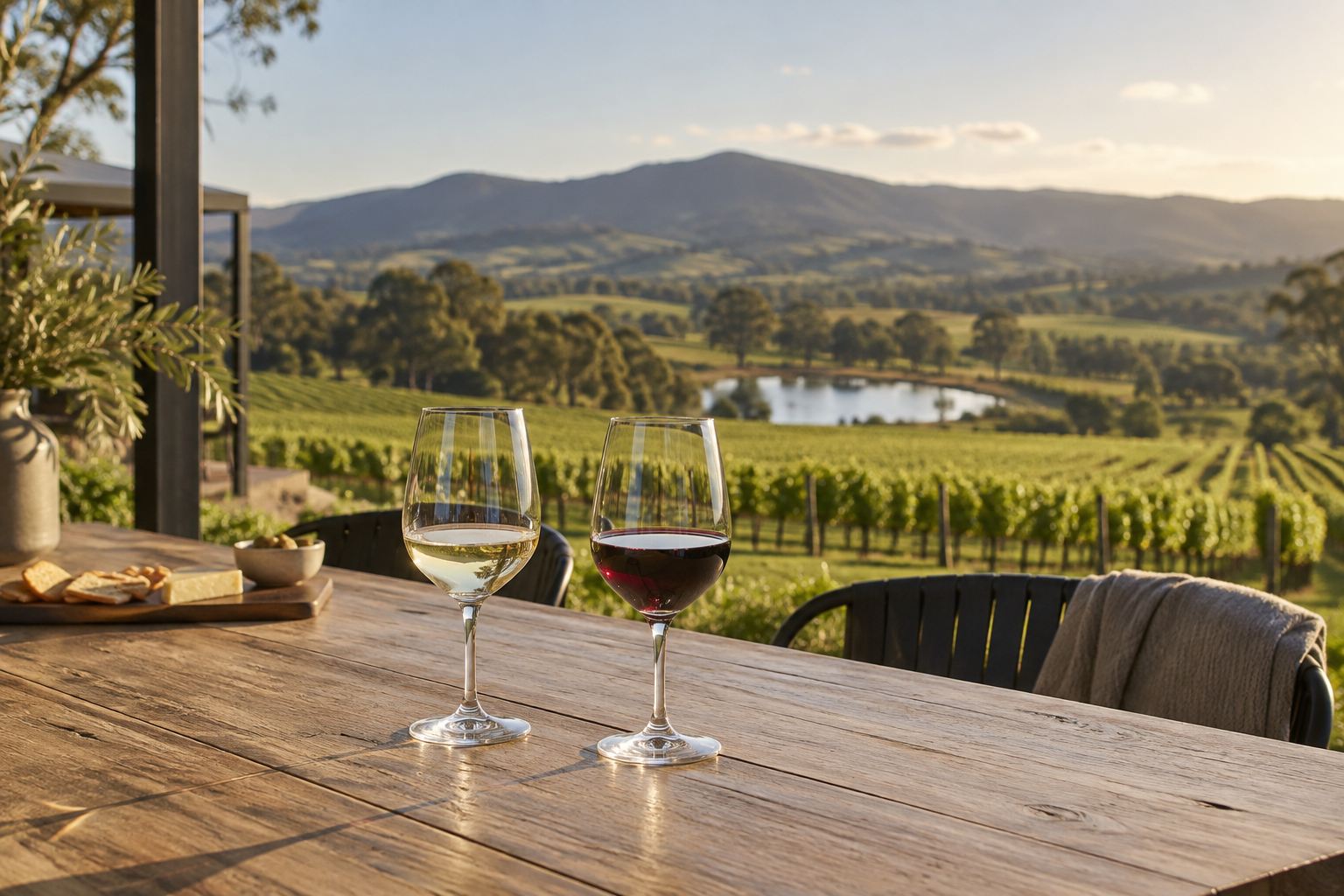
To taste Yarra Valley, start with two or three cellar doors in one part of the region, add lunch and organise transport before you go. The region is especially known for Chardonnay and Pinot Noir, with options ranging from introductory tastings to more focused wine experiences. Book ahead for the experience you want and confirm each venue’s current tasting fees, availability and conditions.
How to taste Yarra Valley without rushing
The Yarra Valley lies east and north-east of Melbourne. Depending on your starting point, traffic and chosen winery, allow roughly an hour to an hour and a half to reach the region from central Melbourne. That is a planning estimate, not a guaranteed journey time.
The important detail is that the valley is not one compact winery precinct. Coldstream, Yering, Yarra Glen, Dixons Creek, Gruyere and Healesville give you different starting points, and travelling between them takes time.
Choose your first cellar door, then build around nearby stops rather than collecting famous names scattered across the map. Two tastings work well for a relaxed half-day; three, with a proper lunch break, are a sensible starting point for a full day.
For a broader overview of experience types and booking considerations, see our guide to Yarra Valley cellar door experiences, costs and bookings.
Choose wine styles before choosing wineries
A little preparation makes the tasting more rewarding. You do not need specialist knowledge: deciding what you enjoy, or what you want to discover, is enough.
Chardonnay and Pinot Noir
These are useful starting points for understanding the region. Chardonnay can range from bright, citrus-led wines to richer examples with oak influence. Pinot Noir can show red-fruit freshness, savoury complexity and different levels of structure.
Ask whether the tasting includes wines from different vineyards or vintages. Comparing two examples side by side can reveal more than tasting several unrelated varieties.
Cabernet Sauvignon, Shiraz and other styles
The Yarra Valley also produces Cabernet Sauvignon, Shiraz and other varieties. Its vineyard sites vary in elevation, exposure and temperature, so “cool climate” does not mean every wine tastes alike.
If you prefer fuller-bodied reds, tell the host when booking or arriving. Do not assume every tasting flight includes them.
Sparkling wine and lighter options
Some producers offer sparkling wine, rosé or other styles alongside their core range. Availability depends on the venue and current tasting list.
For a mixed-interest group, choose at least one cellar door with a range that suits everyone rather than asking every person to follow the same preferences.
Wine tasting Yarra Valley: compare the main touring areas
These areas are useful planning clusters, not fixed tour routes. The businesses below are among Yarra Valley Pass’s partners; their current experiences and booking arrangements should be checked directly.
| Touring area | Partner cellar doors to investigate | Planning advantage |
|---|---|---|
| Coldstream | Dominique Portet, Oakridge, Punt Road Wines | A practical cluster for comparing several producers without crossing the whole valley |
| Gruyere | Coldstream Hills Cellar Door | A useful option for a focused winery visit that can be paired with nearby stops |
| Healesville | Giant Steps, Jayden Ong, Payten & Jones | Winery experiences around a township with food and other businesses nearby |
| Dixons Creek | De Bortoli Wines | A northern-valley anchor around which to build a less scattered itinerary |
A township-based cellar door and a vineyard property can feel quite different. If views and estate surroundings matter, investigate the setting before booking. If you prefer combining wine with shops, food and a town walk, Healesville is worth considering.
Browse the local partner businesses to identify options, then use each business’s current visitor information to confirm the details.
Plan a relaxed Yarra wine tasting itinerary
A good route balances wine, food and travel. These are suggested structures, not bookable packages or promises of availability.
Option 1: a Coldstream-focused day
Start with a booked tasting at Dominique Portet, Punt Road Wines or Oakridge. Choose a second nearby stop that offers a different perspective rather than simply repeating the same style of experience.
If Oakridge is on your shortlist, our guide to what to expect at the Oakridge cellar door can help you prepare.
Arrange lunch separately unless your booking explicitly includes it. Finish with an optional third tasting only if your schedule leaves enough room; a long lunch and two thoughtful tastings can be a better day than four rushed visits.
Option 2: a Healesville-based day
Use Healesville as your base and investigate Giant Steps, Jayden Ong and Payten & Jones. Choose two wine experiences, then leave time for lunch and exploring the town.
Check the actual addresses before assuming you can walk between venues. Being associated with the same township does not guarantee a short, comfortable pedestrian route.
This approach suits visitors who want wine to be part of a broader day out rather than the only activity.
Option 3: one detailed tasting and a leisurely lunch
You do not need multiple cellar doors to have a worthwhile visit. Choose one producer, book the experience that best matches your interests and give it your full attention.
This is particularly useful for first-time visitors, people travelling with non-drinkers, or anyone who wants time to ask questions. Our guide to choosing your first cellar door experience explains how to narrow the options.
Tasting formats, fees and bookings: what to check
There is no single Yarra Valley tasting format or universal fee. A standard tasting, a seated hosted experience and a specialist flight may have different inclusions, durations and booking rules.
Before committing, check:
- The format: Is it a counter tasting, a seated session or a guided experience?
- The wine selection: Is the flight fixed, or can it be adjusted to your interests?
- The fee: Is the published amount per person, and what does it include?
- Bottle-purchase conditions: Can any tasting fee be offset against purchases? Never assume it can.
- Group arrangements: Does your party size require a dedicated booking or different experience?
- Cancellation terms: What happens if your plans change or you arrive late?
Book ahead for weekends, public holidays, larger groups and any experience you particularly want. A venue that accepts some walk-ins may still have no room at your preferred time.
As a planning allowance, leave about 45–60 minutes for a standard tasting, or follow the duration stated by the venue. Add travel time and a buffer between appointments. More detailed experiences may need longer.
A cellar-door booking is not automatically a restaurant booking. If lunch is important to your day, secure that reservation too and check how the two appointments fit together.
Getting there and travelling between cellar doors
Driving provides flexibility, but a tasting day needs a safe transport plan. The simplest arrangement is a designated driver who does not drink alcohol.
Spitting is normal during wine tasting and helps you compare wines without drinking every sample. It is not a substitute for a safe driving plan, and a number of tastings cannot tell you whether someone is fit to drive.
Tours and hop-on, hop-off services
A tour or transport service can remove the need to drive between wineries. Hop It is a Yarra Valley Pass partner offering hop-on, hop-off touring; check its current routes, operating dates, pickup points and timetable before building your itinerary around it.
For any transport booking, confirm whether cellar-door appointments and tasting fees are included or need to be arranged separately.
Public transport and booked transfers
Lilydale is a useful rail gateway, but the train does not deliver you to individual vineyard cellar doors. Plan the onward journey and return connection before leaving Melbourne.
Do not rely on finding an immediate taxi or rideshare at every rural property. If you need a transfer, organise it in advance and confirm the collection location.
Make room for food and non-wine interests
Lunch should be part of the plan, not an afterthought squeezed between appointments. Decide whether you want a winery restaurant, a casual township meal or a quick food stop, then reserve time accordingly.
The Dairy Club and The Yarra Valley Pie Stop are among the local partners to investigate for food-focused stops. Check their locations and current offerings before fitting them into your route.
For visitors who prefer beer, Watts River Brewing provides another Healesville option. It still requires the same responsible transport planning as a winery visit.
Non-drinkers can enjoy the scenery, food and company, but venue policies differ. Ask whether they need to be included in the booking, whether a separate charge applies and what non-alcoholic choices are available.
The Dandenong Ranges offer another kind of outing, with partners including Skyhigh Mount Dandenong. Treat that as a separate route choice rather than assuming it is a quick detour between valley tastings.
Know before you go: weather, access and tasting etiquette
Dress for the setting
Pack a layer even when Melbourne feels warm, particularly if you expect to spend time outdoors. In summer, carry water and sun protection; in cooler or wet weather, allow for covered seating and suitable footwear.
If severe weather or bushfire warnings affect your travel date, check official advice and contact your booked venues. A reservation does not override road closures or safety guidance.
Ask specific accessibility questions
Accessibility varies between properties. Rather than asking only whether a venue is “accessible”, describe what you need: step-free entry, accessible parking and toilets, seating during the tasting, or enough space for a mobility aid.
Families should also check child policies and facilities. Do not assume a lawn is a supervised play area or that every tasting room accommodates prams comfortably.
Taste comfortably, not competitively
You can decline a wine, leave a sample unfinished or ask for a spittoon. There is no obligation to enjoy every style or buy a bottle.
Avoid strong perfume, which can make aromas harder to assess. Ask plain-language questions such as “What makes these two wines different?” or “Which would suit roast chicken?” Photograph bottle labels or make brief notes so you can remember your favourites later.
Support local with Yarra Valley Pass
Yarra Valley Pass rewards participation across the Yarra Valley and Dandenong Ranges. Members earn Yarra Credits and redeem them for rewards on this website.
Before your visit, check the current ways to earn Yarra Credits and browse the available member rewards. Follow the conditions for each activity rather than assuming every purchase at a partner business automatically earns credits. This helps you understand what participation involves before making plans.
A better tasting day starts with fewer stops
To taste the Yarra Valley well, choose a manageable area, book experiences that suit your interests and leave room for lunch and conversation. With transport organised and current venue details checked, you can focus on the wines, the people behind them and the local businesses that make the region worth exploring.
Frequently asked questions
How many Yarra Valley wineries should I visit in one day?
Two or three cellar doors are a sensible starting point for a full day with lunch. For a half-day, consider two nearby venues. Follow each experience’s stated duration and allow time for travel, questions and purchases rather than filling every gap with another tasting.
Do I need to book Yarra Valley wine tastings?
Booking ahead is advisable, especially on weekends, public holidays, for groups and for specialist experiences. Some cellar doors may accept walk-ins, but availability is not guaranteed. Check the venue’s current booking policy and reserve lunch separately if required.
How much does wine tasting in the Yarra Valley cost?
Fees vary by winery and experience. Check the current per-person price, the wines included and any conditions for offsetting the tasting fee against bottle purchases. A restaurant meal, transport or specialist tasting may be charged separately.
Which wines is the Yarra Valley known for?
The Yarra Valley is especially known for Chardonnay and Pinot Noir. It also produces Cabernet Sauvignon, Shiraz, sparkling wine and other styles. Vineyard conditions and winemaking approaches vary, so comparing wines from different producers is a useful way to explore the region.
Can I visit Yarra Valley cellar doors without a car?
Yes, with advance planning. Options include organised tours, hop-on, hop-off touring and booked transfers. Lilydale is a rail gateway, but you still need onward transport to cellar doors. Confirm routes, return arrangements and whether tasting bookings or fees are included.
Related reading
- Soumah Wines: Italian varieties, estate labels and visiting the vineyard
- Oakridge Pinot Noir: Willowlake, Henk, Hazeldene and 864 Explained
- Affordable Yarra Valley Chardonnay: entry-level wines compared
- Levantine Hill Pinot Noir: Colleen’s Paddock and 2016–2019 Vintages
- Top wineries in Yarra Valley: 10 benchmark producers and why they matter
- Tokar Estate Tempranillo: Wine Style, Food Pairings and Cellar Door