Soumah Wines: Italian varieties, estate labels and visiting the vineyard
· Yarra Valley Pass
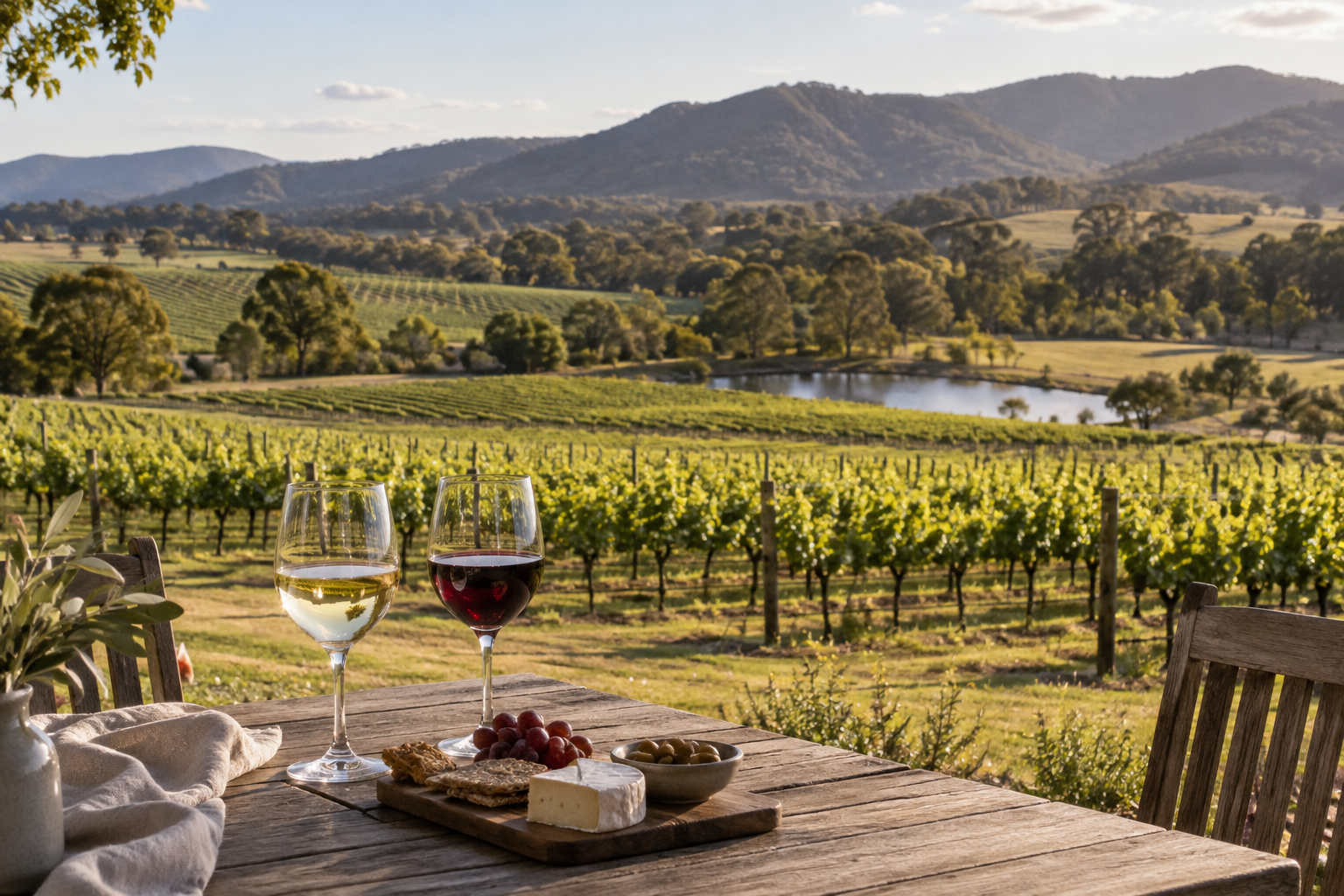
Soumah Wines is a Yarra Valley producer based in Gruyere, known for Chardonnay and Pinot Noir alongside Italian varieties such as Nebbiolo, Pinot Grigio and Brachetto. Its vineyard destination combines cellar-door tasting with Italian-inspired dining at Trattoria d’Soumah. Visit to explore both sides of the range, checking current tasting arrangements, restaurant bookings and available releases before travelling.
What makes Soumah Wines distinctive?
SOUMAH takes its name from its location: south of the Maroondah Highway. The estate sits in the foothills of the Warramate Hills, placing it in a rural vineyard setting rather than a town-centre tasting room.
The useful distinction is its combination of familiar regional wines and less-common varieties. Chardonnay and Pinot Noir provide a starting point for understanding the Yarra Valley’s cool-climate strengths. The Italian varieties then offer different textures, aromas and food-pairing possibilities.
That makes Soumah a worthwhile stop for a mixed group. Someone who usually drinks Chardonnay can explore Pinot Grigio, while a red-wine drinker can compare Pinot Noir’s shape and tannins with Nebbiolo. Brachetto takes the tasting in another direction altogether.
For the broader regional picture, our guide to Yarra Valley vineyards and cellar doors explains how to build a day around wine styles, locations and visitor experiences rather than simply collecting winery names.
Italian varieties at Soumah: what to taste
If you are searching for an Italian winery in the Yarra Valley, Soumah fits the brief through its wine interests and restaurant approach. It remains an Australian producer, however: Italian grape varieties grown here express local conditions, not an identical version of their European counterparts.
Pinot Grigio: look beyond the variety name
Pinot Grigio is a useful alternative to Chardonnay, particularly if you enjoy whites with freshness and a savoury edge. Depending on the release and winemaking, pear-like fruit, citrus and texture may be more important than overt richness.
Ask how the current wine was made. Skin contact, lees ageing and oak use can change its character, so the variety name alone will not tell you whether a bottle is especially crisp, rounded or textured.
For food, think about seafood, lighter pasta dishes or vegetables with olive oil. These are pairing ideas, not a promise about the restaurant’s current menu.
Nebbiolo: fragrance with a firm structure
Nebbiolo is associated with Piedmont in north-western Italy. It can combine floral and red-fruit aromas with substantial tannin and acidity, even when its colour looks relatively light.
At a tasting, compare it with Pinot Noir rather than judging it by colour. Notice how long the tannins remain after swallowing or spitting, and whether food would soften that impression.
If you are choosing a bottle for dinner, ask whether the current release benefits from decanting or further cellaring. Nebbiolo’s structure makes that question more useful than simply asking which red is the strongest.
Soumah Brachetto: aromatic and sweet
Soumah Brachetto belongs at the aromatic, sweet end of the tasting spectrum. Brachetto is another Piedmontese grape, associated with floral perfume and red-fruit characters rather than the tannic profile of a conventional dry red.
It is a sensible wine to investigate if you enjoy fragrant, fruit-led styles or want something to serve with berries. Do not assume it is dry because of its pink-to-red colour.
Check the current bottle’s description for sweetness, alcohol and carbonation. If a label says frizzante, it means lightly sparkling, not the more forceful bubbles of a fully sparkling wine. Serve this style chilled and ask for the producer’s recommended serving temperature.
A quick comparison
These are broad style pointers, not guaranteed tasting notes for every vintage.
| Wine to explore | What to notice | Useful question at the cellar door |
|---|---|---|
| Chardonnay | Acidity, texture and oak influence | How does this release balance freshness and richness? |
| Pinot Noir | Fragrance, red fruit and fine tannin | Which vineyard supplied the fruit? |
| Pinot Grigio | Freshness, savouriness and texture | Was skin contact or oak part of the winemaking? |
| Nebbiolo | Floral aromas, acidity and firmer tannins | Is it ready now, or better with time and food? |
| Brachetto | Floral perfume, sweetness and red fruit | How should this release be chilled and served? |
Soumah Estate and its labels: what the names tell you
Searching for “Soumah Estate” can bring together information about the physical property and bottles carrying different range or vineyard names. Those are related, but they are not interchangeable.
The home vineyard is Hexham, in Gruyere. When a wine identifies Hexham as its vineyard source, that information is more specific than a general Yarra Valley regional designation. Soumah also works with fruit from other vineyard sites, so do not assume every bottle comes from the vines beside the cellar door.
Use three checks when comparing labels:
- Vineyard source: Does the bottle name Hexham, another vineyard or the wider Yarra Valley?
- Range: Is it part of a broader offering, a single-vineyard release or the Equilibrio range?
- Vintage: Are you comparing wines from the same harvest, or different growing seasons?
Equilibrio is Soumah’s premium selection. Treat it as an invitation to ask what distinguishes the particular bottle, rather than assuming that a higher-tier wine will automatically suit your taste better.
A side-by-side comparison of the same variety is especially revealing. Ask about fruit selection, oak treatment and maturation, then decide whether you prefer freshness, concentration or a more developed texture.
For another perspective on site-led regional wines, our explanation of Oakridge’s wine range and vineyard sites helps make sense of similar distinctions elsewhere in the valley.
Visiting Soumah Winery in the Yarra Valley
Soumah’s visitor address is 18 Hexham Road, Gruyere, Victoria. Use the specific address when navigating: “Yarra Valley” covers a large area, and Gruyere is not interchangeable with Healesville, Yarra Glen or the Upper Yarra.
The property works best as a planned stop rather than a rushed detour. A tasting and a restaurant meal are separate activities, and a lunch booking should not be assumed to include a tasting reservation.
Cellar-door tasting
Check the official booking information for the date you intend to visit. Confirm tasting availability, fees, session format and any group-size conditions directly with Soumah; these details can change.
Before the first pour, tell the host what you want to learn. Useful requests include:
- A comparison of Chardonnay and Pinot Noir from different labels.
- An introduction to the Italian varieties.
- A tasting focused on wines you can drink now.
- Help choosing one bottle for food and another for cellaring.
Brachetto is worth mentioning early if it is your main reason for visiting. Not every wine is necessarily included in every tasting format or available in every release.
Dining at Trattoria d’Soumah
Trattoria d’Soumah offers an Italian-inspired dining experience at the vineyard. It makes a natural lunch anchor if you would rather settle into one property than spend the day moving between cellar doors.
Read the current menu and book separately where required. Discuss dietary needs in advance, particularly if you need strict allergen management rather than a simple menu substitution.
If combining lunch and tasting, ask which order the venue recommends. Allow a buffer so a late arrival or extended meal does not squeeze the other booking.
Building a manageable winery day around Gruyere
For many visitors, Soumah plus one other winery is a more satisfying plan than four hurried tastings. Lunch, conversation, rural driving and bottle purchases all take time.
A practical sequence is:
- Start with one booked tasting. Arrive without an immediately competing lunch reservation.
- Make lunch the centre of the day. Choose Soumah’s restaurant if its current menu suits your group.
- Add one nearby stop only if time allows. Check the actual road route and tasting availability first.
You can reverse that order if the booking times work better. The principle is to organise around confirmed appointments, not a list of places that look close on a map.
Avoid casually combining Gruyere with several Upper Yarra destinations unless driving is part of the experience you want. Distances across the region can make a geographically scattered itinerary feel rushed.
Our town-by-town guide to choosing where to spend your winery day is useful for narrowing your route before making reservations.
Choose a designated driver or arrange transport ahead of time. Spitting during tastings helps with sensory focus, but it is not a reliable method of determining whether you are safe to drive.
Know before you go
A few checks make the difference between an enjoyable vineyard visit and an awkward change of plans.
Confirm current arrangements. Check cellar-door opening days, restaurant service, public-holiday changes and any private-event restrictions through Soumah’s official channels. Do not rely on an old directory listing.
Ask about group bookings. A larger party may need a different tasting format or advance arrangements. Do not assume separate small bookings will accommodate one large group.
Check access for your particular needs. If anyone uses a wheelchair or mobility aid, ask about parking, step-free routes, tasting seating and accessible toilets. Vineyard photographs cannot establish accessibility.
Discuss children and non-drinkers. Confirm seating, food options and how the tasting space works for your group. A winery restaurant does not automatically provide play facilities or supervised activities. Our family-friendly winery planning guide sets out useful questions to ask.
Dress for the setting. Layers are sensible in the Yarra Valley, and comfortable shoes help if you spend time outdoors. Do not assume vineyard rows are open for public wandering; ask where visitors may walk.
Keep wine out of a hot car. If you buy bottles, minimise time in a warm boot and take them indoors promptly after your trip. Plan purchases with the weather and the rest of your itinerary in mind.
Choosing bottles to take home
Start with how you will use the wine, not which label sounds most prestigious.
For a near-term meal, ask for a bottle that is drinking well now and explain the dish you have in mind. For a gift, consider the recipient’s preferences: a fragrant, sweet Brachetto and a structured Nebbiolo serve very different tastes.
If you are buying for the cellar, ask about a realistic drinking window and suitable storage. Ageing potential is not useful if the bottle will sit in a cupboard that becomes hot each summer.
Photograph the exact label and vintage of anything you particularly enjoy. “The Soumah Pinot Noir” may be too vague when several vineyard or range options are available. Recording the full name makes a repeat purchase much easier.
Support local while exploring
Yarra Valley Pass members earn Yarra Credits through participation and redeem them for member rewards on this website. Browse the participating local businesses when planning your wider trip, rather than assuming every winery featured in a guide is a partner.
The takeaway
Soumah is a strong choice for visitors who want classic Yarra Valley wines alongside Italian varieties in one vineyard visit. Focus your tasting, read the vineyard and range names carefully, and plan lunch and transport before setting out. That leaves more time to discover which wines genuinely suit you.
Frequently asked questions
Where is Soumah Wines in the Yarra Valley?
Soumah is at 18 Hexham Road, Gruyere, Victoria, south of the Maroondah Highway in the foothills of the Warramate Hills. Navigate using the street address rather than a general Yarra Valley destination.
Is Soumah an Italian winery?
Soumah is an Australian winery with an interest in northern Italian varieties and Italian-inspired dining. Its range includes varieties such as Nebbiolo, Pinot Grigio and Brachetto alongside Yarra Valley Chardonnay and Pinot Noir.
What kind of wine is Soumah Brachetto?
Soumah Brachetto is an aromatic, sweet wine made from a grape associated with Piedmont in Italy. Expect a floral, red-fruit-led style rather than a conventional dry red. Check the current release for its sweetness, alcohol and carbonation details.
Are all Soumah wines made from the estate vineyard?
Do not assume every Soumah bottle comes from the home vineyard. Hexham is the estate vineyard in Gruyere, but Soumah also works with other vineyard sites. Read the vineyard designation and back label to identify the source of a particular wine.
Should I book a Soumah tasting and restaurant visit separately?
Check both arrangements directly with Soumah. A restaurant booking should not be assumed to include a cellar-door tasting, and tasting formats, fees and availability can change. Allow enough time between reservations and discuss group size or dietary requirements in advance.
Related reading
- Oakridge Pinot Noir: Willowlake, Henk, Hazeldene and 864 Explained
- Affordable Yarra Valley Chardonnay: entry-level wines compared
- Levantine Hill Pinot Noir: Colleen’s Paddock and 2016–2019 Vintages
- Top wineries in Yarra Valley: 10 benchmark producers and why they matter
- Tokar Estate Tempranillo: Wine Style, Food Pairings and Cellar Door
- Yarra Valley Chardonnay 2018: Vintage, Ageing and What to Buy