A. Rodda Willow Lake Chardonnay: The Vineyard and Oakridge Connection
· Yarra Valley Pass
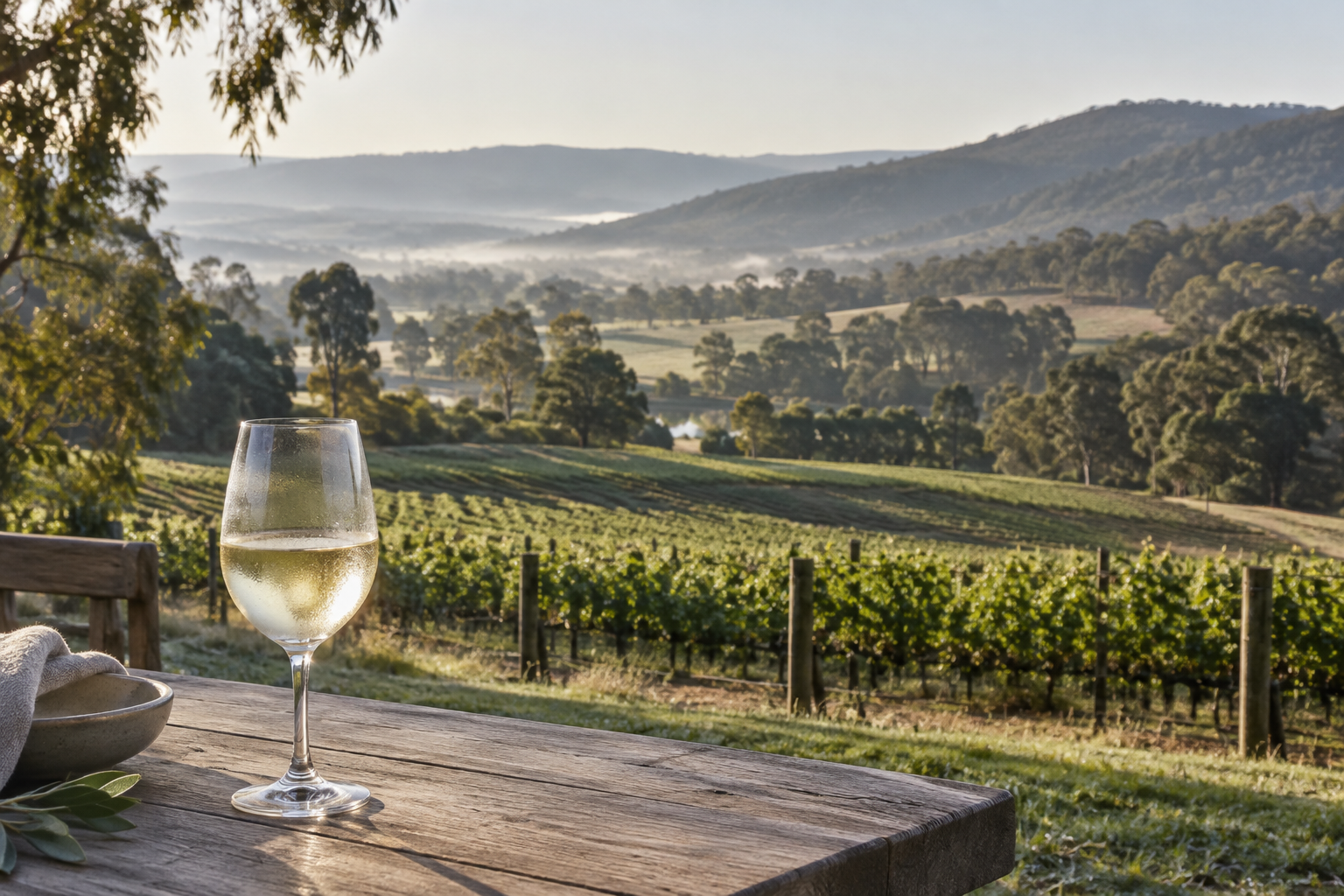
A. Rodda Willow Lake Chardonnay is a single-vineyard Yarra Valley Chardonnay made by Adrian Rodda from the Willow Lake vineyard at Gladysdale in the Upper Yarra. Its Oakridge connection is twofold: Oakridge also makes Chardonnay from this vineyard, generally spelling it “Willowlake”, and Rodda previously worked at Oakridge. These are separate producers and separate wines, so shared vineyard origins do not mean identical winemaking or flavour.
A. Rodda Willow Lake Chardonnay at a glance
The most useful information is in the wine’s full name: producer, vineyard and grape variety. The vintage then tells you which growing season the bottle represents.
- Producer: A. Rodda, the label of winemaker Adrian Rodda.
- Vineyard: Willow Lake, at Gladysdale in the Upper Yarra.
- Wine region: Yarra Valley, despite Rodda being based in Beechworth.
- Grape: Chardonnay.
- Closest comparison for this question: Oakridge’s Willowlake-labelled Chardonnay from the same vintage.
That distinction between winery location and fruit origin matters. A Beechworth-based producer can make a Yarra Valley wine when the grapes come from a Yarra Valley vineyard.
For the wider regional context, our guide to Yarra Valley Chardonnay producers, styles and vintages explains why the region produces both tightly structured and more generously textured examples.
The Willow Lake vineyard: an Upper Yarra source
Willow Lake is at Gladysdale, in the southern, generally cooler part of the Yarra Valley commonly called the Upper Yarra. The vineyard was established in 1979, making it a longstanding source rather than a recently planted site.
“Upper Yarra” is useful geographical shorthand, but it is not a promise that every vineyard has identical conditions. Elevation, slope, exposure and local weather all influence how Chardonnay ripens. A vineyard’s particular position matters more than a broad cool-climate label alone.
For Chardonnay, cooler conditions can help preserve acidity while allowing flavour to develop over a longer ripening period. That balance is important: acidity provides freshness and structure, while ripe fruit flavours and fermentation-derived texture prevent a wine from feeling merely sharp.
The planting date adds context, not a guarantee of quality. Mature vines can be valuable, but vine health, seasonal conditions, crop management and picking decisions still affect the result.
When evaluating a Yarra Valley vineyard wine, separate three questions:
- Where was the fruit grown?
- What happened during that vintage?
- How did the producer turn the grapes into wine?
Our comparison of Hoddles Creek Estate and Seville Estate Chardonnay offers another way to explore Upper Yarra wines without treating them as a single, uniform style.
The Oakridge connection: shared vineyard, different producer
Adrian Rodda worked at Oakridge before establishing his own label in Beechworth. That professional history helps explain why his name appears alongside a vineyard familiar to Oakridge drinkers.
The second connection is the fruit source. Oakridge bottles Chardonnay carrying the Willowlake vineyard name, while A. Rodda uses Willow Lake. In this context, the spelling difference does not indicate two unrelated vineyards.
However, it does not establish that the wines use the same rows, identical picking dates or equivalent portions of the crop. Nor does Rodda’s earlier employment make his own wine an Oakridge bottling.
| Detail | A. Rodda Willow Lake Chardonnay | Oakridge Willowlake Chardonnay |
|---|---|---|
| Producer | A. Rodda | Oakridge |
| Vineyard name on the label | Willow Lake | Usually Willowlake |
| Vineyard location | Gladysdale, Upper Yarra | Gladysdale, Upper Yarra |
| Personal connection | Adrian Rodda previously worked at Oakridge | Rodda’s former workplace |
| Best comparison | Match the vintage and check its technical notes | Match the vintage and confirm the exact bottling |
For searches such as oakridge willowlake chardonnay, check the complete product title rather than relying on a retailer’s abbreviated heading. Oakridge’s regional Chardonnay, a vineyard-labelled wine and an 864 bottling should not automatically be treated as interchangeable.
The guide to Oakridge’s regional Chardonnay, Willowlake and the 864 range explains those distinctions. The key point here is simple: compare two identified bottles, not two producer names in isolation.
What should A. Rodda Willow Lake Chardonnay taste like?
A useful expectation is cool-climate Chardonnay with citrus and stone-fruit flavours, freshness and texture from barrel fermentation and maturation. The balance between those elements changes with vintage and bottle age.
Do not read “cool climate” as “unoaked”. Barrel-fermented Chardonnay can retain a clear acid line while gaining breadth and savoury complexity. Likewise, oak need not present as obvious vanilla or toast.
When reading a vintage-specific technical sheet, look for:
- Barrel fermentation and new-oak percentage: these help explain texture and possible oak influence, although barrel size and age also matter.
- Lees maturation: time with fermentation lees can contribute breadth and savoury character.
- Malolactic fermentation: this can soften acidity, but its use and extent must be checked for the particular wine.
- Bottling date and maturation period: useful context when comparing a recently released bottle with an older one.
Avoid assigning either producer a fixed recipe across every vintage. Descriptions such as “wild fermented” also describe a production choice; they do not, by themselves, establish organic certification or a preservative-free wine.
How to compare A. Rodda and Oakridge fairly
The most revealing comparison is the same vineyard and vintage, served under the same conditions. It reduces some variables while leaving room to explore each producer’s interpretation.
Try this straightforward side-by-side tasting:
- Check both labels. Confirm producer, vineyard, vintage and any additional range designation.
- Use identical glasses. Glass shape can change how aroma and texture appear.
- Serve both cool, not ice-cold. Excessive chilling suppresses aroma and can exaggerate hardness.
- Taste before adding food. Note fruit character, acidity, texture, oak impression and length.
- Return after 15–20 minutes. Air and a little warmth may reveal differences that were initially hidden.
Write observations rather than verdicts: “more citrus-led”, “broader through the middle” or “more oak evident” is more informative than “better”.
If the bottles are from different years, acknowledge that vintage becomes part of the comparison. For another vineyard-focused exercise, our Giant Steps Sexton Vineyard versus Applejack buyer’s guide considers two different sites within one producer’s range.
Buying advice: vintage, provenance and label checks
Confirm the exact bottle
A retailer listing headed simply “A. Rodda Chardonnay” is not enough. Rodda makes Chardonnay from more than one vineyard, so ask for confirmation that it is the Willow Lake Vineyard bottling.
Check the vintage in the product description, bottle image and order confirmation. Retailers sometimes use a photograph from an earlier release; clarify any mismatch before purchasing.
For Oakridge, apply the same discipline. The presence of “Chardonnay” and “Yarra Valley” does not confirm that a bottle is Willowlake.
Choose a vintage for your purpose
For a first comparison, matching vintages is usually more useful than chasing the highest score. You are trying to understand the vineyard and producer connection, not reproduce a critic’s ranking.
A recent release suits drinkers interested in freshness and primary fruit. A mature bottle can offer more developed savoury, nutty or honeyed characters, but its condition becomes increasingly important.
Treat older bottles as individual purchases
Ask how the wine has been stored. Cool, stable storage is more reassuring than an attractive label or a vague claim that a bottle is “collectable”. Heat exposure can damage wine well before there is an obvious external warning.
Where visible, check for leakage, closure damage or an unusual fill level. These checks cannot guarantee soundness, and screwcap bottles are not immune to poor storage.
There is no single drinking window that covers every vintage and cellar. If buying several bottles, opening one early is a practical way to decide whether you prefer the wine’s youthful profile or want to follow its development.
Serving and food pairing
Start around 10–12°C, then let the wine warm gradually in the glass. This is a useful serving range rather than a producer-prescribed rule: adjust according to how expressive or tightly wound the bottle seems.
A medium-sized white-wine glass with room to swirl works well. There is no need for elaborate equipment, and aggressive decanting is not automatically helpful. For a young bottle, taste first and decide whether gentle aeration improves it.
Food should connect with both freshness and texture. Good starting points include:
- Roast chicken with lemon and herbs: acidity refreshes the palate while Chardonnay’s texture complements the meat.
- Pan-fried trout or salmon: particularly with a restrained butter sauce rather than a sweet glaze.
- Mushroom risotto: a useful match for savoury, lees-influenced characters.
- Roast cauliflower with almonds: combines mild sweetness, nuttiness and enough substance for textured Chardonnay.
Very sweet sauces or intense chilli can make a dry Chardonnay seem harder and less fruity. With an older bottle, keep seasoning restrained so developed aromas remain noticeable.
For a side-by-side tasting, serve the same dish with both wines. Changing the food halfway through makes the comparison less reliable.
Know before you go: visiting the Yarra Valley
A vineyard name on a bottle is not an invitation to visit the property. Treat Willow Lake primarily as the wine’s origin unless public access or an appointment has been confirmed.
Oakridge is at Coldstream, on the Maroondah Highway. Its visitor location and the Willow Lake vineyard at Gladysdale are different places, so do not assume that tasting an Oakridge wine means visiting the vineyard that supplied it.
Before travelling, check directly with the producer or venue for:
- Current tasting arrangements and booking requirements.
- Whether the exact Willowlake wine or vintage is available to taste.
- Whether bottles can be purchased on the day.
- Accessibility, dining arrangements and transport needs relevant to your group.
Arrange a designated driver or suitable booked transport if you plan to taste wine. Do not build an itinerary around an unconfirmed vineyard stop.
Oakridge and Giant Steps are among Yarra Valley Pass’s local partner businesses. Check current venue information when planning a Chardonnay-focused day rather than assuming every partner offers the same experience.
Yarra Valley Pass members earn Yarra Credits and redeem them for member rewards. Review current participation requirements and available rewards before your visit; do not assume a particular wine purchase automatically qualifies.
Conclusion
A. Rodda Willow Lake Chardonnay and Oakridge Willowlake Chardonnay share a vineyard connection, reinforced by Adrian Rodda’s earlier work at Oakridge. The best way to understand them is to match the vintage, confirm each bottling and taste them side by side. Let the shared Upper Yarra source frame the comparison without assuming the wines should be identical.
Frequently asked questions
Is A. Rodda Willow Lake Chardonnay the same wine as Oakridge Willowlake Chardonnay?
No. They are separate wines from separate producers, although both use fruit from the Willow Lake vineyard at Gladysdale. Shared vineyard origins do not establish identical picking dates, fruit selection or winemaking.
Where is the Willow Lake vineyard?
Willow Lake is at Gladysdale in the Upper Yarra, within Victoria’s Yarra Valley wine region. The vineyard was established in 1979. Do not assume it offers public access simply because its name appears on wine labels.
Why is A. Rodda Willow Lake Chardonnay labelled Yarra Valley if the producer is based in Beechworth?
The regional designation reflects the grapes’ origin, not simply the winery’s location. Adrian Rodda is based in Beechworth, but Willow Lake Chardonnay comes from a Yarra Valley vineyard.
What is Adrian Rodda’s connection to Oakridge?
Adrian Rodda worked at Oakridge before establishing his own label. His professional background and the producers’ shared use of Willow Lake fruit explain the connection; A. Rodda is not an Oakridge-branded wine.
What food goes well with A. Rodda Willow Lake Chardonnay?
Roast chicken with lemon and herbs, pan-fried fish, mushroom risotto and roast cauliflower with almonds are useful starting points. Adjust the pairing to the bottle’s age and texture, and avoid very sweet sauces or intense chilli if you want its subtler flavours to remain clear.
Should I drink A. Rodda Willow Lake Chardonnay young or cellar it?
A young bottle lets you explore freshness and primary fruit, while a well-stored mature bottle may show more savoury, nutty or honeyed development. There is no universal drinking window: consult guidance for the exact vintage and prioritise storage history when buying older bottles.
Related reading
- Soumah Wines: Italian varieties, estate labels and visiting the vineyard
- Oakridge Pinot Noir: Willowlake, Henk, Hazeldene and 864 Explained
- Affordable Yarra Valley Chardonnay: entry-level wines compared
- Levantine Hill Pinot Noir: Colleen’s Paddock and 2016–2019 Vintages
- Top wineries in Yarra Valley: 10 benchmark producers and why they matter
- Tokar Estate Tempranillo: Wine Style, Food Pairings and Cellar Door