Yarra Valley Chardonnay: Producers, Styles and Vintages
· Yarra Valley Pass
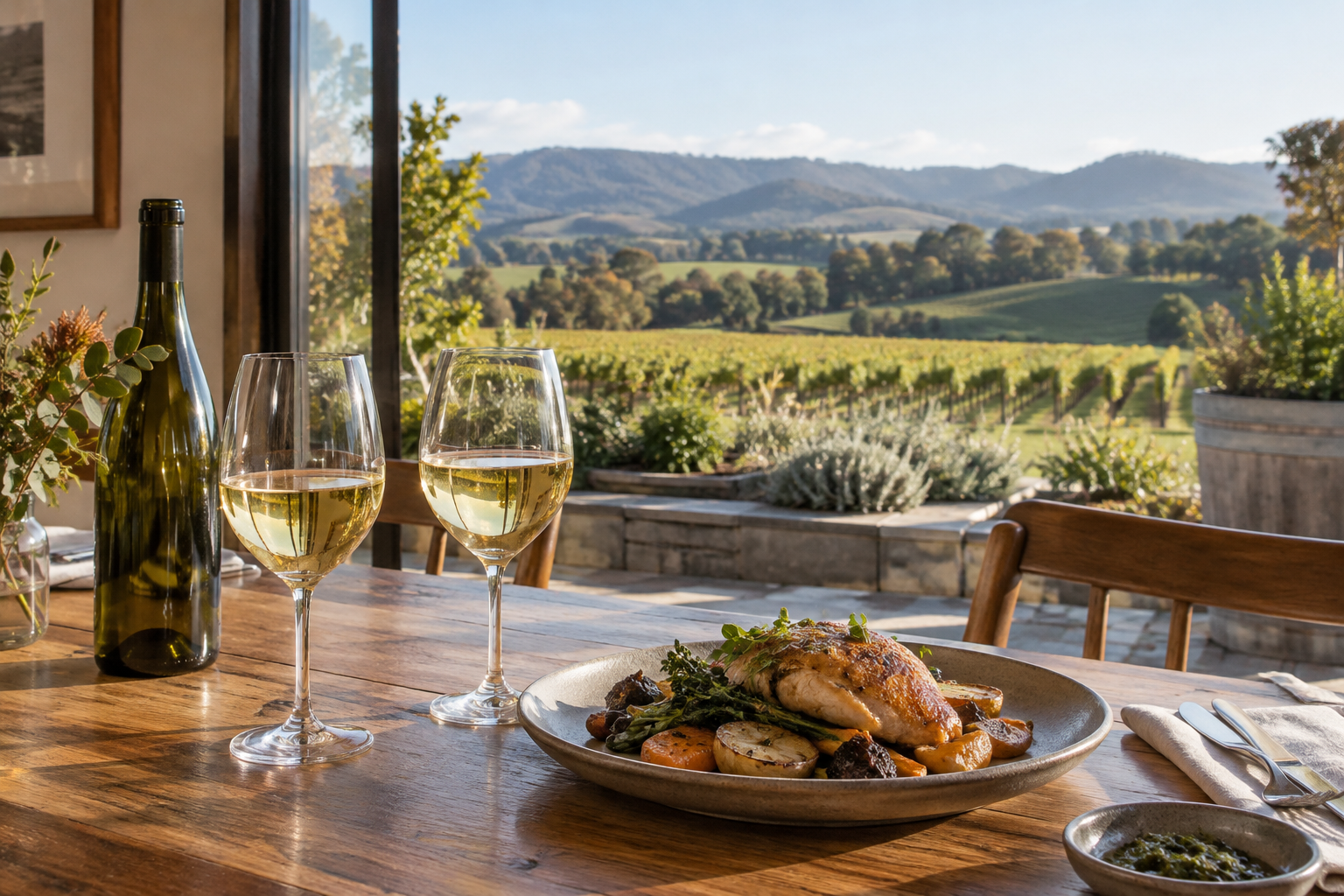
Yarra Valley Chardonnay is known for combining citrus and stone-fruit flavours with fresh acidity, often supported by barrel fermentation and subtle oak. Producers such as Oakridge, Giant Steps, Coldstream Hills and Yering Station offer useful starting points, but the best bottle for you depends on vineyard, vintage, preferred style and whether you want to drink it now or cellar it.
What makes Yarra Valley Chardonnay distinctive?
The Yarra Valley lies east of Melbourne and has a cool-climate reputation, but it is not one uniform growing environment. Elevation, slope, exposure and seasonal conditions all influence how Chardonnay ripens.
Broadly, lower-elevation sites around Coldstream and Yarra Glen can produce generous fruit and substantial texture. Cooler, higher sites in the Upper Yarra, including areas around Hoddles Creek and Gladysdale, often preserve pronounced acidity and a tighter citrus profile. These are tendencies, not rules: an exposed slope, picking date or warm season can change the result.
Winemaking matters just as much. Barrel fermentation can build texture without making a wine taste strongly of oak. Ageing on yeast lees adds savoury complexity, while malolactic fermentation softens sharper malic acidity and can introduce buttery notes.
Modern Yarra Chardonnay frequently aims for balance rather than obvious richness. Expect combinations of lemon, grapefruit, white peach, nectarine, hazelnut and savoury notes, with the exact balance depending on the bottle. A lean young wine may become more expressive with air, food or bottle age.
Yarra Valley Chardonnay producers to know
Start by comparing a producer’s regional Chardonnay with its vineyard-specific or premium release. This helps separate the house style from differences in fruit source and selection.
Availability changes between vintages, so treat the following as a buying map rather than a guaranteed cellar-door tasting list.
| Producer | Useful starting point | What to compare |
|---|---|---|
| Oakridge | Yarra Valley Chardonnay | Regional blending versus vineyard-specific wines and the premium 864 range |
| Giant Steps | Yarra Valley Chardonnay | The regional wine versus single-vineyard releases such as Sexton and Applejack |
| Coldstream Hills | Chardonnay releases available for the current vintage | Fruit expression, oak integration and differences between regional and premium selections |
| Yering Station | Village and estate Chardonnay releases | Everyday drinking style versus greater concentration and structure |
| De Bortoli Wines | Yarra Valley-labelled Chardonnay | Regional or estate sourcing, texture and intended drinking window |
| Soumah | Estate and premium Chardonnay releases | Freshness, barrel-derived complexity and the effect of selection |
| Mount Mary | Estate Chardonnay | Structure and development potential; provenance matters for older bottles |
| Yarra Yering | Estate Chardonnay | Concentration, savoury complexity and how the wine changes with age |
| Yeringberg | Estate Chardonnay | A small-production estate expression; check release and purchasing arrangements |
For Oakridge, the useful distinction is not simply “more expensive equals better”. Different vineyards and selections can deliver different shapes and textures. Our guide to Oakridge’s regional Chardonnay, Willowlake and 864 wines explains the range in more detail.
Giant Steps offers a particularly instructive vineyard comparison: Sexton is in Gruyere, while Applejack is in the cooler Upper Yarra. Explore how Giant Steps Sexton Chardonnay compares with Applejack before choosing between them.
If you are comparing older Coldstream Hills bottles, use our Coldstream Hills Chardonnay guide to The Hills range and 2018–2021 vintages alongside the exact label and vintage on offer.
Small producers also deserve attention. Mac Forbes, A. Rodda, Luke Lambert, Bobar and Rising provide further ways to explore vineyard character and winemaking choices. Check each wine’s regional designation rather than assuming every Chardonnay from a familiar Victorian producer comes from the Yarra Valley.
Searching for “yering chardonnay”? Check the producer first
“Yering chardonnay” can refer to several distinct producers, not one wine or shared range.
- Yering Station offers Chardonnay across different tiers, including Village and estate releases.
- Yarra Yering is a separate producer with its own estate Chardonnay.
- Yeringberg is another distinct estate, producing Chardonnay in relatively small quantities.
Do not substitute one for another when comparing reviews, prices or drinking windows. Match the producer, full wine name and vintage, then check the geographical indication on the label.
For an accessible starting point, our Yering Station Chardonnay comparison of Village wines, estate releases and vintages explains the differences within that producer’s range.
How to choose the best Chardonnay in the Yarra Valley
There is no single answer to “best chardonnay yarra valley”: a wine for oysters has a different job from a bottle for roast chicken or long-term cellaring.
For crisp, citrus-led drinking
Look for descriptions such as lemon, grapefruit, white peach, fine acidity and restrained oak. Ask for a fresher, less buttery style, but do not insist on unoaked wine: subtle barrel work can complement rather than overpower acidity.
For texture and savoury complexity
Look for barrel fermentation, lees ageing and tasting notes mentioning hazelnut, mealiness or savoury depth. Partial or full malolactic fermentation may contribute roundness, although “barrel fermented” does not automatically mean buttery.
A struck-match aroma is generally associated with fermentation-related sulphur compounds, not simply oak. Some drinkers enjoy it; others prefer a more fruit-led expression.
For the cellar
Prioritise balance, concentration and a producer’s track record over oak intensity. Premium or single-vineyard labelling alone does not guarantee longevity. Ask how the specific vintage is developing and whether the producer recommends opening it now.
Yarra Valley Chardonnay vintages: a practical guide
Vintage summaries are useful orientation, not a ranking of every bottle. Weather affects individual vineyards differently, and picking decisions can outweigh broad seasonal patterns.
The following tendencies help frame comparisons when you encounter recent or older stock.
| Vintage | Broad regional context | What to consider when buying |
|---|---|---|
| 2017 | Generally cooler, with later ripening than warmer surrounding seasons | Often a useful reference for freshness and definition; assess older bottles individually |
| 2018 | Generally warm, with favourable ripening conditions in many vineyards | Look for balance between ripe fruit and acidity rather than assuming every wine is rich |
| 2019 | Warm and dry conditions, with heat influencing parts of the season | Site and picking date matter; compare freshness as well as concentration |
| 2020 | A challenging season, with bushfire smoke a concern in parts of south-eastern Australia | Follow producer-specific information; do not assume every Yarra vineyard or released wine was affected |
| 2021 | Generally cool, with a long ripening period | Often a strong starting point for wines combining flavour, freshness and structure |
| 2022 | Wet conditions around parts of the growing season and difficult flowering in some sites | Yields and selections varied; judge the producer and wine, not the year alone |
| 2023 | Cool, wet conditions created vineyard-management challenges | Look for producer-specific evidence of ripeness, balance and successful selection |
For newer releases, consult the producer’s vintage notes rather than extrapolating from the previous year. A regional weather summary cannot tell you which parcels made the final blend.
Buying older Chardonnay
With bottles from 2016–2019, storage history becomes especially important. Ask whether the wine came directly from the producer, a temperature-controlled retailer or a private collection.
Older Chardonnay may develop toasted nuts, honeyed notes and a softer texture. That is different from premature oxidation, where fruit and freshness fade unexpectedly. Closure type alone cannot establish condition, and a celebrated vintage cannot rescue a badly stored bottle.
Many regional wines are enjoyable within a few years of release. More structured examples may develop over five to ten years or longer, but use a bottle-specific recommendation rather than treating that as a universal rule.
Buying well: labels, value and serving
Before comparing prices, confirm that you are comparing the same wine. A regional Chardonnay, reserve bottling and single-vineyard release from one producer may have very different fruit sources and production volumes.
Use this checklist:
- Read the complete label. Note producer, range, vineyard if named, regional designation and vintage.
- Ask what the premium buys. It may reflect vineyard selection, production scale or additional maturation—not necessarily a style you prefer.
- Buy one before buying six. Taste it with food, then decide whether it suits your palate.
- Check provenance for older stock. Ask about storage and the retailer’s policy on faulty bottles.
- Allow for transport. Do not leave wine in a hot parked car during a cellar-door day.
Serve Chardonnay cool rather than icy. Around 10–13°C is a useful starting point, then let the wine warm gradually in the glass. A standard white-wine glass works well; very cold temperatures can hide both texture and aroma.
Planning a Chardonnay-focused cellar-door visit
Much of the Yarra Valley is roughly an hour or more from Melbourne by car, depending on your starting point and traffic. Distances within the region still matter, so group visits geographically rather than chasing every producer in one day.
A practical approach is to choose one cluster:
- Coldstream, Yering and Gruyere: useful for comparing producers such as Oakridge, Yering Station and Coldstream Hills, subject to current visitor arrangements.
- Healesville: a convenient base for Giant Steps and exploring the town between booked tastings.
- Dixons Creek: relevant if De Bortoli is a priority; allow time rather than treating it as a quick detour.
Two or three cellar doors, with a lunch break, usually allow more meaningful comparison than a packed itinerary. Ask to taste a regional wine beside a premium or vineyard-specific Chardonnay where the tasting menu permits.
Know before you go
Check each producer’s official website for bookings, tasting fees, accessibility, food availability and current opening arrangements. A vineyard named on a bottle is not necessarily a visitor destination, and some small estates do not operate a conventional walk-in cellar door.
Nominate a non-drinking driver or arrange suitable transport. Spitting helps with tasting stamina but does not make driving after drinking risk-free. Restaurant bookings may be separate from tasting bookings, and children or dogs may be subject to venue-specific policies.
Food pairings that suit different styles
Match the wine’s weight and acidity to the dish rather than treating all Chardonnay alike.
- Fresh, citrus-led wines: oysters, grilled prawns, simply cooked white fish or salads with a restrained citrus dressing.
- Textural, lightly oaked wines: roast chicken, mushroom dishes, creamy pasta or grilled fish with butter sauce.
- Mature, savoury wines: roast poultry, nutty cheeses or dishes featuring browned butter and mushrooms.
Very sweet sauces, strong chilli heat and aggressive vinegar can make a dry Chardonnay seem sharper or less expressive. For a useful home comparison, serve two contrasting bottles with the same roast chicken dish and notice how acidity, texture and oak change the pairing.
Support local while exploring the region
Yarra Valley Pass members earn Yarra Credits through participation and redeem them for member rewards. Browse local partner businesses, including Oakridge, Coldstream Hills Cellar Door, Giant Steps and De Bortoli Wines, when planning your visit. Check the applicable earning activities and reward conditions rather than assuming every tasting, booking or purchase automatically earns credits.
Your next bottle
Start with a regional Yarra Valley Chardonnay, then compare a vineyard-specific wine from the same producer. Follow your preferred balance of freshness, texture and savoury complexity—and let the exact wine, vintage and storage history guide your next purchase.
Frequently asked questions
What is the best Yarra Valley Chardonnay?
There is no universal best bottle. Oakridge, Giant Steps, Coldstream Hills and Yering Station are useful starting points, while Mount Mary, Yarra Yering and Yeringberg offer estate wines worth exploring. Choose according to your preferred style, budget, intended drinking date and the specific vintage.
Is Yarra Valley Chardonnay usually oaky or buttery?
Not necessarily. Many examples balance citrus and stone fruit with restrained oak and fresh acidity. Barrel fermentation and lees ageing can add texture without obvious oak flavour, while malolactic fermentation may contribute roundness or buttery notes. Ask about the individual wine.
Are Yering Station, Yarra Yering and Yeringberg the same winery?
No. They are separate producers with different vineyards, wine ranges and Chardonnay styles. When searching for 'yering chardonnay', check the complete producer name, wine name and vintage before comparing bottles or reviews.
Which Yarra Valley Chardonnay vintages should I look for?
2017 and 2021 are useful starting points for generally fresh, structured styles, while 2018 produced many well-ripened wines. However, vineyard and producer differences matter more than a simple vintage ranking. For older bottles, storage history and current condition are essential.
How long can Yarra Valley Chardonnay age?
Many regional wines are enjoyable within a few years of release. Some concentrated, well-balanced estate and single-vineyard wines can develop over five to ten years or longer under suitable storage conditions. Follow advice for the exact wine and vintage rather than assuming all premium Chardonnay improves with age.
Can I visit several Chardonnay cellar doors in one day?
Yes, but two or three geographically grouped visits usually make a more comfortable day than a long checklist. Confirm bookings and current opening arrangements, allow time for lunch, and use a non-drinking driver or suitable transport.
Related reading
- Yarra Valley day trip from Melbourne: a practical one-day itinerary
- Yarra Valley sparkling wine: producers, cuvées and Champagne alternatives
- Yarra Valley Sauvignon Blanc and Other White Wine Varieties
- Yarra Valley Red Wine: Cabernet Sauvignon, Shiraz and Blends
- Yarra Valley Pinot Noir: Producers, Vineyards and Vintages
- Yarra Valley Wine Region: History, Growing Conditions and Wine Styles