Yarra Valley Red Wine: Cabernet Sauvignon, Shiraz and Blends
· Yarra Valley Pass
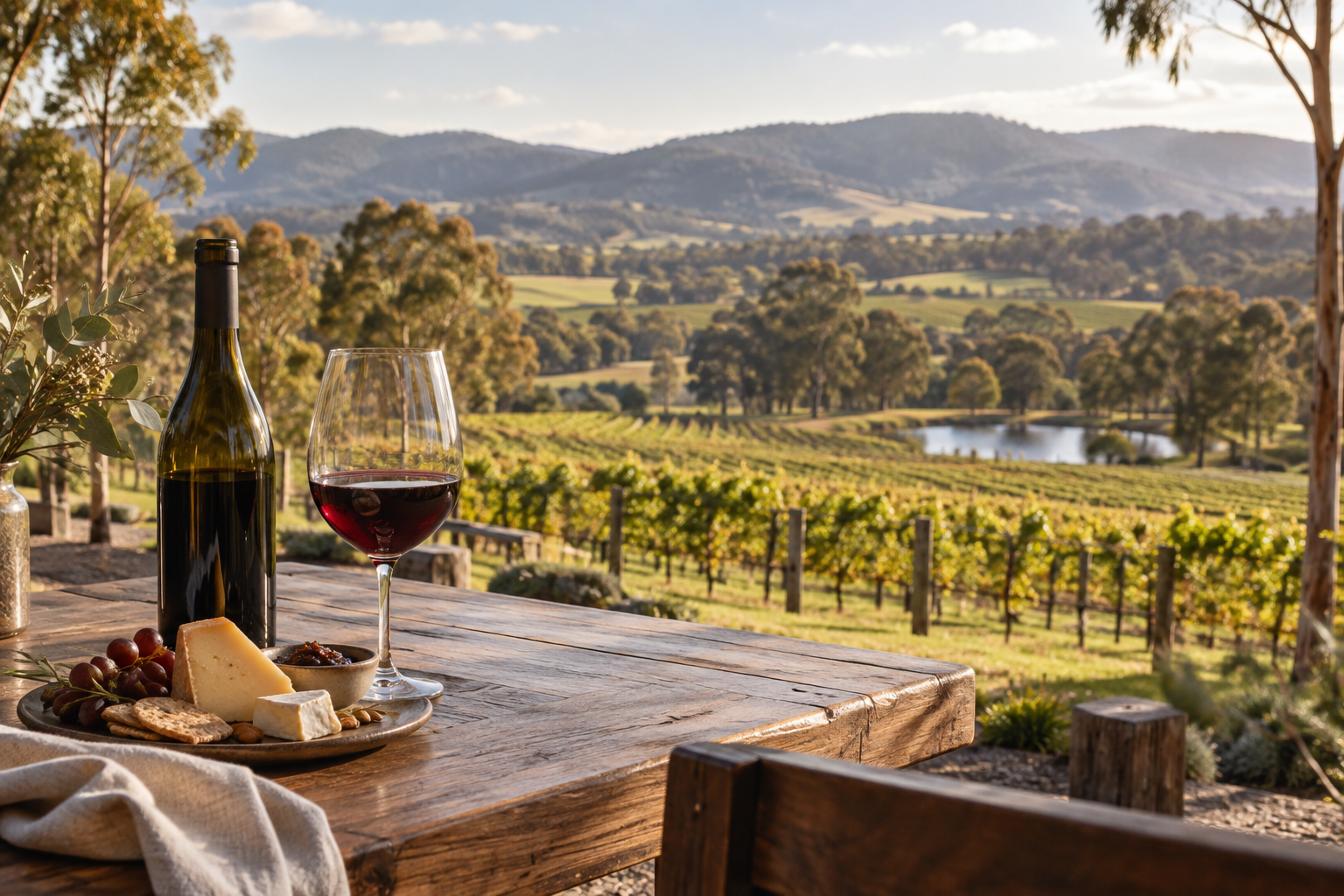
Yarra Valley red wine includes Cabernet Sauvignon, Shiraz and blends that often balance fresh acidity, savoury detail and measured fruit ripeness rather than sheer weight. Cabernet Sauvignon commonly brings blackcurrant and structured tannins, while Shiraz can offer pepper, plum and floral aromas. Pinot Noir is also important to the region, but this guide focuses on Cabernet, Shiraz and the blends that connect them.
Understanding Yarra Valley red wine
The Yarra Valley is a cool-climate wine region east of Melbourne, but it is not uniformly cool. Warmer valley-floor locations and cooler, elevated vineyards give growers different conditions to work with. Aspect, exposure, soil and the growing season also influence how ripe the grapes become and how the finished wine tastes.
That variation matters when buying reds. One Cabernet might be firm, leafy and built for ageing; another might offer rounder fruit and earlier drinking. Shiraz can range from fragrant and medium-bodied to darker and more concentrated. Winemaking choices, including oak, extraction and the use of whole bunches, add another layer of variation.
| Style | Common flavour cues | Structure | Useful food matches |
|---|---|---|---|
| Cabernet Sauvignon | Blackcurrant, cedar, herbs, sometimes mint | Often firm tannins and fresh acidity | Roast lamb, beef, lentil dishes |
| Shiraz | Plum, berries, pepper, sometimes violet | Often medium-bodied, with variable tannin | Grilled meats, mushrooms, sausages |
| Cabernet-led blends | Dark fruit with savoury or herbal detail | Depends on the grapes and proportions | Braised beef, lamb, mature cheese |
| Pinot–Shiraz blends | Red berries, spice, sometimes darker fruit | Can combine freshness with extra depth | Duck, roast chicken, mushroom dishes |
These are starting points, not guaranteed tasting notes. Ask about the particular bottle rather than assuming every wine follows its variety’s stereotype.
Yarra Valley Cabernet Sauvignon: structure without excess weight
Yarra Valley Cabernet Sauvignon is worth exploring if you enjoy blackcurrant fruit, savoury complexity and a clearly defined tannin structure. Compared with many warmer-climate examples, it can feel less heavy, although producer, vineyard and vintage matter more than a simple regional rule.
What to look for in the glass
Expect flavours somewhere along a spectrum of blackcurrant, blackberry, cedar and leafy herbs. Oak maturation may contribute spice or toasted notes, but these are not inherent Cabernet flavours. A herbal edge can be part of the wine’s character; whether it feels balanced depends on the fruit, acidity and your preferences.
Tannin is especially important. It creates the drying sensation around your gums and cheeks, rather than the mouth-watering sensation associated with acidity. A young Cabernet may feel quite firm on its own yet more balanced alongside a meal.
Food pairings and buying tips
Good starting points include:
- Roast lamb: protein and fat suit Cabernet’s structure, while rosemary complements herbal notes.
- Beef or braised short ribs: useful with a fuller, more concentrated example.
- Lentils with roasted mushrooms: an earthy alternative, particularly with a savoury wine.
- Firm, mature cheese: usually a better match than a very delicate fresh cheese.
At a cellar door, ask whether the wine is intended for drinking now or further cellaring. If you want a bottle for dinner this weekend, say so: the most age-worthy Cabernet is not automatically the most enjoyable immediate choice.
Yarra Valley Shiraz: pepper, perfume and plenty of variation
Yarra Valley Shiraz often appeals to drinkers who like freshness and spice alongside fruit. It can be medium-bodied and fragrant, rather than the dense, high-alcohol style sometimes associated with Australian Shiraz. However, richer examples exist, and not every bottle will show obvious pepper.
How winemaking changes the style
Some producers ferment a portion of their grapes as whole bunches, including stems. Depending on the fruit and technique, this can contribute lifted aromas, spice and a different tannin texture. Oak choices also matter: a wine with restrained oak may foreground fruit and savoury notes, while another may show more oak-derived flavour.
Our guide to Luke Lambert Crudo Shiraz, serving and food pairings takes a closer look at a specific label rather than treating all regional Shiraz as interchangeable.
What to eat with it
Try grilled lamb, peppered steak, roast mushrooms or well-seasoned sausages. A lighter, fragrant Shiraz can also suit roast chicken with herbs; you do not always need a heavy meat dish.
Be cautious with very hot chilli. Alcohol can amplify the burning sensation, so a softer, lower-alcohol red may be more comfortable than a powerful Shiraz. For takeaway or casual dinners, prioritise drinkability over prestige.
Red blends: understand the grapes, not just the name
A blend is not inherently better or worse than a single-variety wine. It gives the winemaker different components to work with, potentially balancing aroma, fruit, acidity and tannin. The useful question is what each grape contributes to this particular bottle.
Cabernet-led and Bordeaux-style blends
Cabernet Sauvignon may be combined with Merlot, Cabernet Franc, Malbec or Petit Verdot. Broadly, Merlot can contribute mid-palate fruit, Cabernet Franc aromatic detail, and Malbec or Petit Verdot colour and structure. Their effects depend on ripeness, proportions and winemaking; these are not fixed recipes.
Mount Mary Quintet is a regional reference point for a five-variety Bordeaux-style blend. Yarra Yering Dry Red No 1 is another important Cabernet-led example. For a label-specific explanation, see our Yarra Yering Dry Red No 1 blend and vintage guide.
Shiraz blends and Pinot–Shiraz
Shiraz-led blends may use other varieties to alter perfume, freshness or texture. Read the producer’s description rather than assuming a wine labelled “Dry Red” is entirely Shiraz.
Pinot–Shiraz blends offer another direction. Pinot Noir can contribute red-fruit character and delicacy, while Shiraz may bring darker fruit, spice and extra structure. The result is not necessarily halfway between the two: proportions and winemaking determine the balance.
You may also encounter varieties such as Tempranillo in the valley. If you enjoy savoury reds but find young Cabernet too firm, ask for alternatives rather than limiting your tasting to familiar names.
How to choose a bottle: vintage, label and condition
Start with the occasion. A relaxed lunch, a special dinner and a bottle intended for long-term cellaring call for different decisions. Price alone does not tell you how full-bodied a wine will be, whether it needs time, or whether you will enjoy its style.
Check these details before buying:
- Vintage: warmer and cooler seasons can change ripeness, acidity and tannin, but a regional vintage summary cannot describe every vineyard.
- Variety or blend: a proprietary name may not reveal the grapes on the front label. Check the back label or producer’s technical information.
- Regional origin: a winery located in the Yarra Valley may also make wine from other regions. Read the bottle’s stated origin.
- Alcohol: a useful clue to style, but not a complete measure of body or balance.
- Drinking guidance: ask the producer whether the wine is approachable now and how long they expect it to develop.
Buying older Yarra Valley reds
Older Cabernet and Shiraz can develop savoury, earthy and dried-fruit characters while their youthful fruit becomes less prominent. That evolution is not the same as simply becoming “better”.
Storage history is crucial. Ask about provenance, inspect for leakage or a pushed cork, and consider the seller’s returns policy. A vintage number alone cannot establish condition. Our guide to buying older Allinda Cabernets and Shiraz bottles explores these buying considerations in more detail.
Serving red wine well
“Room temperature” can be misleading in an Australian summer. A warm red may taste more alcoholic and less precise, so modest cooling is often helpful.
Use these as starting points:
- Lighter reds and Pinot–Shiraz blends: around 14–16°C.
- Cabernet and fuller Shiraz: around 16–18°C.
- A bottle sitting in a warm room: try 15–20 minutes in the fridge, then reassess rather than relying entirely on the clock.
- Young, structured wines: decanting may help open the aromas. Taste first, then decide whether more air improves the wine.
- Older bottles: handle gently and watch for sediment. They may need careful pouring rather than lengthy aeration.
A clean, reasonably roomy wine glass is sufficient; you do not need a different glass for every variety. After opening, reseal unfinished wine and refrigerate it. Bring it back towards serving temperature before the next pour, and check its condition rather than assuming a fixed number of days.
Plan a useful Yarra Valley cellar door visit
A focused tasting teaches you more than rushing through a long list of wineries. Choose two or three stops, allow time for lunch, and give yourself room to compare wines rather than racing to the next appointment.
Yarra Valley Pass partners include Dominique Portet, Coldstream Hills Cellar Door, Oakridge, De Bortoli Wines, Jayden Ong, Giant Steps and Payten & Jones. Browse the local partner businesses when planning your visit, then check each business directly for current tasting arrangements and wine availability. Their ranges differ; do not assume every venue offers both Cabernet and Shiraz.
Keep the route manageable
Lilydale is a common approach to the valley from Melbourne. Coldstream, Yarra Glen and Healesville are useful planning anchors, but a winery’s name does not necessarily tell you which town it is closest to. Check the actual locations and driving times before confirming bookings.
For a Cabernet-focused day, look for cellar doors currently pouring Cabernet or Cabernet-led blends. For a broader comparison, choose one Cabernet, one Shiraz and one blend across your tastings. Comparing similar price points can help you focus on style rather than prestige.
Know before you go
- Confirm bookings and tasting fees: requirements vary, especially for groups and weekends.
- Check food separately: a cellar door tasting does not automatically mean lunch is available.
- Arrange safe transport: use a designated driver who does not drink, or book suitable transport. Do not rely on guessing how tastings affect your ability to drive.
- Check service details: Hop It is a Yarra Valley Pass partner; confirm current routes, pickup points and booking conditions directly before relying on it.
- Ask about purchases: verify the exact vintage and whether the bottle you are buying matches the wine tasted.
- Protect your wine: do not leave purchases in a hot parked car. Keep them cool and out of direct sunlight.
You can use the spittoon and still assess a wine properly. Water between pours and a few notes about fruit, acidity, tannin and enjoyment will make your final buying decision easier.
Support local while exploring
Yarra Valley Pass members earn Yarra Credits and redeem them for member rewards on this website. Before your visit, check the current ways to earn Yarra Credits so you understand which activities qualify and any relevant conditions. Treat rewards as a useful addition to a well-planned local visit, not a reason to buy wine you do not want.
Choose the style that suits you
Start with Cabernet for structure, Shiraz for spice and perfume, or a blend for a different balance of flavours. Taste with your meal and drinking timeframe in mind, ask about the exact bottle, and leave space to discover a style you did not expect to enjoy.
Frequently asked questions
What red wine is the Yarra Valley known for?
Pinot Noir is a major Yarra Valley red variety, while Cabernet Sauvignon, Shiraz and Cabernet-led blends are also important. The region’s varied sites produce styles ranging from lighter, fragrant reds to structured wines suitable for ageing.
Is Yarra Valley Cabernet Sauvignon sweet?
Yarra Valley Cabernet Sauvignon is generally made as a dry wine. Ripe blackcurrant or blackberry flavours can give an impression of sweetness without significant residual sugar. Check the producer’s information for the particular bottle.
How does Yarra Valley Shiraz differ from warmer-climate Shiraz?
Yarra Valley Shiraz can be fresher, more fragrant and less full-bodied than many warmer-climate examples, with pepper, floral or savoury notes. This is a tendency, not a rule: vineyard conditions, vintage and winemaking all affect the final style.
How long can you cellar Yarra Valley red wine?
There is no single timeframe for the region. Some reds are intended for early drinking, while structured Cabernet, Shiraz and blends can develop over many years. Follow guidance for the specific producer and vintage, and remember that reliable cool storage is essential.
Do you need to book Yarra Valley cellar door tastings?
Booking requirements vary by business, group size and day. Check directly with each cellar door before visiting, particularly on weekends or with a group, and confirm current tasting fees, food availability and transport arrangements.
Related reading
- Yarra Valley day trip from Melbourne: a practical one-day itinerary
- Yarra Valley sparkling wine: producers, cuvées and Champagne alternatives
- Yarra Valley Sauvignon Blanc and Other White Wine Varieties
- Yarra Valley Chardonnay: Producers, Styles and Vintages
- Yarra Valley Pinot Noir: Producers, Vineyards and Vintages
- Yarra Valley Wine Region: History, Growing Conditions and Wine Styles