Yarra Valley Pinot Noir: Producers, Vineyards and Vintages
· Yarra Valley Pass
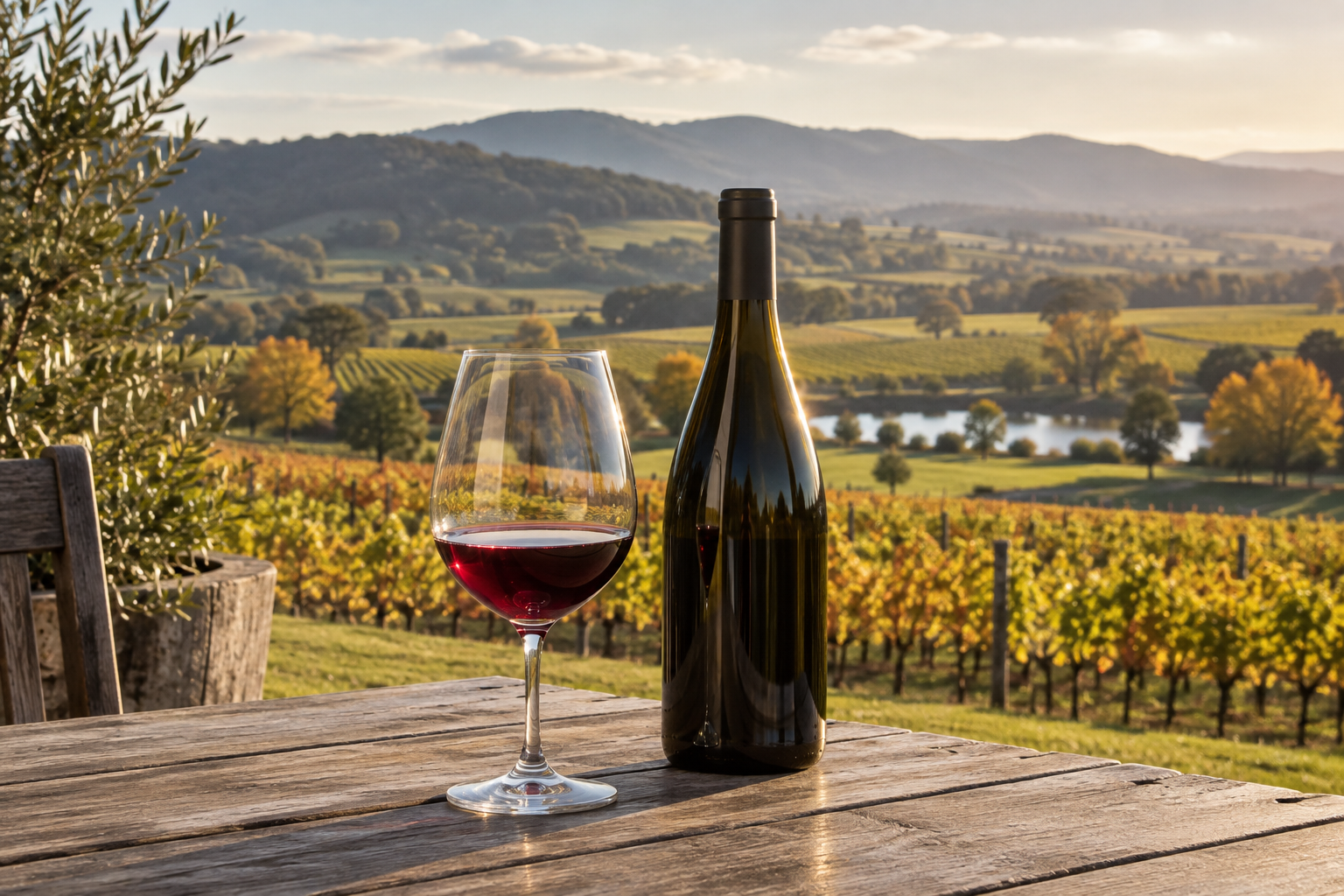
Yarra Valley Pinot Noir is a cool-climate Australian red wine known for red-fruit flavours, fresh acidity and styles ranging from delicate to savoury and structured. To choose a bottle, compare its vineyard source, producer and vintage rather than assuming every Yarra Pinot Noir tastes alike. Giant Steps, De Bortoli, Oakridge, Coldstream Hills, Hoddles Creek and Mac Forbes provide useful starting points for exploring that range.
What makes Yarra Valley Pinot Noir distinctive?
The Yarra Valley, east and north-east of Melbourne, combines relatively cool growing conditions with considerable variation in elevation, exposure and soil. Pinot Noir responds strongly to those differences, which helps explain why two wines from the region can taste quite different.
Common flavours include cherry, raspberry and strawberry, sometimes accompanied by floral notes, spice, earth or a savoury finish. With bottle age, some wines develop more mushroom-like and forest-floor characters.
These are possibilities, not a tasting checklist. Ripeness, vineyard conditions and winemaking all influence the result.
A lighter colour does not necessarily mean a simple wine. Pinot Noir can be pale yet concentrated, with acidity and fine tannins providing structure rather than the weight associated with bigger reds.
Winemaking matters too. Whole-bunch fermentation can contribute aromatic lift, spice and a more pronounced tannin profile; oak maturation can add texture and seasoning. Neither technique automatically makes a wine better, and their effects depend on how they are used.
Understanding the vineyards: Lower Yarra and Upper Yarra
“Lower Yarra” and “Upper Yarra” are useful local descriptions, but they should not be treated as guarantees of style. Site exposure, elevation, soil and farming decisions can matter as much as the broad location.
Lower Yarra: warmer sites and varied exposures
The lower valley includes vineyard areas around Coldstream, Yarra Glen, Dixons Creek and Gruyere. Many sites are relatively warmer than elevated Upper Yarra vineyards, potentially producing fuller fruit expression and more generous texture.
However, a sheltered pocket, an exposed slope and a valley-floor vineyard can behave differently. It is misleading to describe every Lower Yarra Pinot as rich or every Upper Yarra Pinot as delicate.
Giant Steps’ Sexton Vineyard at Gruyere is a useful named site to investigate when exploring lower-valley Pinot Noir.
Upper Yarra: cooler conditions and later ripening
Areas around Hoddles Creek and Gladysdale include cooler vineyard sites where ripening often occurs later. Depending on the season, wines can show bright acidity, fine structure and detailed aromatics.
Applejack Vineyard, associated with Giant Steps, is at Gladysdale. Hoddles Creek Estate is another important producer for understanding this part of the region.
For a focused comparison, explore Giant Steps’ regional and single-vineyard Pinot Noir wines. Tasting vineyard wines from the same producer and vintage helps reduce some variables, although winemaking may still differ between bottlings.
Yarra Valley Pinot Noir producers to know
Start with a small set of producers rather than attempting to taste everything. Each offers a different way into the region, whether through estate fruit, regional blends or vineyard-designated wines.
| Producer | Useful wines or ranges to compare | What the comparison reveals |
|---|---|---|
| Giant Steps | Yarra Valley Pinot Noir and single-vineyard releases such as Applejack or Sexton | Regional blending versus individual vineyard expression |
| De Bortoli | Villages, Estate Vineyard and Riorret Pinot Noir releases | Differences in range, vineyard source and intended style |
| Oakridge | Yarra Valley and vineyard-designated Pinot Noir releases | How site selection influences fruit, acidity and structure |
| Coldstream Hills | Pinot Noir and Reserve releases, where available | Differences in selection, concentration and ageing potential |
| Hoddles Creek Estate | Estate and 1er Pinot Noir | Two approaches within an Upper Yarra estate producer |
| Mac Forbes | Regional blends and vineyard wines | The relationship between a regional picture and individual sites |
Range names and availability can change. Check the complete label and current release information rather than assuming every wine listed is available to taste or buy.
Regional blends are not merely entry-level wines
A regional blend can combine complementary vineyards to create balance and consistency. It may also be the most practical introduction to a producer’s style.
Single-vineyard wines offer a narrower geographical focus, but that does not automatically make them preferable for every drinker or occasion. A regional Pinot may be exactly right for dinner, while a vineyard bottling suits a slower comparative tasting.
Our guide to Mac Forbes’ regional blends, vineyard wines and the 2021 vintage develops this distinction further.
Estate wines need careful interpretation
An estate wine usually points towards the producer’s own vineyard holdings, but the term alone does not identify a particular block or explain the selection process.
Hoddles Creek’s Estate and 1er wines offer a useful comparison. The 1er name should not be mistaken for a French appellation classification. Read more about Hoddles Creek’s estate wines, vintage differences and value before choosing between labels.
How to read a Yarra Valley Pinot label
Before buying, identify four things:
- Producer: who made or released the wine?
- Region: does the bottle specifically say Yarra Valley?
- Range or vineyard: is it a regional blend, estate wine, reserve selection or named vineyard?
- Vintage: which growing season produced the grapes?
A winery’s location and a wine’s grape origin are not necessarily the same. A Yarra Valley-based producer may also make wines from other regions.
Under Australian labelling rules, a single-region claim generally requires at least 85% of the grapes to come from that region. It does not, by itself, establish a single-vineyard source.
De Bortoli is a good example of why the full wine name matters: different ranges should not be treated as interchangeable. Compare De Bortoli Villages, Estate Vineyard and Riorret Pinot Noir to understand those distinctions before shopping.
Yarra Valley Pinot Noir vintages: what to look for
Vintage conditions influence ripeness, acidity, yields and vineyard pressures. Nevertheless, a regional summary cannot predict the quality of every bottle: site, harvest timing, fruit selection and winemaking remain crucial.
The following is a broad guide to several vintages you may encounter, not a ranking.
| Vintage | Broad regional context | Practical buying approach |
|---|---|---|
| 2019 | Generally warm and dry, with ripeness and water stress important considerations | Look for balance rather than assuming warmth means excessive weight |
| 2020 | A challenging season, including bushfire-related smoke risk affecting some vineyards | Ask about the particular wine’s sourcing, assessment and selection; do not generalise across the region |
| 2021 | A cooler, extended season widely associated with freshness and balanced ripening | A useful vintage for comparing producers, while still checking individual reviews and provenance |
| 2022 | Cool, wet spring conditions affected flowering and reduced yields in many vineyards | Investigate the producer’s account of the season and the specific bottling |
| 2023 | A cooler, wetter season with significant vineyard-management challenges | Look for detailed producer information rather than relying on a regional reputation alone |
Is an older vintage necessarily better?
No. Age can bring complexity, but freshness may be the main attraction of a particular Pinot Noir.
For older bottles, storage history is especially important. Ask how the wine has been stored and whether the producer recommends drinking it now or cellaring further. A well-stored regional wine can be a better purchase than an expensive vineyard bottling with uncertain provenance.
There is no universal drinking window for Yarra Valley Pinot. Follow guidance for the exact wine and vintage, not just the producer’s name.
How to choose a bottle without overspending
Begin with the occasion and your preferred style.
- For bright fruit and easy drinking: look for descriptions such as fresh, red-fruited and approachable, then confirm whether the wine is intended for early drinking.
- For savoury complexity: investigate wines described as earthy, spicy or structured, and ask about whole-bunch use and bottle development.
- For a vineyard comparison: buy two wines from different sites, ideally from the same producer and vintage.
- For cellaring: seek an explicit drinking recommendation and pay attention to acidity, tannin balance and storage requirements.
Avoid treating alcohol percentage as a complete guide to weight. It provides context, but texture, extraction and oak can change how substantial a wine feels.
At a tasting, ask: “Which Pinot best shows your regional style, and which most clearly shows its vineyard?” That question often produces a more useful answer than asking for the most expensive bottle.
Serving Yarra Pinot Noir and pairing it with food
Serve Pinot Noir slightly cool, around 14–16°C, rather than at a warm summer room temperature. If a bottle has become warm indoors, a short spell in the fridge can help; taste it as it warms in the glass.
Use a glass with enough bowl space to allow the aromas to develop. Decanting is optional: some young, structured wines benefit from air, while delicate older bottles deserve a gentler approach. Start with a small pour before deciding.
Reliable food partners include:
- Roast duck, particularly with mushrooms or restrained fruit accompaniments.
- Mushroom risotto, lentils or roasted root vegetables.
- Salmon with crisp skin and relatively simple seasoning.
- Roast chicken with herbs and pan juices.
- Charcuterie, where salt and fat complement the wine’s acidity.
Very hot chilli, heavy sweetness and aggressively smoky sauces can overwhelm a delicate Pinot. Match the dish’s intensity to the bottle rather than assuming all Pinot Noir behaves alike.
Planning a Yarra Valley Pinot Noir tasting trip
The Yarra Valley is a practical day trip from Melbourne, but it is a spread-out wine region rather than one compact cellar-door strip. Travel time depends on your starting point, traffic and chosen vineyards.
Build your route around geography:
- Coldstream: consider Oakridge and Coldstream Hills when checking current Pinot tastings.
- Dixons Creek: De Bortoli offers a useful northern-valley focus.
- Healesville: Giant Steps, Jayden Ong and Payten & Jones are names to investigate when planning a town-based wine itinerary.
These are planning suggestions, not guarantees that particular wines will be pouring. Check current tasting locations, booking requirements and release availability directly with each business.
Know before you go
Limit yourself to two or three substantial tastings if you want time to compare wines properly and enjoy lunch. Appointment requirements, tasting fees, food availability and group policies vary.
Do not assume every producer in this guide operates a walk-in cellar door. Vineyard addresses, production wineries and public tasting venues can be different places.
Arrange a designated driver, suitable tour or other confirmed transport before tasting. Spitting is normal at professional tastings and helps you assess more wines, but it is not a substitute for a safe transport plan.
For a broader itinerary, browse Yarra Valley Pass’s local partner businesses. Check each business’s current offering before incorporating it into your wine day.
Near the end of your planning, consider the Yarra Valley Pass membership programme: members earn Yarra Credits and redeem them for member rewards. Review current participation requirements and available rewards rather than assuming every visit or purchase qualifies.
Your next step
Choose one regional Pinot Noir and one vineyard-focused bottle, preferably from the same vintage. Compare them over a meal, note the differences, and use what you enjoy—not a label hierarchy—to guide your next Yarra Valley visit.
Frequently asked questions
What does Yarra Valley Pinot Noir taste like?
Common flavours include cherry, raspberry and strawberry, with some wines showing floral, spicy, earthy or savoury notes. Style varies with vineyard location, vintage and winemaking, so bottles can range from delicate and fresh to more concentrated and structured.
What is the difference between Upper Yarra and Lower Yarra Pinot Noir?
Upper Yarra sites around places such as Hoddles Creek and Gladysdale are often cooler and later-ripening. Many Lower Yarra sites are relatively warmer. However, elevation, exposure, soil and winemaking can outweigh those broad distinctions, so the vineyard matters more than the shorthand alone.
Which Yarra Valley Pinot Noir producers should I try first?
Giant Steps, De Bortoli, Oakridge, Coldstream Hills, Hoddles Creek Estate and Mac Forbes are useful starting points. Begin with a regional or estate wine, then compare a vineyard-designated or selected release to understand the producer’s range.
Is 2021 a good vintage for Yarra Valley Pinot Noir?
The cooler, extended 2021 season is widely associated with freshness and balanced ripening in the Yarra Valley. It is a useful vintage to explore, but the individual producer, vineyard, bottling and storage history remain more informative than the year alone.
Should Yarra Valley Pinot Noir be chilled?
Serve it slightly cool, around 14–16°C. A brief period in the fridge can help if the bottle is warm, then let it develop in the glass. Avoid serving it so cold that its aromas and texture become difficult to appreciate.
Can I visit every producer mentioned in this guide?
Not necessarily. Some producers have public tasting venues, while others may have limited access or no walk-in cellar door. Check the current visitor location, booking requirements and wines available before travelling; a vineyard or winery address is not automatically a public tasting venue.
Related reading
- Yarra Valley day trip from Melbourne: a practical one-day itinerary
- Yarra Valley sparkling wine: producers, cuvées and Champagne alternatives
- Yarra Valley Sauvignon Blanc and Other White Wine Varieties
- Yarra Valley Red Wine: Cabernet Sauvignon, Shiraz and Blends
- Yarra Valley Chardonnay: Producers, Styles and Vintages
- Yarra Valley Wine Region: History, Growing Conditions and Wine Styles