Yarra Valley Wine Region: History, Growing Conditions and Wine Styles
· Yarra Valley Pass
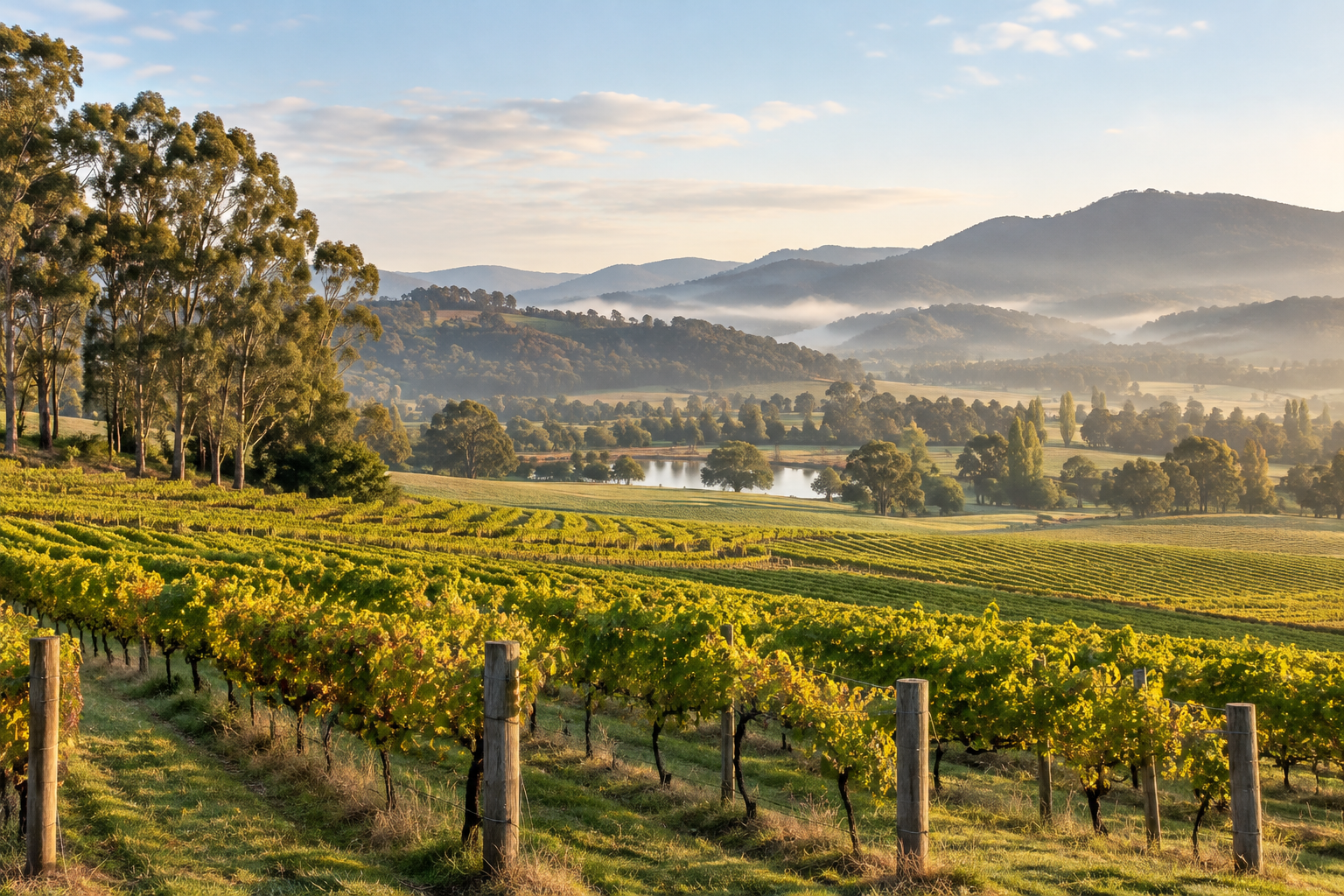
The Yarra Valley wine region is a cool-climate wine-growing area east and north-east of Melbourne, best known for Pinot Noir and Chardonnay, alongside sparkling wine, Cabernet Sauvignon and Shiraz. Its wines reflect a varied landscape of valley-floor vineyards, elevated slopes and different soils rather than one uniform regional style. Understanding those differences makes choosing bottles and planning cellar-door visits considerably easier.
The Yarra Valley wine region at a glance
For visitors, the region is anchored by towns including Lilydale, Coldstream, Yarra Glen and Healesville, with vineyards also extending into the cooler hills around places such as Seville, Woori Yallock and Hoddles Creek.
Many cellar doors are roughly an hour’s drive from central Melbourne, but your destination, traffic and starting point matter. A vineyard near Coldstream and one in the Upper Yarra can require quite different travel plans.
The region’s defining feature is diversity within a relatively compact area. A sheltered, lower-elevation vineyard can ripen grapes differently from an exposed hillside only a short drive away. That helps explain why elegant sparkling wines, finely structured Pinot Noir and substantial Cabernet-based reds can all belong to the same region.
From early vineyards to the modern revival
Much of the valley is Wurundjeri Woi-wurrung Country, with a history that long predates European farming and winemaking.
European viticulture began in 1838, when the Ryrie brothers planted vines at Yering. During the nineteenth century, vineyards and estates developed around the valley, with Swiss settlers playing an important role in its wine industry.
Winegrowing subsequently declined as markets changed and other agricultural activities, including dairying, became more prominent. Commercial winemaking largely disappeared before a new generation of growers began rebuilding the region’s reputation in the 1960s and 1970s.
Three milestones help explain that revival:
- Wantirna Estate, established in 1963 by Reg Egan, was an early participant in the renewed interest in local viticulture.
- Yarra Yering, established in 1969 by Dr Bailey Carrodus, demonstrated the potential for distinctive, carefully grown wines.
- Mount Mary, established in 1971 by John and Marli Middleton, became an influential producer of refined, estate-grown wines.
The modern Yarra Valley developed through small estates, larger producers and increasingly detailed attention to individual vineyard sites. Today, comparing vineyards is often more revealing than looking for a single “typical” Yarra Valley flavour.
How climate, elevation and soils shape the wines
Cool climate, but not cold every day
“Cool climate” describes the conditions affecting grape growth and ripening; it does not mean the valley avoids hot weather. Summer heatwaves, dry spells and rainfall during the growing season can all influence a vintage.
Cooler conditions generally help grapes retain acidity while developing flavour. That natural freshness is especially valuable for Chardonnay, Pinot Noir and sparkling wine.
However, growers still need enough warmth to ripen fruit properly. Site selection, canopy management and harvest timing help balance flavour, acidity and, for red wines, tannin maturity. Wet conditions can also increase disease pressure, making vineyard management particularly important.
Lower valley and Upper Yarra
The lower valley includes many vineyards around Coldstream, Yarra Glen and Healesville. The Upper Yarra generally refers to the cooler, often more elevated southern part of the wine-growing region.
Elevation can moderate temperatures, but it is only one variable. Slope direction, wind exposure, surrounding vegetation and the movement of cold air also matter. Two vineyards at similar heights may behave differently if one receives more afternoon sun or sits in a frost-prone hollow.
As a practical tasting guide, compare wines made from the same grape in different locations. Differences in acidity, fruit character and structure become easier to recognise when the variety stays constant.
Soils influence the vine, not just the tasting note
The region includes grey and brown loams over clay, soils associated with older sedimentary geology, and red volcanic soils in parts of the Upper Yarra.
These affect drainage, water availability, nutrition and vine growth. They do not simply transfer an identical “mineral” flavour into the glass. Soil interacts with climate, vineyard management and winemaking rather than determining quality on its own.
For a closer look at these relationships, explore how climate, soils and elevation shape Yarra Valley wines.
Yarra Valley famous wine styles: what to taste first
Pinot Noir and Chardonnay are the strongest starting points, but stopping there misses much of the region’s appeal.
| Wine style | Common characteristics | What to compare when tasting |
|---|---|---|
| Pinot Noir | Red cherry, strawberry, floral or savoury notes; fine tannins | Vineyard origin, whole-bunch use and oak influence |
| Chardonnay | Citrus, apple or stone fruit; fresh acidity; sometimes creamy texture | Cooler versus warmer sites, barrel influence and malolactic fermentation |
| Cabernet Sauvignon and blends | Blackcurrant, leafy or herbal notes; firmer structure | Ripeness, tannin texture and blending varieties |
| Shiraz, sometimes labelled Syrah | Dark or red fruit, spice and sometimes pepper | Fruit weight, freshness and savoury character |
| Traditional-method sparkling | Bright acidity, citrus and sometimes bread-like notes | Grape blend, time on lees and sweetness level |
| Sauvignon Blanc and Pinot Gris | Styles ranging from crisp and aromatic to more textured | Fermentation method, skin contact and residual sweetness |
Pinot Noir: fragrance and fine structure
Pinot Noir often shows the valley’s balance of fruit, freshness and savoury complexity. Lighter colour does not necessarily mean less flavour or lower quality.
Whole-bunch fermentation can contribute fragrance, spice and additional structure, while oak and extraction decisions influence texture. Ask whether differences between two wines come primarily from the vineyard or the winemaking.
Chardonnay: much more than “oaked or unoaked”
Chardonnay ranges from taut and citrus-led to broader, more textured expressions. Barrel fermentation, lees ageing and malolactic fermentation can all affect the result.
Malolactic fermentation converts sharper malic acid into softer lactic acid and can contribute buttery characters, but not every barrel-aged Chardonnay tastes buttery. Tasting two contrasting examples is more useful than dismissing the grape based on one previous bottle.
Reds and sparkling beyond the headline varieties
Cabernet Sauvignon has deep roots in the region and can produce structured wines with fruit, herbal detail and ageing potential. Cool-climate Shiraz often emphasises spice and freshness rather than sheer weight.
Traditional-method sparkling wines commonly use Chardonnay and Pinot Noir. Their second fermentation takes place in the bottle, while subsequent yeast ageing can add complexity. Sparkling is particularly useful for understanding why retained acidity matters.
Reading the label: origin, vintage and “Yarra Valley vin”
If you encounter the expression “Yarra Valley vin”, vin is simply French for wine; it is not another grape variety or regional classification.
The useful label details are the geographical indication, grape variety, vintage and producer. Under Australian labelling rules, a wine carrying a single geographical indication generally needs at least 85% of its grapes to come from that region.
That distinction matters when a producer makes wines from several Australian regions. A cellar door’s location does not automatically establish the origin of every bottle it sells.
“Single vineyard” identifies a more specific source, but is not a universal quality guarantee. Likewise, a vintage year records the harvest year, not when the wine was bottled. Ask what the season was like and how it affected the wine’s style.
Producers to explore across the valley
Use producers as starting points for comparison rather than treating every cellar door as interchangeable. Among Yarra Valley Pass’s local partner businesses, several provide useful reference points for the region’s wines:
- Giant Steps, Oakridge and Coldstream Hills Cellar Door: strong starting points for exploring Chardonnay and Pinot Noir, including differences between vineyard sources.
- Dominique Portet: useful for broadening your tasting beyond those two varieties, particularly through Cabernet-based wines and rosé.
- De Bortoli Wines: an opportunity to explore a wider range of styles; check the regional origin of each wine you taste.
- Jayden Ong and Payten & Jones: names to investigate when exploring the winemaking scene around Healesville and different approaches to wine style.
Current tasting selections, booking arrangements and experiences can change. Check directly before travelling, especially if your main goal is to taste a particular wine.
Plan a tasting day that teaches you something
Choose a question, not just a list of wineries
A focused tasting day helps you remember what you liked. Useful themes include:
- How does Upper Yarra Chardonnay compare with a lower-valley example?
- Do you prefer fruit-led or more savoury Pinot Noir?
- What changes when Chardonnay is used for sparkling wine?
- How do Cabernet Sauvignon and Shiraz differ in a cool-climate setting?
Three well-spaced visits usually allow more meaningful conversation than a rushed circuit of numerous venues. Allow time for driving, food and any booked experiences.
Keep your route geographically sensible
For a first visit, choose a cluster around Coldstream and Yarra Glen, or focus on Healesville and nearby destinations. Exploring the Upper Yarra deserves its own route rather than being added casually to an already crowded day.
A Healesville tasting venue may be an urban winery or cellar door rather than a vineyard property. Check the setting before booking if vineyard views or a walk through the vines are important to you.
Know before you go
- Book where required. Check tasting availability, group policies and restaurant reservations directly.
- Confirm fees and purchase conditions. Do not assume tastings are free or that fees are always refunded against a purchase.
- Plan safe transport. Choose a non-drinking designated driver or a suitable organised transport service. Spitting is normal at tastings, but should not be treated as proof that you are safe to drive.
- Arrange return travel. Public transport does not conveniently reach every cellar door, and on-demand vehicles may be harder to secure away from towns.
- Protect your purchases. Avoid leaving wine in a hot car; an insulated carrier helps during summer visits.
- Bring layers. Outdoor terraces and elevated sites can feel considerably cooler than sunny tasting rooms.
Harvest commonly falls between late summer and autumn, varying by grape, site and season. It can be an interesting time to visit, but wineries are working businesses and production-area access should never be assumed.
Put wine in its wider local context
Food makes a tasting day more comfortable and can reveal how wine behaves beyond the cellar door. Try Chardonnay with roast chicken or a creamy dish, Pinot Noir with mushrooms or duck, and structured Cabernet with lamb or beef. These are starting points, not rules.
Leave room for the region’s broader food culture, too. A bakery stop, local produce purchase or relaxed lunch can be more enjoyable than adding another tasting simply to fill the schedule.
Fruit wine is a separate category from the grape-based styles discussed here. If you are curious about that side of local drinks, read our guide to blueberry wine producers, buying and tasting in the Yarra Valley.
Support local while you explore
Yarra Valley Pass rewards participation across the Yarra Valley and Dandenong Ranges. Members earn Yarra Credits and redeem them for member rewards on the website. Before your trip, check the available ways to earn Yarra Credits and the conditions attached to each activity rather than assuming every purchase automatically qualifies.
A region best understood through comparison
The Yarra Valley’s appeal lies in the relationship between its history, varied vineyard sites and thoughtful winemaking. Start with Pinot Noir and Chardonnay, then branch into sparkling, Cabernet and Shiraz. A geographically focused day, a few good questions and time to taste carefully will reveal more than a hurried winery checklist.
Frequently asked questions
What wine is the Yarra Valley most famous for?
The Yarra Valley is best known for Pinot Noir and Chardonnay. It also produces notable traditional-method sparkling wines, Cabernet Sauvignon and blends, and cool-climate Shiraz, alongside other varieties.
Why is the Yarra Valley considered a cool-climate wine region?
Its growing conditions generally support gradual ripening and the retention of acidity, particularly at cooler or more elevated vineyard sites. However, the region still experiences hot weather, and conditions vary with elevation, aspect, location and vintage.
What is the difference between the lower Yarra Valley and the Upper Yarra?
The lower valley includes many vineyards around Coldstream, Yarra Glen and Healesville. The Upper Yarra generally refers to the cooler, often higher southern wine-growing areas around locations such as Seville and Hoddles Creek. Individual vineyard conditions matter more than these broad descriptions alone.
When is the best time to visit Yarra Valley wineries?
Wineries can be visited throughout the year, subject to their individual schedules. Late summer and autumn may coincide with harvest, while quieter weekdays can suit visitors seeking more time for conversation. Check bookings, weather and current tasting availability before travelling.
Can you visit Yarra Valley wineries without driving?
Yes, but plan transport in advance. An organised wine tour or suitable booked transport service can connect cellar doors that are difficult to reach by public transport. Confirm pickup points, the return journey and which venues the service covers.
Related reading
- Yarra Valley day trip from Melbourne: a practical one-day itinerary
- Yarra Valley sparkling wine: producers, cuvées and Champagne alternatives
- Yarra Valley Sauvignon Blanc and Other White Wine Varieties
- Yarra Valley Red Wine: Cabernet Sauvignon, Shiraz and Blends
- Yarra Valley Chardonnay: Producers, Styles and Vintages
- Yarra Valley Pinot Noir: Producers, Vineyards and Vintages