Yarra Valley sparkling wine: producers, cuvées and Champagne alternatives
· Yarra Valley Pass
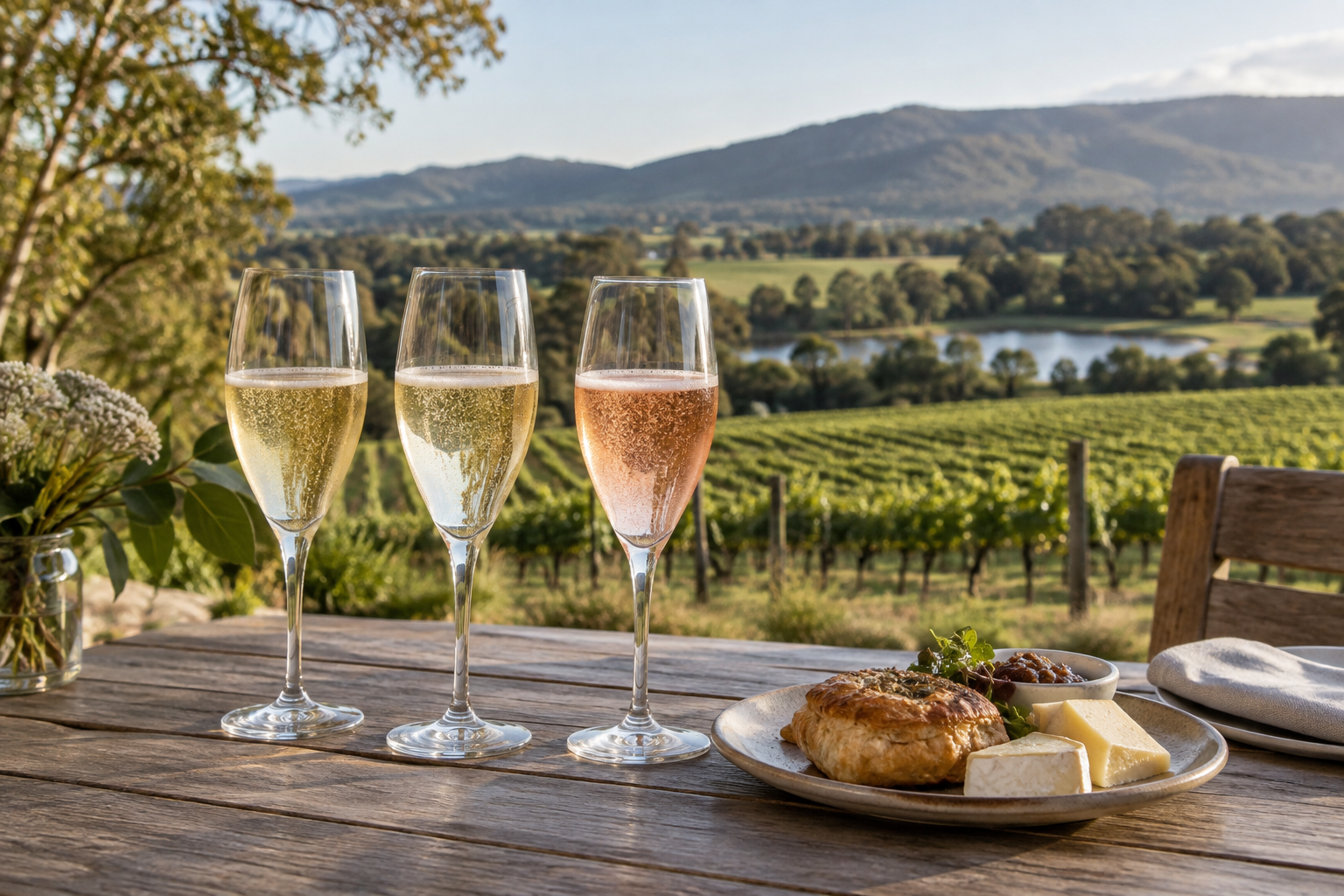
Yarra Valley sparkling wine ranges from crisp Chardonnay-led cuvées to richer Pinot Noir blends and sparkling rosé, with producers to explore including Chandon, Yarrabank, Coldstream Hills and Dominique Portet. For a Champagne alternative, look for traditional-method wines, but check each bottle’s origin: sparkling sold by a Yarra Valley producer is not necessarily made solely from Yarra Valley grapes.
Yarra Valley sparkling wine or Champagne: what is the difference?
Searches for “champagne yarra valley” and “yarra valley champagne” usually mean one of two things: locally produced sparkling wine, or a cellar-door experience centred on bubbles.
Champagne is a protected regional name for wine from Champagne in France, made under that appellation’s rules. An Australian wine does not become Champagne because it uses Chardonnay and Pinot Noir, or undergoes its second fermentation in the bottle.
The useful distinction is origin versus method. Traditional-method sparkling shares a production approach with Champagne, while its grapes, climate and winemaking decisions give it a different identity.
When comparing bottles, prioritise the style you enjoy—zesty, creamy, savoury, fruity or sweeter—rather than treating Champagne as the only quality benchmark.
Why the Yarra Valley suits sparkling wine
The Yarra Valley’s relatively cool growing conditions help grapes retain acidity, an essential part of refreshing sparkling wine. Conditions vary considerably between sites: elevation, exposure and harvest timing all influence ripeness and flavour.
Chardonnay can contribute citrus flavours, freshness and finesse. Pinot Noir can bring structure, red-fruit character and palate weight, even when the finished wine is white.
However, a winery’s address is not proof of grape origin. Some producers source sparkling fruit from multiple Victorian regions or elsewhere in Australia to achieve their preferred style.
Check three things on the bottle or technical sheet:
- Geographical indication: does it specify Yarra Valley, another region or a broader origin?
- Grape varieties: is it Chardonnay-led, a blend or something different?
- Production method: is it traditional method, tank fermented or another approach?
These checks make comparisons more meaningful than grouping every nearby winery under one regional label.
Producers and cuvées to explore
The following names provide a useful starting point, not a guarantee of current cellar-door availability. Labels, vintages and tasting line-ups change; confirm the exact wine before travelling specifically for it.
| Producer or label | Wine to look for | Useful comparison angle |
|---|---|---|
| Chandon | Chandon Brut | Non-vintage house style; check the stated fruit origin |
| De Bortoli | Rococo Premium Cuvée | An alternative non-vintage cuvée to compare with Chandon |
| Yarrabank | Cuvée and Crème de Cuvée | Traditional-method styles; compare sweetness and texture |
| Coldstream Hills | Chardonnay Pinot Noir sparkling | A regional producer’s Chardonnay–Pinot Noir blend |
| Dominique Portet | Brut Rosé | Rosé character, food versatility and sweetness level |
| Yarra Burn | Vintage sparkling releases | Vintage variation, bottle age and storage history |
| Rob Dolan | Blanc de Blanc | A white-grape sparkling style; verify the individual release’s origin |
Chandon: a starting point for non-vintage sparkling
Chandon’s Coldstream destination is an obvious starting point for visitors interested in sparkling wine. Chandon Brut provides a reference for a consistent non-vintage style, but do not assume every Chandon bottling is exclusively Yarra Valley-grown.
Non-vintage wines are designed around a recognisable house style. Depending on the wine, blending may involve different parcels and harvest years, rather than expressing one season alone.
For a focused bottle comparison, read our guide to De Bortoli Rococo Premium Cuvée and Chandon Brut. Compare freshness, texture and finish—not just bubble size.
De Bortoli: put Rococo on your tasting shortlist
De Bortoli’s Yarra Valley estate is in Dixons Creek, making it practical to combine with other visits along the Melba Highway corridor.
Rococo Premium Cuvée is a relevant label for a non-vintage sparkling shortlist. Check the current bottle’s technical information rather than relying on remembered grape percentages, ageing details or an older retailer description.
When tasting, ask whether the wine is available by the glass or in the current flight. A producer’s wider range and its cellar-door tasting selection are not always identical.
Yarrabank: explore Champagne-linked expertise without confusing origin
Yarrabank is associated with Yering Station and Champagne house Devaux, making it particularly relevant to visitors looking for a locally made Champagne alternative.
Its Cuvée and Crème de Cuvée labels deserve separate consideration. A name suggesting creaminess does not tell you the precise sugar level, and sweetness can feel different depending on acidity and serving temperature.
Our guide to Yarrabank Cuvée 2015 and Crème de Cuvée explores those named wines. Treat the 2015 as a specific older release, not an assumption about today’s stock.
Coldstream Hills and Rob Dolan: blend versus white-grape style
Coldstream Hills’ Chardonnay Pinot Noir sparkling and Rob Dolan’s Blanc de Blanc offer a useful stylistic comparison.
A Chardonnay–Pinot Noir blend may combine citrus freshness with additional body and structure. A blanc de blancs is made from white grapes; in this context, check the release’s notes to establish its exact composition and origin.
These are tendencies, not guarantees. Harvest conditions, lees ageing and dosage can substantially alter the result. See our comparison of Coldstream Hills Chardonnay Pinot Noir and Rob Dolan Blanc de Blanc for a more targeted buying decision.
Dominique Portet: make room for sparkling rosé
Dominique Portet, near Coldstream, is worth considering if sparkling rosé is your preferred style.
Rosé colour does not mean sweet wine. Ask about dosage or the labelled sweetness category, then taste for freshness, red-fruit character and texture.
A dry sparkling rosé can bridge aperitif drinking and food particularly well, making it a useful option when your group wants one bottle for several dishes.
Yarra Burn: assess the release, not just the vintage
Yarra Burn is another established name to explore, particularly when comparing vintage sparkling releases.
An older year is not automatically better. Vintage, disgorgement timing and storage all matter, and a bottle bought from a retailer should not be assumed to have the same history as one sourced directly from the producer.
Our guide to Yarra Burn Vintage 2019 versus 2017 explains what to check before choosing between older bottles.
Decode sparkling wine labels before buying
A few terms do most of the useful work:
- Traditional method: the second fermentation happens in the bottle. Time on yeast lees can contribute bread, biscuit and nutty characters.
- Non-vintage, or NV: no single harvest year is declared. Consistency is usually a central aim.
- Vintage: the wine identifies a particular harvest year; it does not automatically outrank NV.
- Blanc de blancs: made from white grapes, commonly Chardonnay in this setting.
- Blanc de noirs: white sparkling made from dark-skinned grapes.
- Brut: a dry sweetness category. Confusingly, extra dry is sweeter than brut.
- Demi-sec: noticeably sweeter, often better suited to lightly sweet dishes than a very dry sparkling.
“Cuvée” identifies a wine or blend; it is not a universal quality grade. Likewise, a fine bead is attractive but cannot establish quality by itself.
How to choose a Champagne alternative
Start with the part of Champagne you enjoy.
For citrus freshness and a lean finish: consider Chardonnay-led wines or blanc de blancs. Ask whether the style is bright and youthful or richer from lees ageing.
For toast, brioche and savoury complexity: seek traditional-method wines and ask about time on lees. Bottle age alone is not a substitute for that information.
For fuller texture: explore Chardonnay–Pinot Noir blends. Pinot Noir can add weight without making the wine taste overtly of red berries.
For fruit-forward drinking: consider sparkling rosé, while checking sweetness independently of colour.
For a softer finish: ask about dosage and sweetness categories. “Dry” does not describe acidity, and a high-acid wine may taste drier than its sugar level suggests.
Food pairings that make sense
Sparkling wine’s acidity and bubbles work particularly well with salt, richness and crisp textures.
- Lean, dry styles: oysters, grilled prawns, fresh goat’s cheese or simply prepared fish.
- Textural Chardonnay–Pinot Noir blends: roast chicken, mushroom dishes, buttery pastry or a warm savoury pie.
- Dry sparkling rosé: salmon, charcuterie, tomato-based dishes or duck.
- Sweeter styles: gently sweet fruit desserts, provided the wine is at least as sweet as the dish.
Very sweet desserts can make brut taste harsh. Chilli can also sharpen the perception of alcohol and acidity, so consider a slightly sweeter style rather than assuming any sparkling will work.
Plan a practical sparkling cellar-door day
For a relaxed half-day, choose two nearby stops rather than trying to cover the entire valley.
Coldstream and Gruyere
Consider Chandon or Dominique Portet, then Coldstream Hills in Gruyere. This groups visits around the eastern side of the Coldstream area without requiring a cross-valley itinerary.
Confirm that sparkling is included in the available tasting before booking. Add lunch only once you have checked the relevant venue’s current dining arrangements.
Yarra Glen and Dixons Creek
Enquire about tasting Yarrabank at Yering Station, then consider De Bortoli in Dixons Creek. This is a logical Melba Highway corridor outing, subject to availability and bookings.
Know before you go
- Book ahead, especially for weekends, holidays and groups.
- Check tasting fees and inclusions directly. Buying wine does not always waive a fee.
- Arrange safe transport. Use a non-drinking driver or confirm a suitable tour or transfer; do not rely on finding a last-minute rideshare.
- Check transport routes carefully. Hop It is among Yarra Valley Pass’s partners, but confirm its current stops and service arrangements before building your itinerary around it.
- Allow time between venues. Rural roads, lunch and tasting appointments make tightly packed schedules frustrating.
Browse the local partner businesses when planning your wider visit. De Bortoli Wines, Coldstream Hills Cellar Door and Dominique Portet are among the listed partners; partnership does not guarantee a particular sparkling tasting or offer.
Serving, storing and buying older bottles
Serve most sparkling wine at roughly 6–10°C. Richer, mature wines often show more aroma towards the warmer end; excessive chilling can hide flavour.
A tulip-shaped glass usually gives more aromatic detail than a narrow flute. Open the bottle slowly, keeping control of the cork and pointing it away from people.
Before buying an older vintage, ask about storage, bottle condition and any available disgorgement information. Avoid bottles showing seepage or unusually low fill levels. Keep purchases away from heat, particularly in a parked car.
After opening, use a proper sparkling-wine stopper and refrigerate. Drink promptly: a stopper slows the loss of fizz but does not preserve the wine indefinitely.
Support local while exploring
Yarra Valley Pass rewards participation across the Yarra Valley and Dandenong Ranges. Members earn Yarra Credits and redeem them for member rewards on this website. Check eligible activities and current terms rather than assuming every tasting or purchase earns credits.
The best bottle is the one that fits your taste
Choose Yarra Valley sparkling wine by origin, method, sweetness and the occasion—not by Champagne comparisons alone. A focused tasting of two or three contrasting styles, paired with sensible travel plans, is more useful than collecting as many cellar-door stops as possible.
Frequently asked questions
Can sparkling wine made in the Yarra Valley be called Champagne?
No. Champagne is a protected regional name for wine from Champagne in France made under its appellation rules. Yarra Valley producers can make traditional-method sparkling wine, but using the same production method does not make it Champagne.
Which producers should I explore for Yarra Valley sparkling wine?
Useful starting points include Chandon, Yarrabank, Coldstream Hills, De Bortoli, Dominique Portet and Yarra Burn. Rob Dolan’s Blanc de Blanc is another relevant comparison. Check each release’s grape origin and current availability rather than assuming every wine from a local producer is entirely Yarra Valley-grown.
Is Yarra Valley sparkling rosé sweet?
Not necessarily. Rosé describes colour, not sweetness. Check the label’s sweetness category or ask the producer about dosage; brut rosé is generally dry, while sweeter categories have more residual sugar.
Is vintage sparkling wine better than non-vintage?
Not automatically. Vintage sparkling identifies a particular harvest year, while non-vintage wines usually emphasise a consistent house style. Quality and suitability depend on the producer, release, ageing, storage and your preferred flavour profile.
Do I need to book sparkling wine tastings in the Yarra Valley?
Booking ahead is sensible, especially on weekends, holidays or when travelling with a group. Confirm that sparkling wine is included in the current tasting, and check fees, dining availability and transport before setting your itinerary.
Related reading
- Yarra Valley day trip from Melbourne: a practical one-day itinerary
- Yarra Valley Sauvignon Blanc and Other White Wine Varieties
- Yarra Valley Red Wine: Cabernet Sauvignon, Shiraz and Blends
- Yarra Valley Chardonnay: Producers, Styles and Vintages
- Yarra Valley Pinot Noir: Producers, Vineyards and Vintages
- Yarra Valley Wine Region: History, Growing Conditions and Wine Styles