Yarra Valley Sauvignon Blanc and Other White Wine Varieties
· Yarra Valley Pass
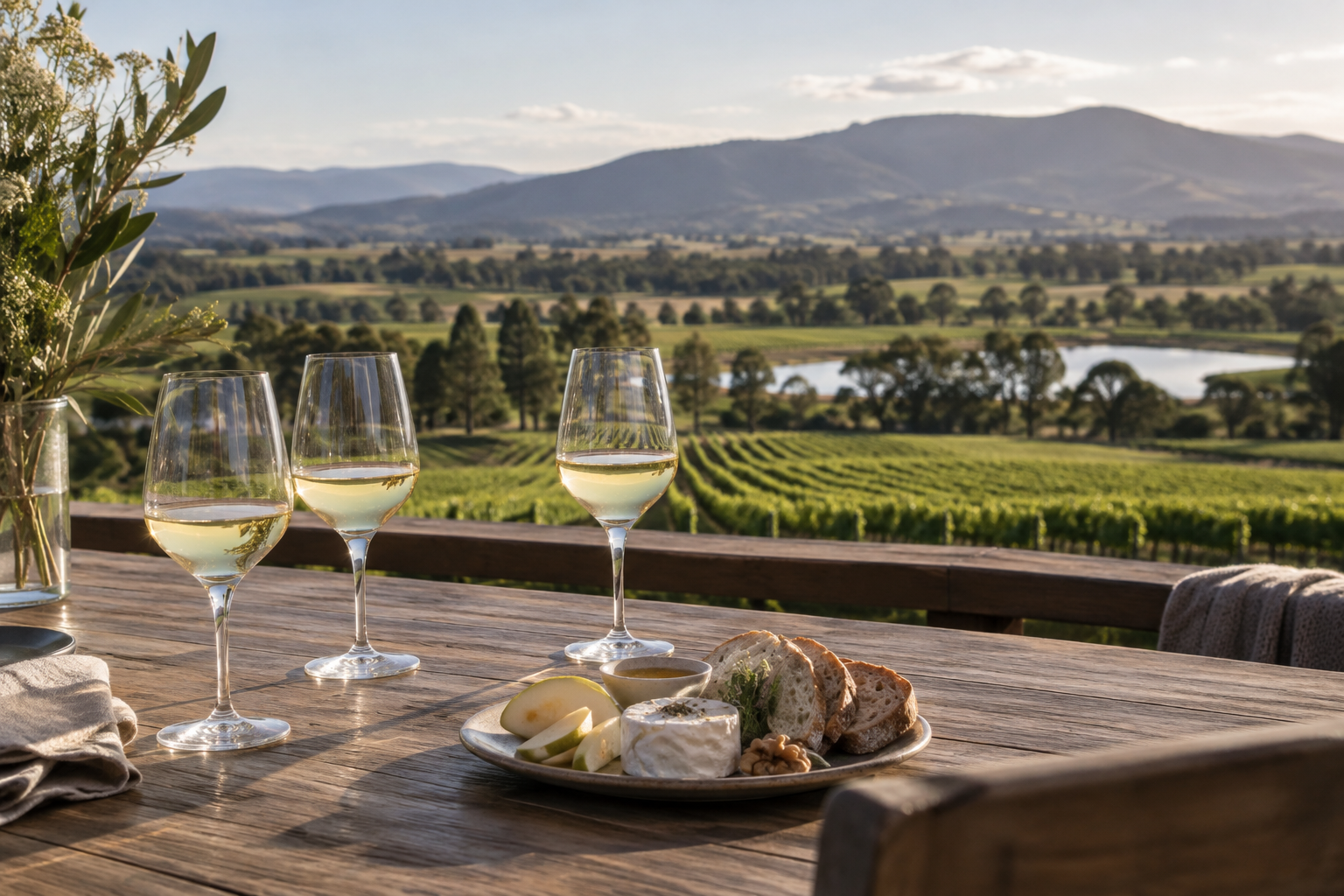
Yarra Valley Sauvignon Blanc typically offers fresh acidity with citrus, herbal and sometimes tropical-fruit flavours, although vineyard conditions and winemaking can produce anything from a crisp, unoaked wine to a textured white. The region also rewards exploration of Chardonnay, Pinot Gris, Riesling and distinctive white blends. If you prefer something sweeter, look for Moscato—but check both the sweetness level and where the grapes were grown.
Yarra Valley Sauvignon Blanc: what does it taste like?
Sauvignon Blanc is a useful starting point if you enjoy refreshing whites with clearly defined aromas. Depending on the vineyard, season and picking decisions, a Yarra Valley example might suggest lemon, grapefruit, gooseberry, fresh herbs or passionfruit.
These are tasting descriptors, not added ingredients. You do not need to identify every aroma to judge whether you like the wine.
The Yarra Valley’s cool-climate conditions help preserve acidity, but the region is not uniform. Sites around Coldstream and Yarra Glen are generally warmer than higher, cooler sites towards the southern and eastern parts of the valley. Elevation, aspect and exposure also matter, so regional origin alone cannot predict a bottle’s exact flavour.
Crisp versus textured Sauvignon Blanc
An unoaked style generally puts freshness and fruit at the centre. Fermentation or maturation in oak, and time on lees—the yeast sediment remaining after fermentation—can add body and a more savoury character.
Ask these questions at a tasting:
- Is this wine entirely Sauvignon Blanc, or a blend?
- Was it fermented or matured in oak?
- Is it designed for immediate drinking or some bottle age?
Do not assume every bottle will resemble a strongly tropical Marlborough Sauvignon Blanc. For a producer-focused starting point, explore our guide to Coldstream Hills Sauvignon Blanc and other Yarra Valley bottles.
Compare the main Yarra Valley white wine styles
Use this table to choose what to taste next. These are broad tendencies rather than promises: sweetness, oak and texture vary between producers and vintages.
| Wine style | Common flavour and texture cues | Usually dry? | A useful food match |
|---|---|---|---|
| Sauvignon Blanc | Citrus, herbs, gooseberry; fresh acidity | Yes | Goat’s cheese or grilled fish |
| Chardonnay | Citrus, apple or stone fruit; lean to creamy texture | Yes | Roast chicken or richer seafood |
| Pinot Gris / Pinot Grigio | Pear, apple, citrus; light to rounded texture | Usually | Antipasto or mushroom dishes |
| Riesling | Lime, lemon, floral notes; pronounced acidity | Often, but check | Prawns or dishes with ginger |
| Sauvignon Blanc–based blends | Citrus and herbs with added texture or complexity | Usually | Fish with a buttery sauce |
| Marsanne–Roussanne blends | Pear, floral or waxy notes; fuller texture | Usually | Roast poultry or baked vegetables |
| Moscato | Grapey, floral or peach-like aromas; sometimes lightly sparkling | Often sweeter | Fruit desserts or gently spiced food |
The most helpful comparison is often between two wines tasted together. Ask for a Sauvignon Blanc beside a Chardonnay or Pinot Gris, then notice which feels sharper, fuller or more aromatic.
Chardonnay: the region’s essential white-wine comparison
Chardonnay deserves a place in any comprehensive Yarra Valley white-wine tasting. It can be taut and citrus-led, generously textured, or somewhere between the two.
Oakridge and Giant Steps are established Yarra Valley Chardonnay names and Yarra Valley Pass partner businesses. Individual bottles differ, so ask which wines are being poured rather than assuming a particular label will be available.
Three factors help explain Chardonnay’s range:
- Site and season: these influence ripeness, fruit character and acidity.
- Oak: barrels can contribute texture and, depending on their age and use, flavours such as spice or toast.
- Malolactic fermentation: this converts sharper malic acid into softer lactic acid and can contribute buttery notes.
If you dislike heavily oaked Chardonnay, say so. The grape itself does not automatically produce a buttery wine, and a fresher example may suit you better.
Pinot Gris, Pinot Grigio, Riesling and Savagnin
Pinot Gris versus Pinot Grigio
Pinot Gris and Pinot Grigio are the same grape. The different names often signal a stylistic intention, although they are not a guarantee.
Pinot Grigio commonly suggests a lighter, drier, citrus-and-apple style. Pinot Gris often points towards riper pear flavours and a broader texture. Some examples have residual sweetness, while others are fully dry.
Compare producer approaches in our guide to Soumah Pinot Grigio and Yarra Valley Pinot Gris styles. At the cellar door, ask about sweetness rather than relying on the name alone.
Riesling and Savagnin
Riesling is worth seeking out if you prioritise fragrance and acidity. Lime, lemon and floral notes are useful reference points; sweetness varies, so ask whether the bottle is dry, off-dry or sweeter.
Savagnin is a different grape again—not another spelling of Sauvignon Blanc. Soumah markets its Savagnin wine as Savarro. Our guide to Soumah Savarro and how it compares with Pinot Grigio explains this less familiar option.
These wines offer a good reminder to explore beyond the varieties you already recognise.
White blends: more than a single-grape alternative
Blending allows a producer to combine different strengths: aromatic lift, acidity, body or ageing potential.
Two notable Yarra Valley reference points are Mount Mary Triolet, made from Sauvignon Blanc, Sémillon and Muscadelle, and Yeringberg’s Marsanne–Roussanne white blend. They are not interchangeable styles: the grapes and winemaking create different flavour profiles and textures.
Sémillon can add breadth to a Sauvignon Blanc–based blend, while Marsanne and Roussanne can produce whites with generous texture and floral, pear-like or savoury characters.
Read our comparison of Yeringberg Marsanne Roussanne and Mount Mary Triolet before choosing a bottle. These are useful wines to investigate, but do not assume either is available for a casual walk-in tasting.
Moscato Yarra Valley: sweetness, sparkle and origin
Moscato appeals to drinkers looking for fragrant fruit, softer perceived acidity and often some sweetness. The name refers to wines made from Muscat grapes, rather than one universally consistent style.
Some examples are still; others have a gentle spritz or more obvious bubbles. Many are lower in alcohol than standard table wines, but that is not automatic—check the label.
A Yarra Valley tasting does not guarantee Yarra Valley fruit
A winery based in the valley may sell wines made with grapes from other Australian regions. This is particularly important when shopping for Moscato: the cellar-door address and the fruit’s origin are separate facts.
For an Australian wine labelled with a single regional geographical indication such as Yarra Valley, at least 85% of its grapes must come from that region. Read the bottle’s stated origin rather than treating the producer’s location as proof.
Before buying, check:
- Whether the wine is sweet, lightly sweet or dry.
- Whether it is still or sparkling.
- Its alcohol percentage and regional label.
- Whether it is available to taste that day.
For dessert, choose a pairing carefully: a tart fruit dessert is often easier to match than something intensely sugary, which can make the wine seem less sweet.
Where to start your white-wine tasting
Build your itinerary around contrasting styles, not the longest possible list of wineries.
Among Yarra Valley Pass partners, Dominique Portet and Coldstream Hills are sensible places to ask about Sauvignon Blanc in the current range. Oakridge and Giant Steps offer starting points for exploring Chardonnay. De Bortoli Wines is another established producer to consider when comparing available white styles.
These are suggestions for enquiries, not a promise of today’s tasting selection. Wines, tasting formats and availability change.
Browse the local partner businesses before planning, then check each venue’s current booking arrangements directly.
A practical two- or three-stop plan
- Begin with a focused comparison. Taste Sauvignon Blanc alongside one other dry white.
- Allow time for food. Book lunch or bring an appropriate food plan rather than assuming every cellar door serves meals.
- Finish with something different. Seek a textured Chardonnay, Pinot Gris, white blend or Moscato if available.
Keep your route geographically compact. Coldstream and Yarra Glen make useful orientation points, but travel times depend on the specific properties you select.
Food pairings that help you understand the wine
A simple food comparison can reveal more than a long tasting note.
For Sauvignon Blanc, try goat’s cheese, a herb-led salad or grilled fish with lemon. Fresh acidity can balance richness, while herbal flavours can complement green ingredients.
For Chardonnay, consider roast chicken, creamy pasta or richer seafood. Match the dish’s weight to the wine: a lean Chardonnay and a generously textured example need not suit the same meal.
For Pinot Gris, try antipasto, roast vegetables or mushrooms. If the wine has noticeable sweetness, gently spiced dishes may work well.
For Moscato, consider fresh fruit or a moderately sweet dessert. Spicy food can also work, but very hot chilli may overwhelm a delicate, low-alcohol style.
Treat these as starting points, not rules. Your preferred combination matters more than a technically perfect match.
Know before you go: bookings, transport and buying bottles
A little preparation makes a white-wine day more useful and less rushed.
- Check the tasting list: a producer may make a variety without pouring it on the day.
- Book where required: confirm current tasting arrangements, group limits and any restaurant reservation separately.
- Allow realistic time: conversation, tasting and purchases can make a visit longer than expected.
- Plan safe transport: choose a non-drinking driver or suitable transport service. If considering Hop It, check its current routes, pickup points and timetable.
- Use the spittoon: spitting is normal at wine tastings and helps you compare wines without consuming every pour.
- Protect purchases from heat: do not leave wine in a parked car on a warm day; an insulated carrier can help.
For tasting at home, serve crisp whites cool, but let a fuller Chardonnay or textured blend warm slightly in the glass so its aromas can emerge. Taste dry, lighter wines before sweeter or more powerful styles.
Before buying several bottles, ask about drinking windows and storage. Fresh Sauvignon Blanc and Moscato are commonly enjoyed young, while some Chardonnays and white blends can develop with age. Ageing potential belongs to the particular wine, not simply its grape variety.
Make local participation rewarding
Yarra Valley Pass supports participation across the Yarra Valley and Dandenong Ranges. Members earn Yarra Credits and redeem them for member rewards on this website. Check the current participation requirements and reward details rather than assuming every winery purchase automatically earns credits.
Find your next favourite Yarra Valley white
Start with Yarra Valley Sauvignon Blanc if you enjoy freshness, then compare it with Chardonnay, Pinot Gris or a white blend. For Moscato, check sweetness, sparkle and regional origin before buying. A focused itinerary, a few good questions and a side-by-side tasting will teach you more than rushing through a long list of cellar doors.
Frequently asked questions
What does Yarra Valley Sauvignon Blanc taste like?
It commonly has fresh acidity with citrus, herbal, gooseberry or tropical-fruit notes. Vineyard conditions and winemaking affect the result: unoaked versions tend to emphasise freshness, while oak and lees ageing can add texture.
Is Yarra Valley Sauvignon Blanc usually dry?
Yes, it is usually made as a dry white wine. Fruity aromas do not necessarily indicate sweetness, so ask about residual sugar if you want to be certain about a particular bottle.
Can I find Moscato at Yarra Valley cellar doors?
Moscato may be available, but check a venue’s current range and tasting list before visiting. A wine sold at a Yarra Valley cellar door is not necessarily made from Yarra Valley grapes, so check its regional label too.
What is the difference between Pinot Gris and Pinot Grigio?
They are the same grape. Pinot Grigio often signals a lighter, crisp style, while Pinot Gris often suggests riper fruit and more texture. These naming conventions are not guarantees, and sweetness varies.
Is Savagnin the same as Sauvignon Blanc?
No. Savagnin and Sauvignon Blanc are distinct grape varieties. Soumah markets its Savagnin wine as Savarro, making it an option to explore if you want to try a less familiar white.
Which Yarra Valley white wine should I try after Sauvignon Blanc?
Try a lighter Pinot Grigio or dry Riesling if you enjoy crispness. Choose Chardonnay or a white blend if you want more texture, or investigate Moscato if you prefer a sweeter, aromatic style.
Related reading
- Yarra Valley day trip from Melbourne: a practical one-day itinerary
- Yarra Valley sparkling wine: producers, cuvées and Champagne alternatives
- Yarra Valley Red Wine: Cabernet Sauvignon, Shiraz and Blends
- Yarra Valley Chardonnay: Producers, Styles and Vintages
- Yarra Valley Pinot Noir: Producers, Vineyards and Vintages
- Yarra Valley Wine Region: History, Growing Conditions and Wine Styles