Domaine Chandon Yarra Valley: its history and Moët & Chandon connection
· Yarra Valley Pass
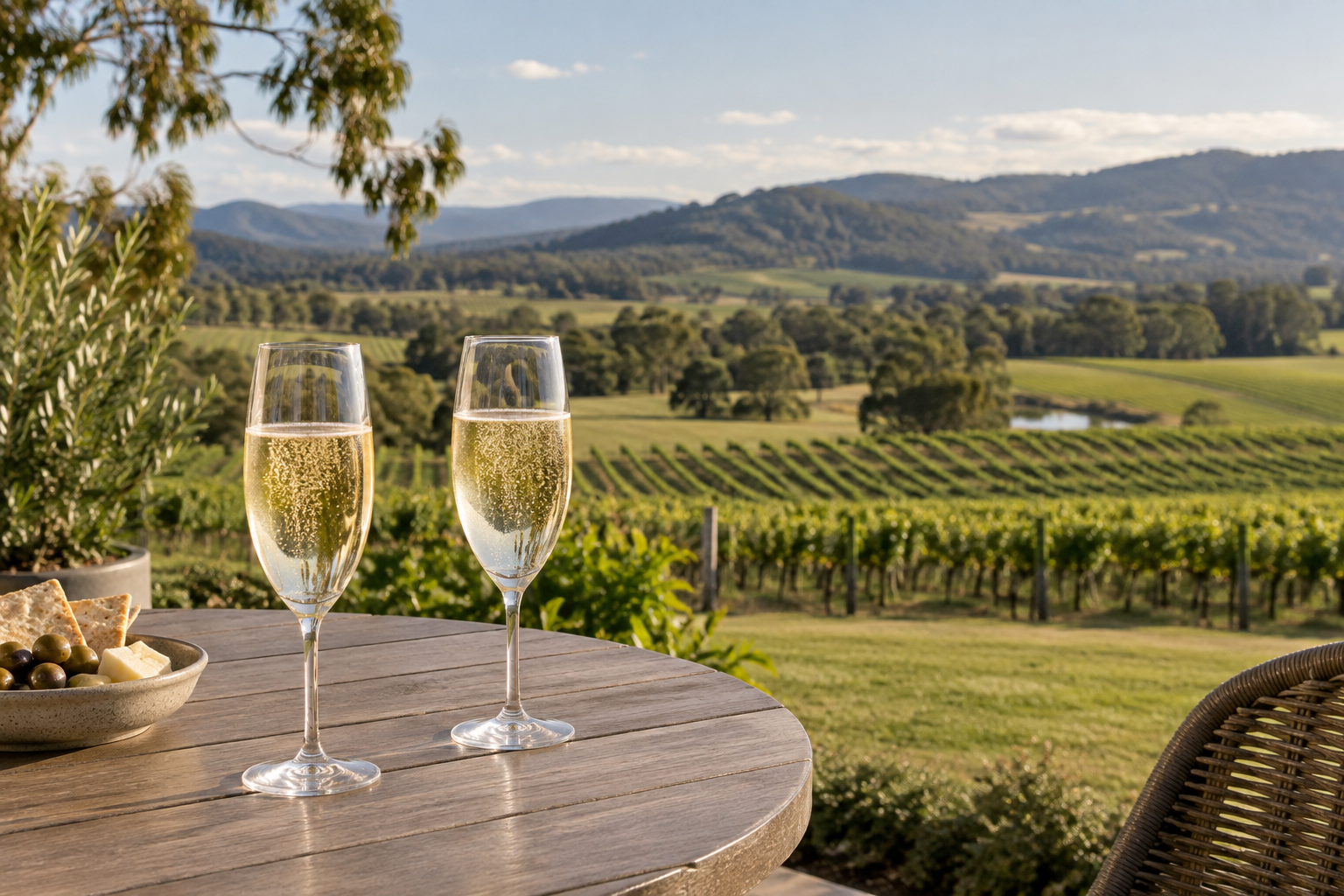
Domaine Chandon Yarra Valley is an Australian sparkling-wine estate established in 1986 by Moët & Chandon, the Champagne house based in Épernay, France. Its Coldstream winery applies French sparkling-wine expertise to Australian grapes, but its wines are not Champagne: that name is reserved for qualifying wines from France’s Champagne region. Today, Chandon and Moët & Chandon sit within the LVMH group.
Domaine Chandon Yarra Valley: how the estate began
Chandon’s Australian story belongs to a wider international expansion. Rather than simply exporting Champagne, Moët & Chandon established sparkling-wine operations in other countries, using local grapes and adapting its winemaking knowledge to different landscapes.
The Yarra Valley offered a compelling combination: a relatively cool growing environment, established winegrowing expertise and proximity to Melbourne. Chardonnay and Pinot Noir, two important grapes for traditional-method sparkling wine, were well suited to the broader region.
A short timeline helps separate the French house from the Australian estate:
- 1743: Claude Moët establishes the wine business that becomes Moët & Chandon in Épernay.
- 1959: Chandon’s international story begins in Argentina, well before its Australian arrival.
- 1986: Chandon Australia is established in the Yarra Valley.
- Today: The Australian estate operates under the Chandon name, within the same luxury group as Moët & Chandon.
Australian winemaker Dr Tony Jordan was central to establishing Chandon Australia. His contribution matters because this was not simply a French recipe transplanted unchanged: successful sparkling wine required an understanding of Australian vineyards, harvest timing and fruit character.
The Coldstream property is known as Green Point and was formerly a dairy farm. Its transformation into a vineyard and winery reflects the Yarra Valley’s wider development as a modern wine destination.
Is “Moet and Chandon Yarra Valley” the same place?
Searches such as “Moet and Chandon Yarra Valley”, “Moet Chandon Yarra Valley” and the reversed “Chandon Domaine Yarra Valley” generally point to the Australian Chandon estate.
The distinction is straightforward: Moët & Chandon is the French Champagne house; Chandon is the international sparkling-wine brand with an Australian estate in Coldstream. “Domaine Chandon” remains a familiar name for that estate, although current branding commonly uses Chandon.
The connection is genuine, but it does not make a bottle of Australian Chandon a bottle of Moët & Chandon Champagne.
Chandon versus Moët & Chandon: what is the difference?
The most important difference is geographical origin, not whether bubbles are created inside the bottle.
Champagne is a protected geographical name. Wines must come from the Champagne region of France and comply with its appellation rules to use it. An Australian sparkling wine can use a comparable production method without becoming Champagne.
| Feature | Chandon Australia | Moët & Chandon |
|---|---|---|
| Home base | Coldstream, Yarra Valley, Victoria | Épernay, Champagne, France |
| Wine identity | Australian sparkling wine | Champagne |
| Connection | Established by Moët & Chandon; part of LVMH | Founding Champagne house behind Chandon’s expansion; part of LVMH |
| Important grapes | Chardonnay and Pinot Noir | Chardonnay, Pinot Noir and Meunier |
| Production approach | Traditional method for its core sparkling wines | Traditional method under Champagne’s rules |
| Vineyard influence | Australian growing conditions and sourcing | Vineyards within the Champagne appellation |
Neither the shared ownership nor the production method guarantees an identical flavour. Vineyard conditions, grape selection, blending and ageing all influence the finished wine.
If you want to compare them, taste similar styles together: a dry white sparkling wine against a dry white Champagne is more informative than comparing a rosé with a richer vintage cuvée.
Why the Yarra Valley wine region suits sparkling wine
Good sparkling wine starts with grapes that retain freshness. Winemakers usually harvest sparkling-wine fruit earlier than fruit destined for many still wines, seeking acidity and balanced potential alcohol rather than maximum ripeness.
The Yarra Valley wine region has a relatively cool climate by Australian standards, but it is not uniform. Elevation, exposure, soils and seasonal weather create meaningful differences between vineyard sites.
Coldstream sits in the lower valley. Higher areas elsewhere in the region can be cooler, while individual slopes and vineyard management further influence ripening. That diversity gives winemakers options when building a blend.
Chardonnay contributes freshness and structure; Pinot Noir can add body, texture and fruit character. Neither grape has one fixed flavour profile, and both respond strongly to site and harvest decisions.
One useful label-reading distinction is that a winery’s location does not prove that every grape in every bottle was grown on that estate. Chandon Australia also draws on fruit beyond its home vineyard. Check a wine’s stated origin and technical information before treating it as exclusively Yarra Valley-grown.
For the wider regional picture, our guide to Yarra Valley vineyards and cellar doors explains how different producers fit into a wine-country visit.
How traditional-method sparkling wine is made
Chandon’s core sparkling wines use the traditional method: the second fermentation happens in the bottle. Understanding the process makes a tasting more rewarding.
- Make the base wine. Grapes are pressed and fermented into still wine. Freshness is especially important because further production stages will change its texture and aroma.
- Build the blend. Winemakers combine selected base wines to achieve the intended style. Depending on the cuvée, this can involve different grapes, vineyards or harvest years.
- Create the bubbles. Yeast and sugar are added before bottling. A second fermentation produces carbon dioxide, which remains dissolved in the sealed wine.
- Age on lees. The wine rests with spent yeast cells. This can contribute bread-like, biscuity or savoury characters, alongside greater textural complexity.
- Remove the sediment and finish the wine. Riddling moves the sediment towards the bottle neck; disgorgement removes it. A finishing addition called dosage helps establish the final sweetness level before closure.
“Brut” indicates a dry style, not necessarily a wine with no residual sugar. Likewise, a creamy texture does not automatically mean sweetness: ageing and the character of the bubbles can affect that impression.
At a tasting, ask how long a wine spent on lees and what the blend contains. Those answers are more revealing than simply asking which bottle is the most expensive.
What to look for in the wine range
Treat the following as useful categories rather than a promise about the current tasting line-up. Wines, vintages and cellar-door availability change.
Non-vintage sparkling
A non-vintage wine can combine base wines from more than one harvest. Blending gives the winemaker flexibility to maintain a recognisable style despite seasonal differences.
Chandon Brut is a useful reference point for understanding the house’s dry white sparkling style. Look for the balance between fruit, acidity and any yeast-derived complexity.
Rosé sparkling
Rosé offers a different expression, often bringing red-fruit characters into the comparison. Colour alone does not tell you how sweet the wine is, so ask about style rather than assuming pink means sweet.
Vintage and other cuvées
A vintage sparkling wine identifies a particular harvest year. It can reveal more about that season, although vintage status alone is not a quality ranking.
For any special cuvée, ask what distinguishes it: fruit origin, grape proportions, time on lees or another production choice. Sparkling-based drinks and spritz products should be understood separately from straight sparkling wine.
Visiting Chandon in Coldstream
Chandon’s Australian estate is at 727 Maroondah Highway, Coldstream, Victoria. It is a practical stop on the eastern approach to the valley from Melbourne, rather than a winery deep in the Upper Yarra.
Allow roughly an hour to an hour and a half from central Melbourne as a planning estimate, with extra time for traffic. Your starting suburb, road conditions and weekend congestion can change the journey substantially.
The important booking question is not simply “Can we visit?” but “Which experience are we booking?” A tasting, a food booking and a special wine experience may have different arrangements.
Before committing, check Chandon’s current official information for:
- The available tasting formats and whether advance reservations are required.
- Food options and whether dining needs a separate booking.
- Group-size restrictions and any conditions for organised tours.
- Accessibility arrangements relevant to your group.
- Current opening days, times and charges.
For a closer look at the choices, see our comparison of Chandon’s tasting and dining options.
Do not assume that vineyard access or a production tour is included with a standard tasting. Chandon is a working wine estate, so follow visitor signage and staff directions rather than walking between vines uninvited.
Building a sensible day around Chandon
A satisfying Yarra Valley day does not need five cellar doors. Chandon plus one contrasting producer, with time for food, usually allows more attention to the wines and less rushing between appointments.
Keep the geography manageable
Starting in Coldstream makes it sensible to consider other lower-valley stops before adding a longer drive towards Healesville or the Upper Yarra. Use our town-by-town guide to choosing Yarra Valley winery stops to avoid an itinerary that repeatedly crosses the region.
Nearby producers do not necessarily offer the same experience. Coldstream Hills and Dominique Portet can provide useful contrasts in wine style and cellar-door focus; check their current arrangements independently.
Add a contrasting wine experience
After a sparkling-focused visit, a producer known for still wines can broaden the day. Our guide to Oakridge’s wine range and vineyard sites explains one option for comparing Chardonnay, Pinot Noir and the role of individual vineyards.
Book your meal before filling every gap with another tasting. A late-running lunch can disrupt subsequent reservations, especially on busy weekends.
Arrange a designated driver or suitable transport before the day. If considering Yarra Valley Pass partner Hop It, confirm its current route, whether Chandon is a stop and how its timetable fits your bookings.
Know before you go
A few checks make the difference between a relaxed visit and an awkward arrival:
- Match the booking to the group. Tell the venue about children, non-drinkers and larger parties rather than assuming every experience accommodates them equally.
- Ask about dietary requirements early. Do not rely on a tasting reservation to secure suitable food.
- Dress for changing conditions. Vineyard settings can feel exposed, and outdoor seating is weather-dependent. Bring a layer even when Melbourne starts warm.
- Leave room between appointments. Driving time is only part of the transfer; parking, checking in and paying also take time.
- Taste deliberately. Spittoons let you assess wines without drinking every pour. Their use is normal at wine tastings.
- Protect your purchases. Avoid leaving sparkling wine in a hot car, particularly while continuing to another lunch or cellar door.
Autumn visits may coincide with harvest activity, but timing varies with the season. Visiting during harvest does not guarantee access to production areas or a behind-the-scenes experience.
Support local while planning your visit
Yarra Valley Pass rewards participation across the Yarra Valley and Dandenong Ranges. Members earn Yarra Credits through qualifying activities and redeem them for member rewards on this website. Browse the local partner businesses, including Oakridge, Dominique Portet and Coldstream Hills Cellar Door, when planning additional stops. Do not assume a Chandon visit earns credits: check the current participating businesses and qualifying activities first.
The connection, in perspective
Domaine Chandon brings a genuine Moët & Chandon heritage to the Yarra Valley, but its identity is Australian. Visit for the opportunity to understand traditional-method sparkling wine in a local setting, then compare it with the region’s still wines. Confirm your chosen experience, plan transport and leave enough time to enjoy the differences.
Frequently asked questions
When was Domaine Chandon established in the Yarra Valley?
Chandon Australia was established in the Yarra Valley in 1986 by Moët & Chandon. Australian winemaker Dr Tony Jordan was central to establishing the operation.
Is Domaine Chandon owned by Moët & Chandon?
Moët & Chandon established Chandon Australia, and both brands now sit within the LVMH group. They are related businesses, but Chandon’s Australian sparkling wines are distinct from Moët & Chandon’s French Champagnes.
Is Chandon Yarra Valley wine Champagne?
No. Champagne is a protected geographical name for qualifying wines made in France’s Champagne region. Chandon Australia makes Australian sparkling wine, including traditional-method wines with a second fermentation in the bottle.
Where is Domaine Chandon in the Yarra Valley?
The estate is at 727 Maroondah Highway, Coldstream, Victoria. It is in the lower Yarra Valley, with driving time from central Melbourne often around an hour to an hour and a half, depending on traffic and your starting point.
Do you need to book before visiting Chandon?
Check Chandon’s current official booking information for your preferred experience. Tastings, dining and special experiences may have separate arrangements, and booking ahead is a sensible approach for weekends, groups and visits with specific requirements.
Related reading
- Soumah Wines: Italian varieties, estate labels and visiting the vineyard
- Oakridge Pinot Noir: Willowlake, Henk, Hazeldene and 864 Explained
- Affordable Yarra Valley Chardonnay: entry-level wines compared
- Levantine Hill Pinot Noir: Colleen’s Paddock and 2016–2019 Vintages
- Top wineries in Yarra Valley: 10 benchmark producers and why they matter
- Tokar Estate Tempranillo: Wine Style, Food Pairings and Cellar Door