Killara Estate Winery: Wines, Setting and Planning Your Visit
· Yarra Valley Pass
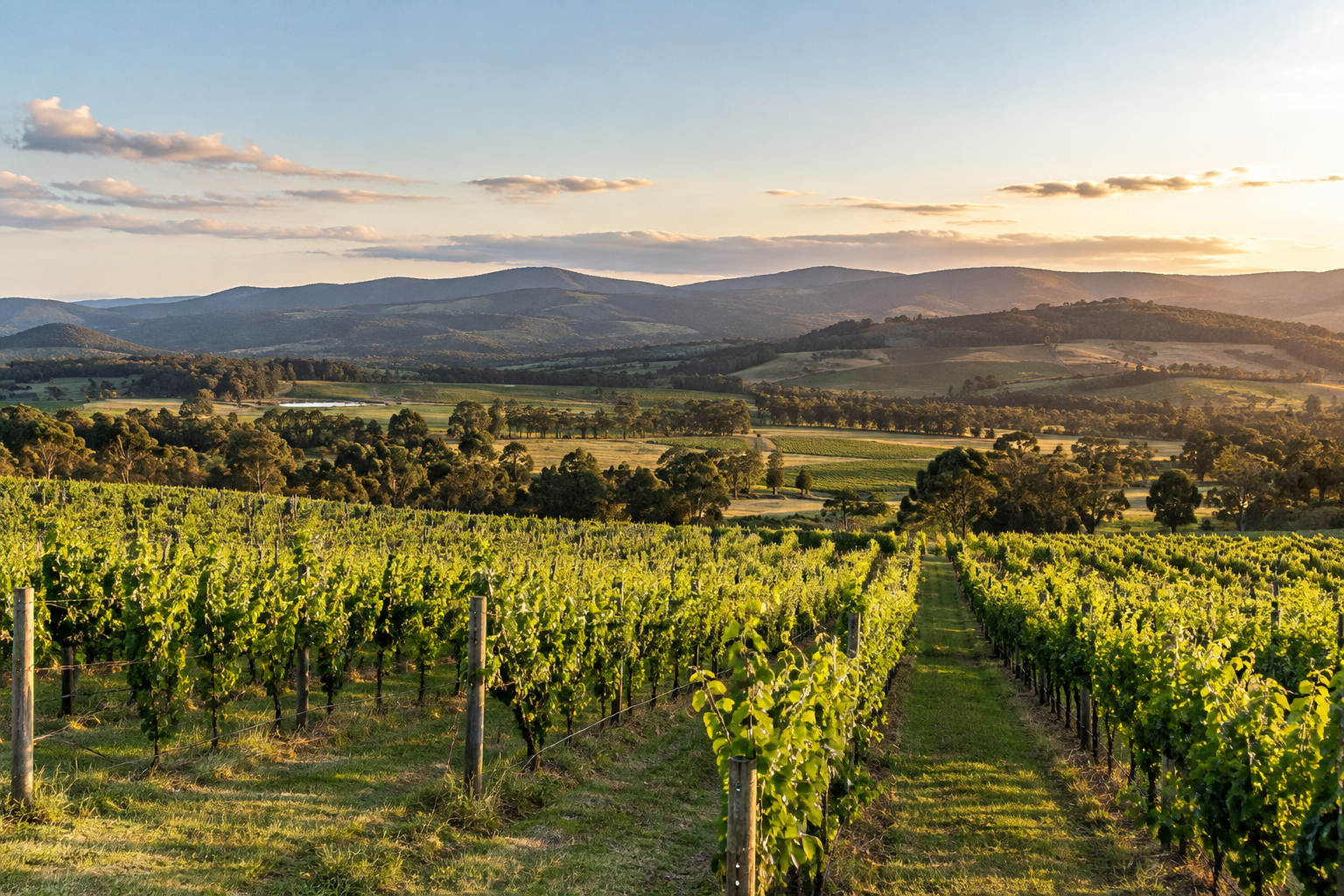
Killara Estate Winery is an Italian-influenced winery, cellar door and restaurant in Seville East, in Victoria’s Yarra Valley. Its appeal is the combination of vineyard views, food-friendly wines and the opportunity to build a visit around both tasting and dining. Confirm current cellar-door and restaurant arrangements before travelling, particularly if lunch is the centrepiece of your day.
Where is Killara Estate Winery?
Killara Estate is at 60 Sunnyside Road, Seville East, on the eastern side of the Yarra Valley. For visitors approaching from Melbourne through Lilydale, the Warburton Highway provides the main route towards Seville and Seville East.
This location matters when planning your day. Killara is not in the same immediate cellar-door cluster as wineries around Coldstream or Yarra Glen. Trying to combine all three areas with a leisurely lunch can create more driving than tasting.
The estate’s vineyard setting is part of the attraction: rows of vines, rolling countryside and an outlook that gives a meal or tasting a distinctly rural backdrop. However, a vineyard view does not necessarily mean visitors can walk freely through the vines. Ask which outdoor areas are open to guests.
For the wider regional picture, start with our guide to Yarra Valley vineyards and cellar doors. It helps distinguish a destination restaurant visit from a wine-focused circuit with several shorter stops.
Killara’s wines: Italian influence and Yarra Valley classics
If you are looking for an Italian winery in the Yarra Valley, Killara’s appeal lies in its Italian-influenced approach rather than an exclusively Italian grape list. Familiar regional varieties sit alongside wines that suit that food-led direction.
Pinot Grigio, Chardonnay and Pinot Noir are useful starting points when exploring Killara’s range. Availability, vintages and the wines being poured can change, so treat these as tasting priorities rather than a guaranteed cellar-door line-up.
| Wine to explore | What to notice in the glass | A useful cellar-door question |
|---|---|---|
| Pinot Grigio | Freshness, texture and the balance between fruit and acidity | Is this made as a crisp aperitif wine or a more textured food wine? |
| Chardonnay | Acidity, fruit weight and any oak influence | How does fermentation or maturation shape this wine? |
| Pinot Noir | Red-fruit character, tannin and savoury detail | What food would you pair with this vintage? |
What does “Italian-influenced” mean here?
It is more useful to think about food compatibility than nationality alone. A wine can express an Italian-influenced approach through freshness, restrained weight or a style intended to work at the table, even when its grape variety is also strongly associated with other countries.
Pinot Grigio, for example, belongs to the same grape variety as Pinot Gris. The names often signal different stylistic intentions, but the label alone does not tell you how dry, textured or aromatic the wine will be. Tasting is the better guide.
Likewise, do not assume every bottle sold at a winery comes entirely from the vineyard you can see. Ask which wines use estate-grown fruit and whether others draw on additional sites. That distinction makes a Yarra Valley vineyard visit more informative.
If Italian varieties are your main interest, our guide to Soumah’s Italian varieties and estate wines offers another useful point of comparison. Compare the wines and styles, rather than assuming the two estates offer identical experiences.
Making the most of a wine tasting at Killara
For wine tasting in the Yarra Valley, a little preparation helps you get beyond choosing whichever bottle tastes most immediately appealing.
Tell the cellar-door team what you enjoy and what you want to discover. “I like fresh whites but want to understand Chardonnay” is more useful than simply asking for the best wine. If you are buying for dinner, describe the dish, including its sauce or seasoning.
A productive tasting approach is to:
- Start with lighter wines. Follow the host’s recommended order rather than moving randomly between whites and reds.
- Compare two wines closely. Look for differences in acidity, texture and tannin, not just fruit flavours.
- Ask one production question. Oak use, grape sourcing or time on lees can explain something you are noticing.
- Think about the bottle’s purpose. A wine for an outdoor lunch may be different from one intended for a slow-cooked dinner.
- Record the vintage. A photograph of the bottle is more useful than remembering only the variety.
Confirm whether tastings require reservations, whether a fee applies and how group bookings are handled. A restaurant reservation should not be treated as an automatic tasting booking.
If you are driving, the simplest plan is not to drink. Spitting is useful during a tasting, but it is not a guarantee that driving afterwards is safe or lawful.
Dining and the vineyard setting
Killara’s restaurant makes the estate a potential anchor for the day rather than just another stop between cellar doors. The Italian influence provides a natural reason to consider wine and food together.
Look at the current menu before selecting your tasting priorities. If you know what you are likely to order, ask the team which available wine would suit it. Consider the whole dish: a tomato-based sauce, creamy preparation or strong seasoning can matter as much as the main ingredient.
For a lunch-led visit, settle the restaurant booking first, then ask how a tasting can fit around it. This avoids arriving with an ambitious tasting schedule that clashes with your table time.
The outlook is another reason not to rush. Allow some unstructured time to enjoy the setting, without assuming you will receive a particular table or outdoor seat. If a view, sheltered seating or a quieter location is important, mention it when booking and ask what can realistically be accommodated.
Check dietary requirements in advance. Do not infer gluten-free, vegan or allergy-safe options solely from the restaurant’s Italian influence.
How to build a day around Seville East
A sensible Killara itinerary usually begins with geography, not a list of famous winery names. Our town-by-town guide to planning a Yarra Valley winery day can help you choose a manageable area.
Option 1: Make Killara the main event
This suits visitors who want lunch, a tasting and time to appreciate the vineyard setting.
Approach through Lilydale and the Warburton Highway corridor, with a coffee or practical stop in Wandin or Seville if needed. Head to Killara for the booked portion of your visit, then keep the afternoon flexible rather than committing to several appointments.
The advantage is simple: delays at lunch or extra time discussing wines do not derail the rest of the day.
Option 2: Add one contrasting winery
One additional stop can give you a more rounded understanding of the area without turning the outing into a tasting marathon. Choose it for a reason: a different winemaking approach, a particular variety or another vineyard setting.
Seville Estate is a separate winery, not another name for Killara. Our guide to Seville Estate’s wines and visitor access provides background for considering it as part of an eastern Yarra Valley day. Check its current visitor arrangements before adding it to your route.
Option 3: Continue towards Warburton
If scenery matters more than a second tasting, continuing east towards Warburton creates a different kind of outing. A township stop or riverside walk can balance a wine-and-lunch visit.
Keep daylight, weather and the return journey in mind. Warburton is an extension to the day, not a neighbouring cellar door you can casually squeeze between reservations.
Know before you go
Book the experience you actually want
Be clear whether you are requesting a tasting, a restaurant table or both. Give the full party size, including non-drinkers and children, and mention any special requirements.
For celebrations or larger groups, ask about group conditions before inviting everyone. Standard visitor arrangements may not apply to a large party.
Check access rather than assuming it
For visitors with mobility requirements, useful questions include:
- Is there a step-free route from parking to the cellar door and restaurant?
- Is an accessible toilet available?
- Are there slopes, gravel sections or thresholds on the route?
- Can an appropriate table position be reserved?
A general description such as “accessible” may not answer the particular needs of your group.
Plan for children and outdoor conditions
If children are coming, ask about suitable seating, menu options and supervision expectations. Vineyard land is a working environment, not automatically a play space.
Our family-friendly winery planning guide covers the facility and booking checks that matter more than a venue simply welcoming families.
Bring layers for changing weather and shoes suitable for any permitted outdoor areas. In warm conditions, keep purchased wine out of direct sun and avoid leaving bottles in a hot car while making another stop.
Organise the return journey
If nobody is remaining alcohol-free, arrange transport before the day. Confirm that a driver or service covers Seville East and can collect you at the required time. Do not rely on a last-minute vehicle being available after lunch.
Who is Killara best suited to?
Killara is a strong candidate for visitors seeking wine, food and a vineyard outlook in one stop, particularly those interested in an Italian-influenced experience.
It also suits a less hurried eastern Yarra Valley itinerary. You can focus on a few wines, enjoy a meal and leave room for scenery rather than measuring the day by the number of cellar doors visited.
A tightly scheduled tour centred on Coldstream, Yarra Glen or Healesville needs more careful route planning before adding Killara. The question is not whether another estate is worth visiting, but whether the extra travel leaves enough time to enjoy both places properly.
Support local while exploring
Yarra Valley Pass members earn Yarra Credits through participating activities and redeem them for member rewards. Check current participation and conditions before assuming any particular visit, including a visit to Killara Estate, qualifies. It is a useful way to connect local exploration with rewards where eligible.
The bottom line
Visit Killara Estate Winery for its combination of Italian-influenced wines, dining and a Seville East vineyard setting. Build the day around your preferred experience, confirm tasting and restaurant arrangements separately, and keep the route realistic. One well-planned estate visit can be more rewarding than several hurried stops.
Frequently asked questions
Where is Killara Estate Winery?
Killara Estate Winery is at 60 Sunnyside Road, Seville East, in Victoria’s Yarra Valley. Visitors approaching through Lilydale generally travel along the Warburton Highway towards Seville and Seville East.
Is Killara Estate an Italian winery?
Killara Estate has an Italian-influenced wine and dining identity. That does not mean its range consists exclusively of Italian grape varieties; it also includes familiar Yarra Valley varieties such as Chardonnay and Pinot Noir.
Which wines should I explore at Killara Estate?
Pinot Grigio, Chardonnay and Pinot Noir are useful starting points. Ask which labels and vintages are currently available to taste, and which wines use estate-grown fruit.
Do I need to book a tasting or lunch at Killara Estate?
Confirm current booking requirements directly with the estate, especially for weekends and groups. If you want both a tasting and lunch, request both explicitly rather than assuming a restaurant reservation includes a tasting.
Can I combine Killara Estate with other Yarra Valley wineries?
Yes, but plan around its Seville East location. One additional stop in the eastern Yarra Valley is generally a more manageable starting point than a packed itinerary spanning Coldstream, Yarra Glen and Healesville.
Related reading
- Soumah Wines: Italian varieties, estate labels and visiting the vineyard
- Oakridge Pinot Noir: Willowlake, Henk, Hazeldene and 864 Explained
- Affordable Yarra Valley Chardonnay: entry-level wines compared
- Levantine Hill Pinot Noir: Colleen’s Paddock and 2016–2019 Vintages
- Top wineries in Yarra Valley: 10 benchmark producers and why they matter
- Tokar Estate Tempranillo: Wine Style, Food Pairings and Cellar Door