Samantha's Paddock wine: the blend, its style and food pairings
· Yarra Valley Pass
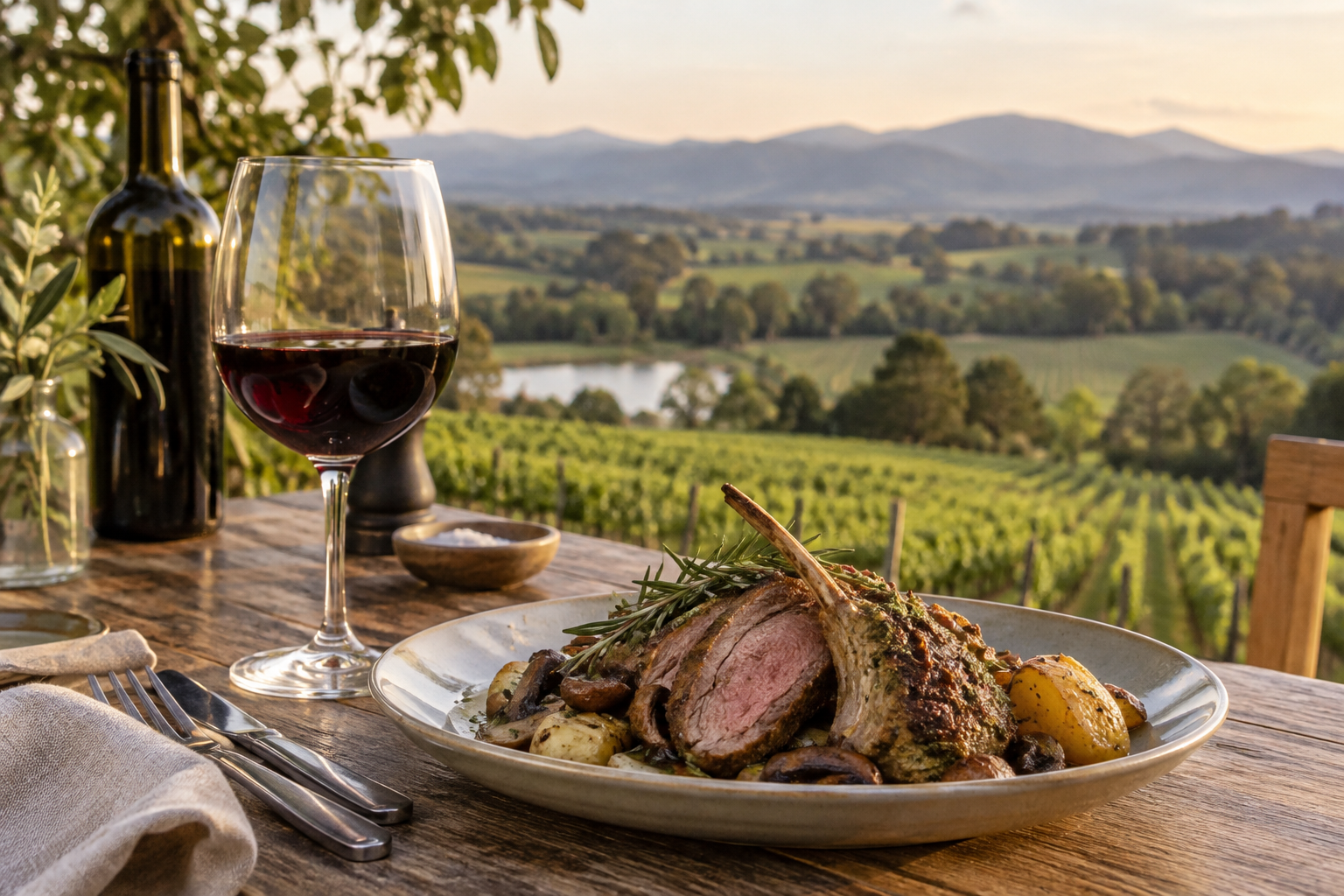
Samantha's Paddock wine is a Cabernet Sauvignon-led red blend made by Kellybrook in the Yarra Valley. Expect a dry, structured style that suits roast lamb, beef and savoury mushroom dishes, with flavour and texture changing as the wine matures. Check Kellybrook's information for your particular vintage to confirm the supporting grape varieties and exact proportions.
What is Samantha's Paddock wine?
Samantha's Paddock is a named wine from Kellybrook, rather than a grape variety. Kellybrook is based in Wonga Park, at the Melbourne-facing end of the Yarra Valley, making it a useful winery to investigate when planning a visit to the region's western side.
The important identifiers when shopping are Kellybrook, Samantha's Paddock and the vintage year. A retailer's broad category, such as “Cabernet blend”, may help you find the wine but does not necessarily provide its complete composition.
Searches sometimes shorten the name to “samantha paddock wine” or remove the apostrophe in “samanthas paddock wine”. These spelling variations should not be treated as different labels: check the producer and bottle photograph before ordering.
Also distinguish a description of the wine's general style from a review of a specific release. A tasting note for an older vintage is not a reliable description of every bottle carrying the name.
What to know about the Samantha's Paddock blend
The useful starting point is Cabernet Sauvignon-led, not a universal percentage recipe. Cabernet provides a structural backbone: tannin, dark-fruit character and, depending on ripeness and development, a leafy or herbal edge.
The supporting varieties and their proportions need a vintage-specific source. Do not turn a retailer's shorthand into an assumed formula, or carry a breakdown from one vintage across to another without confirmation.
How to check the blend before buying
For the most useful answer, look for:
- The vintage printed on the bottle, not just in the product-page heading.
- A producer technical sheet or release note covering that year.
- The full list of grape varieties, with percentages where supplied.
- Confirmation that the notes refer to Samantha's Paddock, rather than another Kellybrook red.
Searching “samanthas paddock blend” alongside “Kellybrook” and the vintage year can help narrow the results. If the producer's information does not give percentages, leave them unspecified rather than filling in a plausible-looking ratio.
You also cannot reliably work backwards from flavour to composition. A plum note does not prove Merlot is present, and pepper does not establish a Shiraz percentage.
For another named regional blend, our guide to Yarra Yering Dry Red No 1 provides a useful comparison without implying that the two wines share a recipe.
The style: what to expect in the glass
Approach Samantha's Paddock as a structured, food-friendly Yarra Valley red wine. Cabernet's characteristic flavour family includes blackcurrant, dark berries and herbal notes; development may bring more savoury, earthy or cedar-like impressions.
These are expectations for the style, not a guaranteed tasting note for an unspecified vintage. Growing conditions, winemaking, bottle age and storage all influence what reaches your glass.
Three distinctions help when choosing it:
- Dry does not mean fruitless. A wine can taste generously of berries without having noticeable sweetness.
- Tannin is different from acidity. Tannin creates a drying sensation on the gums; acidity makes the mouth water.
- Structure is not the same as heaviness. A Cabernet-led red can have a firm frame without feeling thick or excessively alcoholic.
How it compares with other red-wine styles
| Wine style | Typical emphasis | Texture to expect | Useful food direction |
|---|---|---|---|
| Samantha's Paddock, approached as a Cabernet-led blend | Dark fruit with a potentially herbal or savoury edge | Structured; judge weight and tannin by vintage | Roast lamb, beef, mushroom dishes |
| Varietal Cabernet Sauvignon | Blackcurrant, leafy notes and a clear tannin framework | Often firm, especially when young | Steak, lamb, mature hard cheese |
| Cool-climate Shiraz | Berry fruit, pepper and spice | Can combine freshness with savoury grip | Sausages, peppered beef, grilled vegetables |
| Pinot Noir | Red berries and, with development, earthy notes | Generally lighter and less tannic | Duck, chicken, mushrooms |
The table describes broad tendencies, not fixed rules. For the regional context, see our guide to Yarra Valley Cabernet Sauvignon, Shiraz and blends.
If you are choosing between a Cabernet-led blend and a Shiraz-led meal pairing, the Luke Lambert Crudo serving and food guide offers another useful point of reference.
Food pairings that make practical sense
The easiest pairing strategy is to give a structured red something savoury, with enough richness to balance its tannin. You do not need an elaborate dish or an expensive cut of meat.
Roast lamb with rosemary and garlic
Lamb is a sensible first choice. Its richness suits Cabernet's structure, while rosemary and garlic work alongside the wine's possible herbal character.
Try roast shoulder, grilled cutlets or leftover lamb served with potatoes. Keep sweet glazes restrained: a heavily honeyed or sugary sauce can make a dry red seem sharper and less fruity.
A gravy made from roasting juices is generally a better fit than a sweet mint jelly. You can still use mint, but a fresh herb dressing gives a different result from a sugary condiment.
Beef, from steak to slow-cooked dishes
For a younger, firmer bottle, steak with mushrooms or slow-cooked beef is a useful match. Salt, protein and richness can make tannin feel less severe, so a properly seasoned dish matters more than a complicated recipe.
Choose the sauce to suit the bottle:
- Younger and firmer: beef with mushroom gravy or a savoury braise.
- More mature and delicate: simply cooked steak, without a dominating sauce.
- More fruit-forward: grilled beef with herbs and lightly charred vegetables.
Use chilli cautiously. High heat can accentuate the warming sensation of alcohol and overwhelm subtler flavours.
Mushroom and vegetable dishes
Vegetarian pairings work well when they provide savoury depth and enough substance. Try mushroom and lentil pie, grilled eggplant with herbs and olive oil, or roasted mushrooms over creamy polenta.
Avoid assuming that any vegetable dish will suit. A lightly dressed salad offers little to balance tannin, while heavily bitter or very hot preparations can make the combination less comfortable.
For a mushroom dish, browned edges, stock, butter or olive oil help build the richness that a structured red needs.
Cheese after dinner
Mature cheddar and other firm, savoury cheeses are straightforward options. Serve them with plain crackers or bread rather than sweet accompaniments that dominate the wine.
Strong blue cheese is less predictable: its salt and intensity can overwhelm a subtle older bottle. If the wine has developed delicate savoury aromas, keep the cheese board simple.
Serving Samantha's Paddock: temperature, air and glassware
Serving conditions can change your experience noticeably, especially if the bottle has been sitting in a warm room.
Aim for slightly cool, not warm
Around 16–18°C is a useful starting range for a structured red, rather than a producer-specific instruction. Warm wine can seem more alcoholic and less defined; very cold wine can suppress aroma and make tannin feel harder.
If the bottle feels warm, give it a short spell in the fridge and reassess. The aim is gentle cooling, not the temperature you would normally use for a crisp white wine.
Use a reasonably roomy wine glass and leave space above the pour. That allows you to swirl and smell the wine without needing specialist glassware.
Decant according to the bottle, not a rigid rule
For a young bottle, taste a small pour first. If it seems closed or firmly tannic, try some air; 30–60 minutes is a starting experiment, not a guarantee that every vintage needs an hour.
An older bottle deserves more caution. Stand it upright ahead of opening if sediment is present, then pour gently. Decanting may help separate sediment, but prolonged exposure to air can diminish a fragile mature wine.
Keep tasting as it opens. If the aromas become clearer and the texture more comfortable, continue; if the fruit starts fading, serve rather than waiting for an arbitrary deadline.
Buying a bottle: vintage, provenance and condition
The vintage is only one part of a buying decision. Storage history can matter as much as the year, particularly for bottles purchased on the secondary market.
Questions worth asking the seller
Before buying, establish:
- Which vintage will actually be supplied? Product photographs are sometimes illustrative.
- How has the bottle been stored? Seek a credible history of cool, stable conditions.
- Are there condition concerns? Ask about leakage, closure damage or an unusually low fill level.
- Is the tasting note relevant? Check that it describes the advertised vintage.
- What happens if the bottle is faulty? Understand the seller's policy before purchase.
A high score or an old release date does not prove a bottle will drink well today. Nor is “older” automatically “better”: some buyers prefer fresh fruit and firm structure, while others want developed savoury flavours.
Our guide to buying older Allinda Cabernet and Shiraz bottles explains the broader condition checks that are useful when considering mature Yarra Valley reds.
Reading an older bottle fairly
A brick-coloured rim, dried-fruit notes and earthiness can be normal signs of development. They are not, by themselves, proof of a fault.
Persistent musty, damp-cardboard aromas may indicate cork taint in a cork-sealed bottle. Pronounced unwanted oxidation, combined with fading fruit and a tired palate, deserves a different assessment from healthy maturity.
There is no responsible single drinking window to apply to every Samantha's Paddock vintage. Match advice to the year and condition, and avoid leaving purchases in a hot car while continuing a day of sightseeing.
Know before you go: planning a Yarra Valley wine visit
If Samantha's Paddock is the reason for your trip, contact Kellybrook before travelling. Confirm the current tasting arrangements, whether bookings are needed, and whether the vintage you want is available to taste or buy. Do not assume an older bottle found online will be stocked at the winery.
Build a manageable itinerary rather than trying to cover the whole valley. Allow time for travel, lunch and collecting purchases, and arrange a designated non-drinking driver or suitable transport.
For a wider regional visit, browse local partner businesses, including wineries such as Punt Road Wines, Coldstream Hills Cellar Door and Oakridge. Check each venue's current arrangements separately; their inclusion is not a claim that they stock Samantha's Paddock.
Yarra Valley Pass members earn Yarra Credits through participation and redeem them for member rewards. Check the current details rather than assuming a particular tasting or bottle purchase qualifies.
In short
Choose Samantha's Paddock for a Cabernet-led Yarra Valley red suited to savoury food. Confirm the blend for your vintage, buy with attention to storage and condition, and let the bottle—not a fixed decanting rule—guide how you serve it.
Frequently asked questions
Who makes Samantha's Paddock wine?
Samantha's Paddock is made by Kellybrook, based in Wonga Park in the Yarra Valley. Match the producer, wine name and vintage when checking a retailer's listing.
What is the Samantha's Paddock blend?
Samantha's Paddock is a Cabernet Sauvignon-led red blend. Check Kellybrook's release notes or technical information for the supporting grape varieties and percentages in your particular vintage; do not assume a single recipe applies to every release.
Is Samantha's Paddock wine sweet or dry?
It is a dry red wine. Dark-fruit flavours can give an impression of richness, but fruitiness is not the same as sweetness.
What food goes well with Samantha's Paddock?
Roast lamb, steak, slow-cooked beef, mushroom and lentil pie, and mature cheddar are sensible starting points. Savoury dishes with some richness generally suit its Cabernet-led structure better than very sweet sauces or intense chilli.
Should I decant Samantha's Paddock wine?
Taste it first. A young, closed bottle may benefit from air, with 30–60 minutes as an initial trial. For an older bottle, decant gently if sediment needs separating and monitor it closely, because extended aeration can diminish delicate mature flavours.
Related reading
- Soumah Wines: Italian varieties, estate labels and visiting the vineyard
- Oakridge Pinot Noir: Willowlake, Henk, Hazeldene and 864 Explained
- Affordable Yarra Valley Chardonnay: entry-level wines compared
- Levantine Hill Pinot Noir: Colleen’s Paddock and 2016–2019 Vintages
- Top wineries in Yarra Valley: 10 benchmark producers and why they matter
- Tokar Estate Tempranillo: Wine Style, Food Pairings and Cellar Door