Soumah Pinot Noir: Estate, Equilibrio and 2019–2021 Vintages
· Yarra Valley Pass
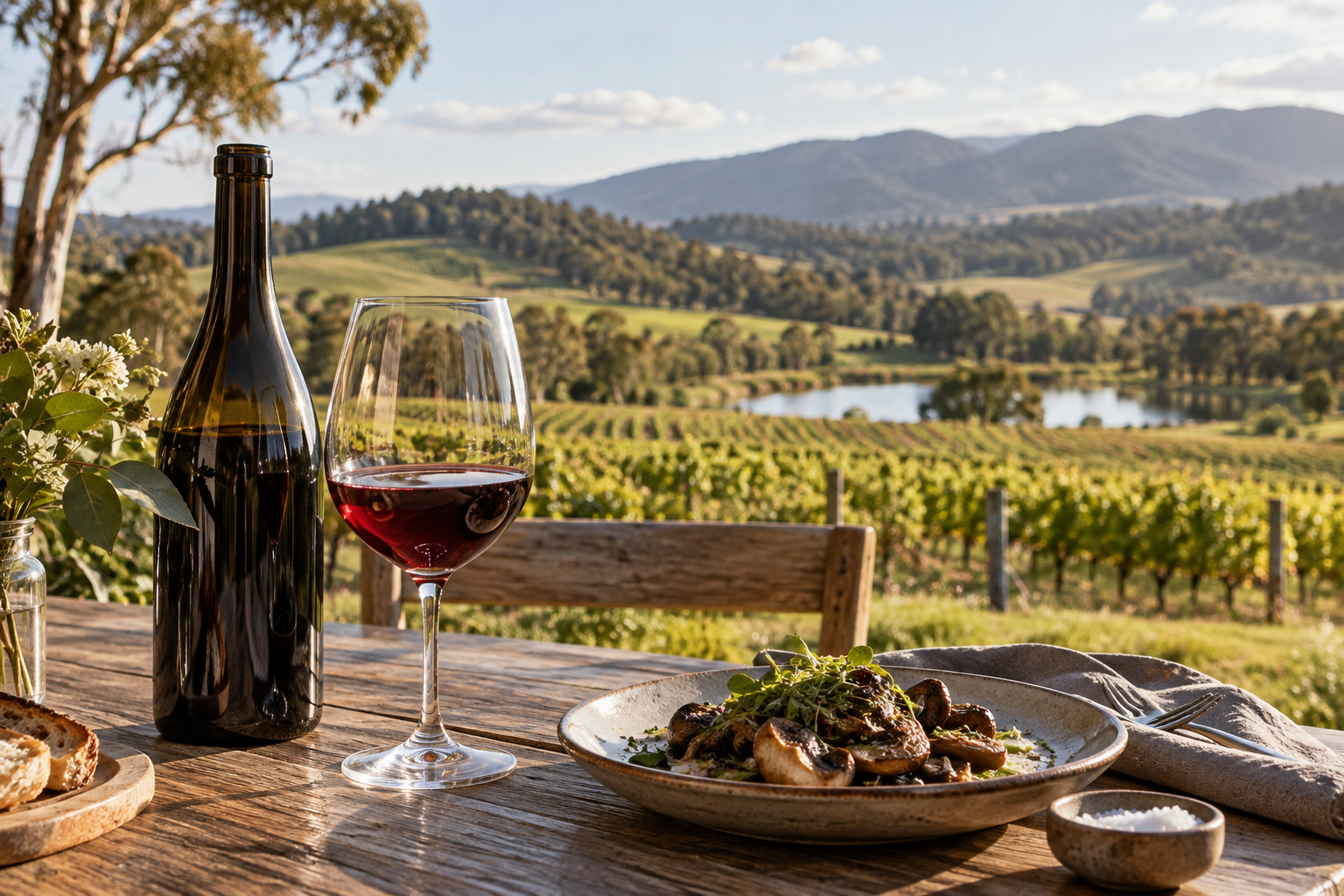
Soumah Pinot Noir is a Yarra Valley wine from a producer based in Gruyere, with vineyard-labelled bottlings and a premium Equilibrio selection. When comparing the 2019, 2020 and 2021 vintages, identify the complete wine name first: the selection, vineyard source and storage history matter alongside the harvest year. Equilibrio is a premium selection within Soumah’s range, not simply another name for its standard Pinot Noir.
What distinguishes Soumah Pinot Noir?
Soumah sits in the Gruyere district of the Yarra Valley, near the Warramate Hills. Its name refers to its position south of the Maroondah Highway. The producer’s Hexham vineyard is an important reference point when reading its Pinot Noir labels.
This is useful geographical context, but it is not a tasting note. Within the Yarra Valley, elevation, exposure, soils and picking decisions can produce noticeably different Pinot Noir styles, even between nearby vineyards.
For Soumah Pinot Noir, think in terms of red-fruit character, aromatic detail and fine tannin rather than expecting a heavy red wine. Those are useful stylistic expectations for the variety, not guaranteed descriptions of every vintage or bottle. Maturation and bottle age can shift the emphasis towards savoury, earthy and dried-fruit characters.
Soumah wines also include Chardonnay and varieties associated with northern Italy. For this comparison, however, the most useful question is narrower: which Pinot Noir bottling are you actually buying?
Our broader guide to Yarra Valley Pinot Noir producers, vineyards and vintages explains how regional and vineyard differences fit together.
Estate, Hexham and Equilibrio: read the complete label
Retail listings sometimes shorten wine names. A listing headed “Soumah Pinot Noir 2019” may leave out information that materially changes the comparison.
Look at the front label, back label and producer description together. Do not assume that “estate”, “Hexham” and “Equilibrio” are interchangeable, or that every vintage was released under an identical naming structure.
| Label wording | What it tells you | What to check before buying |
|---|---|---|
| Soumah Pinot Noir | Producer and grape variety | Full cuvée name, vintage and geographical indication |
| Hexham | A named vineyard associated with Soumah | Whether that vineyard appears on the actual bottle being sold |
| Estate wording | An estate association | The producer’s description of the vineyard source for that release |
| Equilibrio | A premium, selection-driven bottling | Vintage-specific source, winemaking details and condition |
| 2019, 2020 or 2021 | The grape harvest year | Storage history and whether the listing matches the bottle |
Equilibrio represents a more selective approach within the range, including barrel selection. That does not automatically mean a bigger, sweeter or more heavily oaked wine: balance and refinement are more useful expectations than sheer power.
If you are comparing value, compare equivalent labels. An Equilibrio bottle and a vineyard-labelled Pinot Noir from the same year answer different buying questions.
Soumah Pinot Noir 2019, 2020 and 2021: interpreting the vintages
Vintage helps explain growing conditions, but it cannot establish an individual bottle’s flavour or quality. The following notes describe broad Yarra Valley seasonal context, not verified tasting notes for each Soumah release.
Soumah Pinot Noir 2019
The Yarra Valley’s 2019 season was generally warm and dry, with heat influencing ripening and harvest decisions. For Pinot Noir, the timing of picking was especially important in balancing fruit ripeness with freshness.
When considering Soumah Pinot Noir 2019, distinguish original release descriptions from how a bottle might taste after several years of maturation. Fresh cherry characters can evolve towards dried cherry, forest-floor and other savoury notes, but development depends on the wine and its storage.
Ask whether the bottle came from a producer’s library, professional storage or an undocumented private collection. A sound older bottle may be more rewarding than a younger one, but age alone is not a quality guarantee.
Soumah Pinot Noir 2020
Uneven flowering and reduced yields were significant features of the Yarra Valley’s 2020 season. Lower yields do not automatically mean greater concentration or better wine; the resulting balance depends on the vineyard and winemaking decisions.
For Soumah Pinot Noir 2020, a vintage-specific producer technical sheet or a review of the exact bottling is more informative than a general regional score.
Australia’s bushfires also make smoke a reasonable question for buyers of 2020 wines. However, neither the vintage date nor the region alone establishes smoke impact. Do not assume a particular Soumah bottle was affected without evidence specific to that wine.
Soumah Pinot Noir 2021
The Yarra Valley’s 2021 season is widely regarded as favourable, with relatively mild conditions supporting measured ripening and freshness. It provides a useful starting point for shoppers interested in regional Pinot Noir, rather than a guarantee that every 2021 wine is superior.
When buying Soumah Pinot Noir 2021, check the selection and source before comparing it with 2019 or 2020. A change in bottling can be more consequential than the difference between two harvest years.
For another vineyard-specific comparison, our guide to Giant Steps Applejack Pinot Noir and its 2019–2021 vintages shows why site and vintage should be considered together.
Soumah Equilibrio Pinot Noir 2019: when the premium selection matters
Someone searching for Soumah Equilibrio Pinot Noir 2019 is looking for a specific wine, not simply any Soumah Pinot from that harvest.
Its premium positioning makes it relevant if you want to explore the producer’s selection process, compare wines from the same season or choose a bottle for a focused dinner. Nevertheless, the label alone does not establish how much longer it will cellar or whether it will suit your palate better.
If both wines are available, compare the 2019 Equilibrio with another Soumah Pinot Noir from 2019. Keeping the harvest year constant helps you focus on differences in selection and maturation.
Ask the seller for:
- The exact bottle label and vintage-specific producer notes.
- Details of provenance and storage.
- Any drinking guidance that applies to this release, rather than to the range generally.
Avoid paying a premium solely because a listing uses “rare” or “reserve” language. Bottle condition remains central.
Soumah versus Zonzo Pinot Noir
Zonzo Pinot Noir is a natural comparison for visitors exploring the Yarra Valley. Zonzo is based at Yarra Glen, while Soumah is based at Gruyere; both can be considered as winery stops, but their location does not tell you everything about the wine in a particular bottle.
For a fair comparison, use:
- The same vintage, where possible.
- A similar selection level, rather than comparing an entry bottling with Equilibrio.
- The geographical indication and vineyard information printed on each bottle.
- The same serving conditions, especially temperature and glass size.
Taste first without food, then alongside the same dish. Notice acidity, tannin texture, fruit character and the persistence of flavour rather than trying to declare one producer universally better.
If you enjoy decoding ranges, our explanation of De Bortoli’s Villages, Estate Vineyard and Riorret Pinot Noir labels offers another useful comparison. Producer names alone rarely make two bottles equivalent.
Serving Soumah Pinot Noir and choosing food
Temperature, glasses and opening
A practical serving target is approximately 14–16°C. In a warm Australian dining room, “room temperature” can leave Pinot Noir tasting less fresh, with alcohol more noticeable.
If the bottle feels warm, give it a short spell in the fridge and reassess. Avoid chilling it so thoroughly that the aromas become muted. Use a clean glass with enough bowl space to swirl without spilling.
For an older 2019 bottle, open it and taste a small pour before deciding to decant. If the wine is expressive and delicate, extended aeration may offer little benefit. If it seems closed, follow its development in the glass before committing to a long decant.
Where sediment is visible, let the bottle stand upright beforehand and pour gently. Sediment is not, by itself, a fault.
Food matches that respect the wine
Useful pairings include:
- Roast duck or chicken: savoury flavours without excessive chilli heat.
- Mushroom dishes: particularly with an evolved bottle showing earthy complexity.
- Salmon: richness balanced by Pinot Noir’s acidity.
- Pork or rabbit: especially with herbs and restrained sauces.
Keep strongly sweet glazes and intense chilli away from a subtle older bottle. For mushroom pasta, moderate cream and cheese allow more of the wine’s aroma to remain apparent.
You do not need a complicated menu. A roast chicken, crisp potatoes and lightly dressed greens can be a better match than a dish with several competing sauces.
Buying older bottles: a practical checklist
For 2019–2021 releases, provenance deserves at least as much attention as a score. A bottle stored in a hot garage may disappoint regardless of the vineyard’s reputation.
Before ordering:
- Confirm the exact wine. Ask for a bottle photograph if the listing is abbreviated.
- Ask about storage. Consistently cool conditions matter more than vague claims that a bottle was “cellared”.
- Inspect condition where possible. Leakage, a pushed cork or an unusually low fill level warrant questions.
- Check review identity. A score for Equilibrio should not be attributed to another Soumah Pinot Noir.
- Plan delivery. Avoid leaving wine in direct sun or arranging delivery during extreme heat where alternatives exist.
- Read the seller’s policy. Understand how it handles damaged deliveries and potentially faulty bottles.
A screwcap is not evidence of lower quality, and a cork is not proof of superior ageing. Both require sensible storage.
If the vintage is less important than the drinking experience, ask about current releases too. An available, well-stored younger bottle can be a more dependable purchase than an older wine with uncertain history.
Visiting Soumah wines: know before you go
Soumah’s Gruyere setting makes it practical to explore the central Yarra Valley without attempting to cover the entire region in one day. Coldstream Hills and Oakridge are useful names to consider when planning other wine stops in the wider area.
Check Soumah’s current tasting arrangements, booking requirements, restaurant service and accessibility information directly before travelling. Do not assume an advertised wine is available to taste, or that older Equilibrio vintages are held for cellar-door sale.
If a particular bottle is the purpose of your visit, ask in advance whether it is available for purchase and whether any tasting option includes it. A current-release tasting and a museum-vintage tasting are different experiences.
Choose two or three confirmed stops rather than a crowded itinerary. Allow time for lunch, tasting conversations and travel between properties. Use a designated driver or book suitable transport; winery visits should not depend on guessing whether someone is safe to drive.
For additional itinerary ideas, browse local partner businesses, including Coldstream Hills Cellar Door, Oakridge, De Bortoli Wines and Giant Steps.
Yarra Valley Pass rewards participation across the Yarra Valley and Dandenong Ranges: members earn Yarra Credits and redeem them for member rewards. Check current participation and eligibility before planning around a purchase; this article does not establish that a Soumah or Zonzo transaction qualifies.
The takeaway
Choose Soumah Pinot Noir by its full label, not just its vintage. Equilibrio, vineyard source and storage history all influence the comparison. Use 2019–2021 seasonal context as background, then prioritise the exact bottle, sensible serving and a food match that lets the wine speak.
Frequently asked questions
What is the difference between Soumah Pinot Noir and Equilibrio Pinot Noir?
Equilibrio is a premium, selection-driven bottling within Soumah’s range, including barrel selection. It should not be treated as interchangeable with every estate or vineyard-labelled Soumah Pinot Noir. Check the complete label and vintage-specific producer description when comparing bottles.
Which is the best Soumah Pinot Noir vintage: 2019, 2020 or 2021?
There is no reliable universal ranking without identifying the exact bottlings and their condition. Broadly, 2019 was warm and dry, 2020 had uneven flowering and reduced yields, and 2021 offered favourable, relatively mild growing conditions. Selection, storage and your preference for youthful or developed flavours remain important.
Was Soumah Pinot Noir 2020 affected by smoke?
The year and regional designation alone cannot establish smoke impact. Do not assume a particular Soumah 2020 bottle was affected because Australia experienced bushfires that season. Look for information specific to the wine from the producer or a reliable assessment of the exact release.
Should I decant Soumah Equilibrio Pinot Noir 2019?
Taste a small pour first. If the wine is already expressive and delicate, serve it without prolonged aeration. If it seems closed, monitor it in the glass before deciding to decant. Where sediment is present, stand the bottle upright beforehand and pour carefully.
How should I compare Soumah Pinot Noir with Zonzo Pinot Noir?
Compare the same vintage and similar selection levels, and check each bottle’s geographical indication and vineyard information. Serve both at approximately 14–16°C in similar glasses, then assess fruit character, acidity, tannin texture and flavour persistence with the same food.
Related reading
- Soumah Wines: Italian varieties, estate labels and visiting the vineyard
- Oakridge Pinot Noir: Willowlake, Henk, Hazeldene and 864 Explained
- Affordable Yarra Valley Chardonnay: entry-level wines compared
- Levantine Hill Pinot Noir: Colleen’s Paddock and 2016–2019 Vintages
- Top wineries in Yarra Valley: 10 benchmark producers and why they matter
- Tokar Estate Tempranillo: Wine Style, Food Pairings and Cellar Door