TarraWarra Pinot Noir: estate wines, vintage differences and the 2019 release
· Yarra Valley Pass
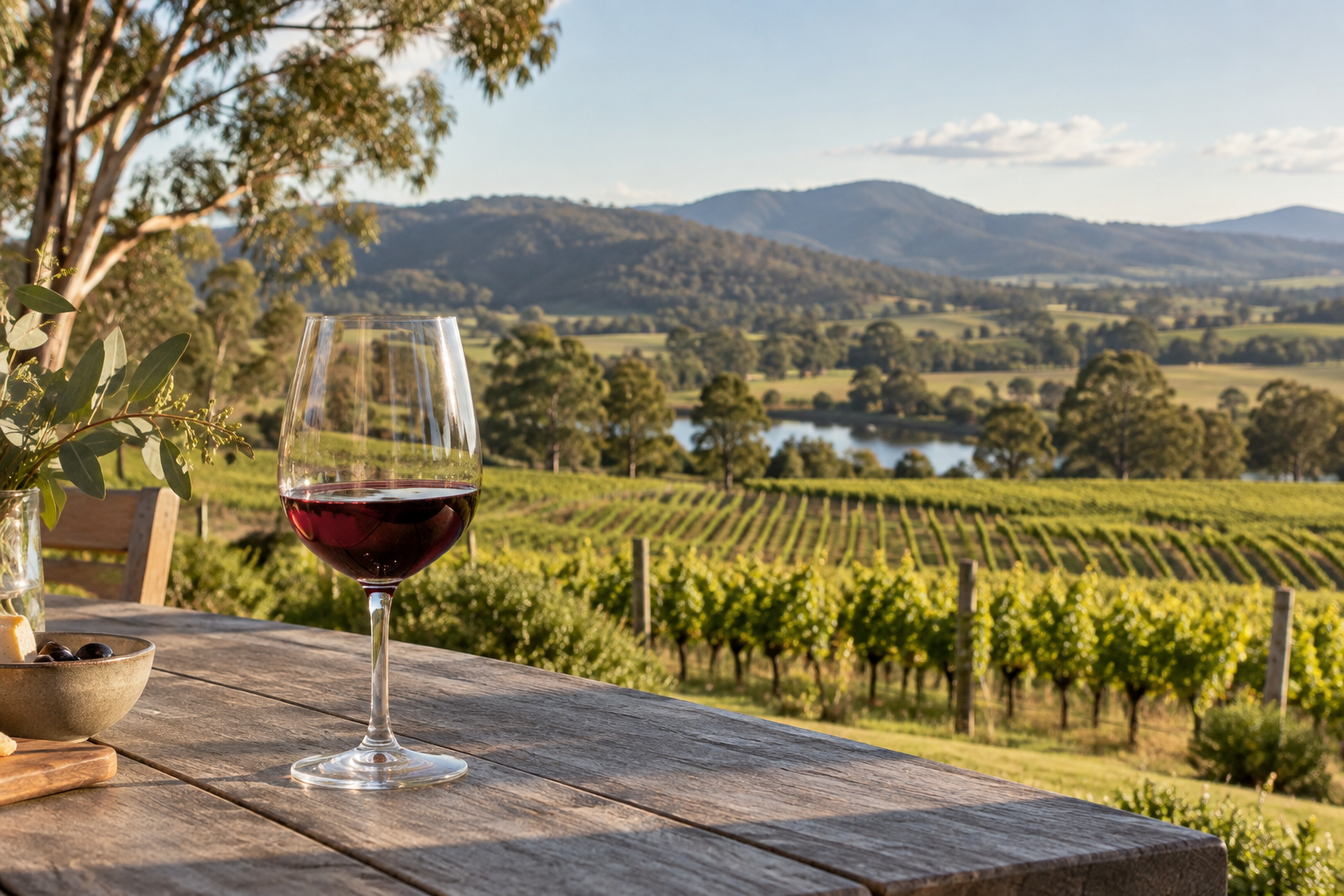
TarraWarra Pinot Noir is estate-grown Yarra Valley wine, with Estate and Reserve bottlings that should not be treated as interchangeable. If you are buying TarraWarra Pinot Noir 2019, confirm the exact label first, then assess storage history: an older bottle’s condition matters as much as its vintage. Expect Pinot Noir built around fruit, savoury detail and fine tannins, with bottle age potentially bringing more earthy complexity.
TarraWarra Pinot Noir: the estate and its setting
Established by Marc and Eva Besen in 1983, TarraWarra Estate is one of the Yarra Valley’s longstanding wine producers. Pinot Noir and Chardonnay are central to its identity.
The estate is on Healesville–Yarra Glen Road, between the two towns. Its rolling vineyard landscape is part of the experience, but the important wine distinction is that these are estate-based bottlings, rather than simply wines carrying a broad regional name.
Estate sourcing provides a consistent vineyard reference from year to year. It does not guarantee identical flavours: weather, picking decisions, vineyard selection and maturation all influence the finished wine.
For a wider explanation of how estate wines differ from regional blends and single-vineyard releases, start with our Yarra Valley Pinot Noir guide.
TarraWarra Estate Pinot Noir versus Reserve
The most useful first step is to separate the standard Estate Pinot Noir from Reserve Pinot Noir. Retail listings sometimes shorten names, so read the label photograph rather than relying solely on a search result.
An important naming detail: “TarraWarra Estate” is also the producer’s name. Seeing “Estate” in a listing does not, by itself, prove that the bottle is the standard Estate release. Look specifically for the word “Reserve”.
| What you are comparing | Estate Pinot Noir | Reserve Pinot Noir |
|---|---|---|
| Position in the range | The core estate Pinot Noir bottling | A more selective estate bottling |
| General buying purpose | Exploring the estate’s style; drinking with food | Exploring greater concentration and ageing potential |
| What to verify | Vintage and complete label name | Vintage and explicit Reserve designation |
| For an older bottle | Storage history and present condition | Storage history and present condition remain essential |
The Estate wine is generally the more approachable introduction. Reserve involves greater selection and is positioned for more depth and cellaring potential, but that does not mean every Reserve bottle will taste heavier or more obviously oaky.
Likewise, “Reserve” is not a guarantee that an older bottle is in better condition. A carefully stored Estate wine can be a better purchase than a Reserve bottle exposed to heat.
TarraWarra Pinot Noir 2019: what to expect
The 2019 release needs to be considered as an older-vintage purchase, not assumed to be the wine currently poured or sold at the cellar door. Availability may come through retailers, private collections or occasional back-vintage offerings.
What the vintage tells you
Across much of the Yarra Valley, 2019 brought warm, dry conditions through important parts of ripening. That provides useful regional context, but it is not a complete tasting note for either TarraWarra bottling.
A warmer season can encourage riper fruit expression. The actual result still depends on site, harvest timing and winemaking. Pinot Noir harvested to preserve freshness can retain fine structure even in a warm year.
Avoid applying one review indiscriminately to every bottle labelled “TarraWarra 2019”. A note for 2019 Reserve Pinot Noir is not evidence that the standard 2019 Estate Pinot Noir has the same concentration, oak treatment or ageing trajectory.
How bottle age may change the wine
In youth, Pinot Noir commonly shows cherry, berry and floral characters. With age, those primary flavours can become less prominent while dried fruit, forest-floor, mushroom and other savoury notes develop.
These are possibilities, not a promise about an unopened TarraWarra 2019 bottle. Storage, closure performance and the individual wine’s structure influence how it develops.
If you enjoy bright, freshly released Pinot, an older vintage may not be your best match. If you prefer savoury detail alongside fruit, a sound 2019 bottle could be more appealing.
A buying checklist for 2019
Before purchasing, ask for:
- The full label name: Estate or Reserve, with a clear bottle photograph.
- Storage history: temperature-controlled storage is preferable to an unknown garage or shop-window history.
- Condition details: look for leakage, unusual ullage or a visibly compromised closure.
- The seller’s condition policy: particularly important with older wine.
- The relevant vintage note: use the producer’s technical information where available, matching both year and bottling.
A clean label does not prove good storage, and a prestigious bottling does not compensate for heat exposure. Be particularly cautious when a seller offers only a generic image and no information about provenance.
Understanding vintage differences in Yarra Valley Pinot Noir
Vintage comparisons are most useful when you hold the producer and bottling constant. Comparing TarraWarra Estate 2019 with TarraWarra Reserve from another year mixes vintage variation with a change in selection.
The region’s 2021 season is widely associated with cooler conditions than 2019. As a broad tasting framework, you might investigate whether a 2019 wine feels riper and more developed, while a 2021 counterpart shows fresher fruit or a firmer acid line. Neither outcome is guaranteed for every producer.
Bottle age also complicates the comparison. The older wine has had more time to evolve, so a softer impression may reflect maturation rather than growing-season warmth alone.
For a useful side-by-side tasting, buy the same TarraWarra label from two years, serve both at the same temperature and compare fruit character, acidity, tannin and finish. Our Mac Forbes guide to regional blends, vineyard wines and vintages offers another perspective on separating site from season.
TarraWarra versus Yarra Yering Pinot Noir
Yarra Yering Pinot Noir is a relevant comparison because Yarra Yering is another established Yarra Valley estate. It is based in Gruyere, with a different vineyard setting and its own production decisions.
The useful question is not simply “Which winery is better?” It is “Which exact bottles are being compared?” TarraWarra Estate, TarraWarra Reserve and Yarra Yering Pinot Noir represent different selections, and their vintages may also differ.
To make the comparison meaningful:
- Choose the same vintage where possible. Otherwise, acknowledge both season and bottle-age differences.
- Compare equivalent condition. One wine from professional storage and another with unknown provenance is not a fair test.
- Taste before checking reviews. Record your own impression of fruit, freshness, texture and finish.
- Include food. A wine that seems restrained alone may become more compelling alongside dinner.
For a third reference point, consider a named vineyard wine rather than another broad regional bottling. Our Giant Steps Applejack Pinot Noir guide explains that vineyard and its 2019–2021 vintages.
This approach reveals what you actually prefer, rather than treating reputation or price as a substitute for tasting.
Serving and food pairings
Serve TarraWarra Pinot Noir slightly cool, around 14–16°C, rather than at a warm Australian room temperature. A short spell in the fridge can help if the bottle has been sitting in a heated dining room.
Use a glass with enough bowl space for aromas to develop. You do not need specialist stemware, but a small, tightly shaped glass can make a nuanced Pinot harder to assess.
Should you decant a 2019 bottle?
Start cautiously. Open the bottle, pour a small taste and give it a little time in the glass before deciding whether more air is useful.
If there is sediment, stand the bottle upright ahead of serving and pour carefully. Gentle decanting can separate wine from sediment, but an older Pinot should not automatically receive several hours in a broad decanter.
Food that suits the style
Useful matches include:
- Roast duck: fruit and acidity balance richness without requiring a heavy red.
- Mushroom risotto: earthy flavours can complement savoury bottle development.
- Roast chicken with thyme: a good match when you want the wine’s subtler details to remain visible.
- Pork with lentils: especially suitable when the sauce is restrained rather than sweet.
For an older 2019 bottle, avoid very hot chilli or intensely sweet glazes. Both can overwhelm delicate aromas and make the wine seem less balanced.
Visiting TarraWarra: know before you go
TarraWarra makes sense as a stop when travelling between Yarra Glen and Healesville. The estate offers a cellar-door experience and restaurant, while the neighbouring TarraWarra Museum of Art adds a separate cultural reason to visit.
Plan the wine, dining and museum components individually. Do not assume a tasting reservation includes restaurant seating or exhibition entry.
Ask for the tasting that answers your question
If your main interest is Pinot Noir, ask whether the available tasting includes both Estate and Reserve. That comparison is more informative than tasting only one wine and trying to infer the rest of the range.
If you specifically want the 2019 vintage, enquire before travelling. An older wine appearing in an online search does not establish that it is available for tasting or purchase at the estate.
Useful questions include:
- Which Pinot Noir vintages are currently available?
- Can Estate and Reserve be tasted together?
- Are any back vintages available, and on what basis?
- Is a tasting booking required for your intended visit?
Confirm current opening days, tasting arrangements, fees and restaurant availability directly before setting out. Exhibition schedules should also be checked separately.
Keep the itinerary manageable and arrange a designated driver or suitable transport if you plan to taste at several wineries. For another producer to research when shaping your route, our Coldstream Hills Pinot Noir guide explains its labels and vintage comparisons.
Make your wider valley visit count
Yarra Valley Pass rewards participation across the Yarra Valley and Dandenong Ranges. Members earn Yarra Credits and redeem them for member rewards on this website. When planning other stops, browse local partner businesses, including Coldstream Hills Cellar Door, De Bortoli Wines and Giant Steps, and check the current participation details. TarraWarra is not included in the supplied partner list, so do not assume a TarraWarra purchase qualifies.
The bottom line
Choose TarraWarra Pinot Noir by exact label first, vintage second and bottle condition throughout. For 2019, reliable provenance matters more than a borrowed tasting note or score. Whether you buy Estate or Reserve, serve it thoughtfully and use a cellar-door visit to sharpen your understanding of the difference.
Frequently asked questions
What is the difference between TarraWarra Estate Pinot Noir and Reserve Pinot Noir?
Estate Pinot Noir is the core estate bottling, while Reserve is a more selective wine positioned for greater depth and ageing potential. Because TarraWarra Estate is also the producer’s name, check for the explicit word “Reserve” on the label rather than relying on a shortened retailer listing.
Is TarraWarra Pinot Noir 2019 ready to drink?
A well-stored 2019 bottle may be enjoyable now, but there is no reliable drinking recommendation that covers both Estate and Reserve or every storage history. Expect the possibility of more savoury development than in a young release, and assess the bottle gently after opening.
Can I taste TarraWarra Pinot Noir 2019 at the cellar door?
Do not assume the 2019 vintage is available. Contact the estate before visiting to confirm current tasting wines, whether Estate and Reserve can be compared, and whether any back vintages are offered.
How does TarraWarra compare with Yarra Yering Pinot Noir?
Both are established Yarra Valley estate producers, but they have different vineyard settings and make distinct wines. Compare the same vintage where possible, identify the exact TarraWarra bottling and use bottles with comparable storage histories rather than choosing by reputation alone.
What food goes well with TarraWarra Pinot Noir?
Roast duck, mushroom risotto, herb-roasted chicken and pork with lentils are useful starting points. With an older bottle such as 2019, restrained sauces help preserve the wine’s subtler aromas; very hot chilli and sweet glazes can overwhelm them.
Related reading
- Soumah Wines: Italian varieties, estate labels and visiting the vineyard
- Oakridge Pinot Noir: Willowlake, Henk, Hazeldene and 864 Explained
- Affordable Yarra Valley Chardonnay: entry-level wines compared
- Levantine Hill Pinot Noir: Colleen’s Paddock and 2016–2019 Vintages
- Top wineries in Yarra Valley: 10 benchmark producers and why they matter
- Tokar Estate Tempranillo: Wine Style, Food Pairings and Cellar Door