Yering Station Pinot Noir: Village, The Elms and vintage labels explained
· Yarra Valley Pass
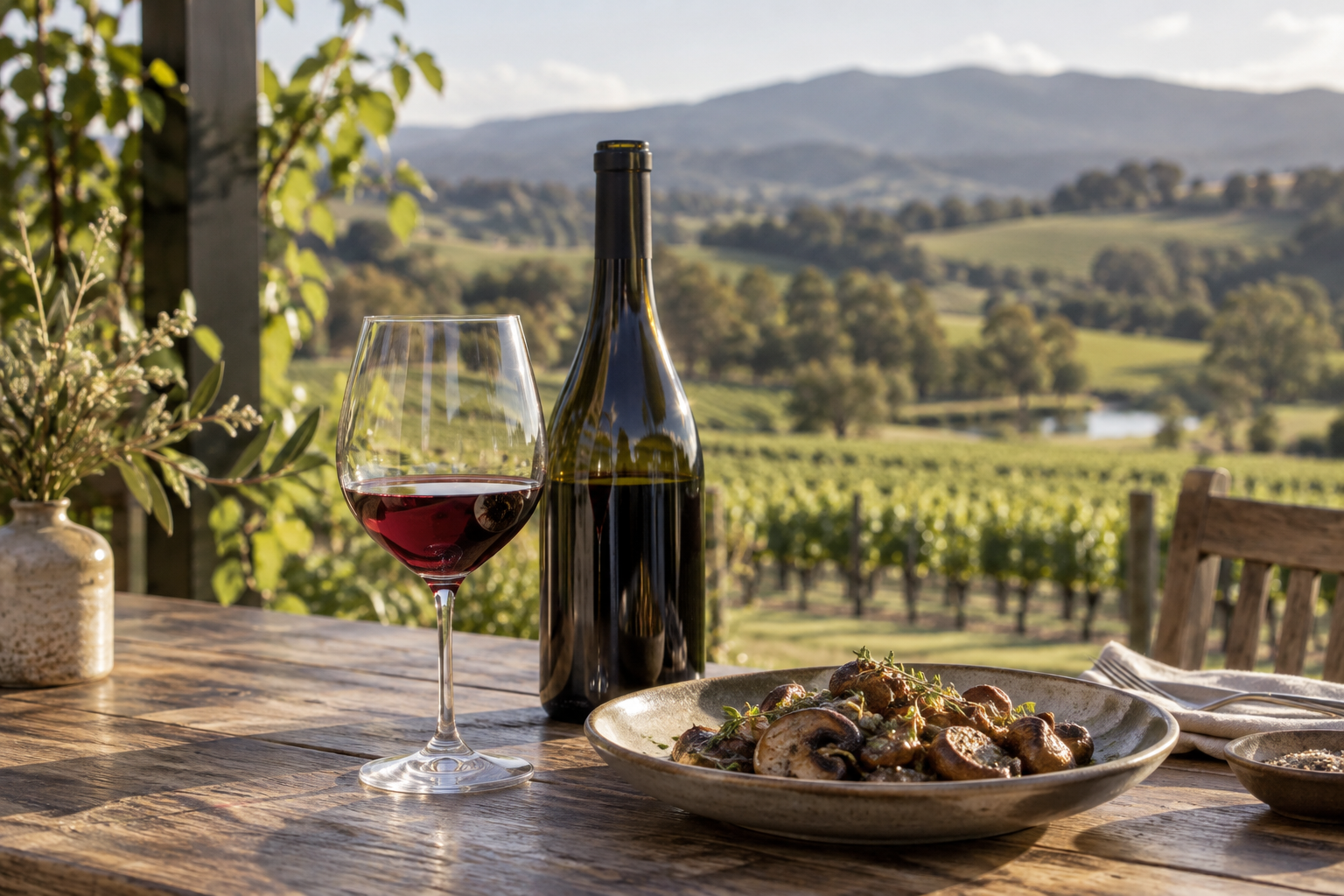
Yering Station Pinot Noir is not one interchangeable wine: Village, The Elms and the producer’s main Yarra Valley bottling need to be identified separately before comparing vintages. Read the full range name, geographical indication and year on the bottle; a retailer’s shortened title may leave out an important distinction. For older releases such as 2017 and 2019, storage history matters alongside the vintage’s reputation.
Yering Station Pinot Noir: understand the label first
Yering Station traces its vineyard history to 1838 and is based in Yarra Glen. That history provides useful context, but it does not mean every wine bearing the producer’s name comes from the same vineyard or follows the same winemaking recipe.
When browsing Yering Station wine, start with these distinctions:
| Label or listing | How to interpret it | What to check before buying |
|---|---|---|
| Yering Station Village Pinot Noir | A distinct regional range, generally positioned for approachable drinking | The vintage and the complete Village label |
| Yering Station The Elms Pinot Noir | A separate label, not another name for Village | The geographical indication on that particular bottle |
| Yering Station Pinot Noir, labelled Yarra Valley | The producer’s main regional Pinot Noir listing, unless another range is specified | Whether the bottle and description identify the same wine |
| Yering Station Reserve Pinot Noir | A separate, higher-tier wine | That the listing actually says Reserve, rather than simply using premium language |
Australian wine-labelling rules also help explain what the bottle tells you. A single variety, vintage or geographical indication generally requires at least 85% of the wine to satisfy that claim. A Yarra Valley designation identifies regional origin; it does not, by itself, mean a single vineyard or exclusively estate-grown fruit.
For the bigger regional picture, see our guide to Yarra Valley Pinot Noir producers, vineyards and vintages.
Yering Station Village Pinot Noir
Yering Station Village Pinot Noir is best understood as its own range, rather than a discounted version of whichever standard or Reserve wine appears beside it.
Its general appeal is accessibility: Pinot Noir suited to drinking without assuming years of cellaring. That does not mean every vintage tastes identical, or that an older Village bottle cannot be enjoyable. It means you should assess it against its intended style rather than expect the concentration or ageing trajectory of a higher-tier release.
For a dinner-party bottle, Village is a sensible range to investigate. Ask about the current release, whether it has been tasted recently, and whether its fruit and tannins suit your menu.
Yering Station Village Pinot Noir 2019
A listing for Yering Station Village Pinot Noir 2019 identifies both a range and a vintage. It should not be treated as equivalent to a bottle described simply as Yering Station Pinot Noir 2019.
Because this is now an older release, provenance becomes important. Prefer a seller who can explain where it has been stored, rather than one relying solely on an old review score. At this stage, secondary savoury characters may be more noticeable than in a newly released Village wine, but condition determines whether that development is attractive.
If buying several bottles, trying one first is more useful than assuming the entire parcel will suit your taste.
Yering Station The Elms Pinot Noir
Yering Station The Elms Pinot Noir needs particular care when comparing retailer listings. The producer’s location does not automatically establish the origin of every associated bottling: use the geographical indication printed on the bottle.
The Elms is a distinct label. Do not transfer Village tasting notes, vineyard details or drinking windows onto it simply because both wines share the Yering Station name.
If an online listing has only a generic photograph, request an image of the actual front and back labels. That resolves three common uncertainties at once: the range, the vintage and the declared region.
What does “Yering Station Yarra Pinot Noir” mean?
Yering Station Yarra Pinot Noir can be retailer shorthand for a Yarra Valley-labelled wine. The shortened wording alone does not establish a separate official range.
Look for the complete bottle name. If Village, The Elms or Reserve appears on the label, that information should guide your comparison. If it does not, check the producer’s description of the standard Yarra Valley Pinot Noir.
This is especially important when comparing prices: similar search results may represent different wines, not competing offers for the same bottle.
Yering Station Pinot Noir 2017, 2019, 2020 and 2021
Vintage gives useful context, but it is not a substitute for identifying the range. Regional weather summaries describe broad growing conditions; they cannot provide a verified tasting note for every Yering Station bottling.
| Vintage search | Broad Yarra Valley context | Practical buying priority |
|---|---|---|
| Yering Station Pinot Noir 2017 | A cooler season with a later harvest than warmer years | Storage history and current bottle condition |
| Yering Station Pinot Noir 2019 | Warmer, drier conditions, including significant summer heat | Balance, range identity and provenance |
| Yering Station Pinot Noir 2020 | A challenging season, with low yields in many vineyards and bushfire concerns across parts of Victoria | Producer-specific information rather than assumptions from headlines |
| Yering Station Pinot Noir 2021 | A cooler, generally well-regarded regional season | The individual wine’s structure and readiness, not vintage reputation alone |
Buying the 2017 and 2019 releases
For Yering Station Pinot Noir 2017, do not assume that a cooler season guarantees a bottle is still improving. A well-stored wine and one exposed to fluctuating temperatures can age very differently.
The same applies to Yering Station Pinot Noir 2019. Warmer conditions can influence fruit ripeness, but they do not prove that every wine will be fuller-bodied, higher in alcohol or longer-lived. Vineyard position, picking decisions and winemaking also matter.
For either vintage, inspect the fill level, closure and signs of leakage. These checks can reveal concerns, although an apparently sound bottle is not a guarantee of perfect condition. Avoid older stock that has spent prolonged periods in a bright, warm display window.
Understanding the 2020 vintage
For Yering Station 2020 Pinot Noir, separate regional concerns from evidence about the actual wine. Bushfire headlines do not establish that an individual bottled wine has smoke taint.
Ask for the producer’s vintage information and a tasting assessment of the specific release. If buying a case of older stock, tasting a bottle first is a practical precaution.
Also check that a 2020 product description is not paired with a photograph or review from another year. Retailers sometimes retain generic imagery, making the vintage selector and written confirmation important.
Understanding the 2021 vintage
Yering Station 2021 Pinot Noir benefits from the interest surrounding a strong regional season, but vintage enthusiasm should not erase differences between Village, the standard bottling and Reserve.
A wine with more structure may need additional time or air; an approachable release may already be drinking comfortably. The useful question is not simply “Is 2021 good?” but “Which 2021 wine is this, and how is it showing now?”
Our Mac Forbes guide to regional blends, vineyard wines and the 2021 vintage offers another perspective on why vineyard and range distinctions matter within the same year.
What to expect in the glass
Yarra Valley Pinot Noir commonly combines red-fruit flavours with freshness, fine tannins and varying degrees of spice or savoury complexity. Cherry, raspberry, earthy notes and oak-derived spice are useful reference points, not guaranteed descriptors for every Yering Station release.
When assessing a Yering Station Pinot, pay attention to balance rather than colour alone. Pinot Noir can be relatively pale while still having flavour, length and structure.
A useful tasting sequence is:
- Smell before swirling. Note whether the wine seems fresh, closed or already expressive.
- Take a small sip. Consider acidity, tannin and fruit together.
- Give it a little air. Revisit after ten minutes rather than judging immediately.
- Try it with food. A savoury dish can change how the wine’s acidity and tannins feel.
For an older bottle, gentle development is different from obvious deterioration. Persistent vinegar-like aromas, severe oxidation or a musty cork-taint character warrant discussion with the seller. Some unusual opening aromas dissipate, so allow a little time before reaching a conclusion.
Serving temperature and food pairings
Aim for roughly 14–16°C, adjusting to your preference and the wine’s structure. A warm Australian kitchen can make Pinot Noir seem softer and more alcoholic; a brief refrigerator chill can help.
Start with a short period of air for a younger bottle. For mature 2017 or 2019 wines, open carefully and taste before deciding whether to decant. Prolonged aeration is not automatically beneficial.
Useful food matches include:
- Roast duck or chicken: savoury flavours without overwhelming delicate fruit.
- Mushroom dishes: earthy flavours that suit Pinot Noir’s savoury side.
- Salmon: particularly roasted or pan-seared preparations.
- Pork with herbs: a versatile match for fresher, medium-bodied styles.
Very sweet sauces and intense chilli can dominate a subtle bottle. Keep accompaniments restrained when opening an older wine.
Comparing Yering Station with other local Pinot Noir
Coldstream Hills Pinot Noir is a useful neighbouring reference, but compare equivalent wines wherever possible. A current regional bottling and an older premium release do not make a controlled comparison.
For a two-bottle tasting, choose the same vintage where available, serve both at the same temperature and use similar glasses. Look for differences in fruit profile, acidity, tannin and oak rather than trying to declare one producer universally better.
Our Coldstream Hills guide to The Hills range and 2019–2021 vintages helps distinguish that producer’s labels. The De Bortoli comparison of Villages, Estate Vineyard and Riorret also shows why a range name matters: similar words across wineries do not guarantee identical sourcing or style.
Know before you buy or visit
Yering Station’s Yarra Glen location makes it a natural consideration for a northern Yarra Valley outing. Check the winery’s current cellar-door arrangements directly before travelling, including booking requirements, tasting availability and whether the wine you want is being poured.
Older vintages advertised online may not be available for tasting at the cellar door. A current-release visit can help you understand the producer’s approach, but it cannot confirm the condition of a separately sourced 2017 bottle.
Before purchasing, ask:
- Is the photograph of the actual bottle and vintage?
- Does the invoice identify Village, The Elms, standard Pinot Noir or Reserve?
- How has older stock been stored?
- What is the seller’s policy if the bottle is faulty?
For a broader day out, browse local partner businesses. Coldstream Hills Cellar Door, De Bortoli Wines, Oakridge and Giant Steps are among Yarra Valley Pass partners. Confirm each venue’s current arrangements and organise a designated driver or suitable transport rather than squeezing too many tastings into one day.
Yarra Valley Pass members earn Yarra Credits through participation and redeem them for member rewards. Check the current qualifying activities and reward details when planning your visit; do not assume every winery purchase qualifies.
The bottom line
Choose Yering Station Pinot Noir by range first, vintage second and bottle condition third. Village, The Elms and Yarra Valley-labelled releases are not interchangeable, and older vintages deserve a provenance check. With the label confirmed and sensible serving conditions, you can make a much more informed choice than a search result or vintage score alone allows.
Frequently asked questions
What is the difference between Yering Station Village Pinot Noir and The Elms Pinot Noir?
Village and The Elms are distinct labels, not alternative names for the same wine. Village is generally positioned as an approachable regional range. For The Elms, check the geographical indication on the actual bottle rather than assuming its origin from the producer’s name.
Is Yering Station Yarra Pinot Noir a separate wine range?
Not necessarily. The wording can be retailer shorthand for Yering Station’s Yarra Valley Pinot Noir. Check the full label for Village, The Elms, Reserve or another range designation before comparing listings.
Is Yering Station Pinot Noir 2019 better than 2021?
There is no reliable universal ranking across all labels. The Yarra Valley’s 2019 season was warmer and drier, while 2021 was cooler and generally well regarded. The specific range, winemaking, storage and your taste preferences matter more than the year alone.
Can you still drink Yering Station Pinot Noir 2017?
A well-stored bottle may still be enjoyable, but the vintage alone cannot establish its condition. Confirm the range, ask about storage, inspect for leakage or an unusually low fill level, and taste before giving it prolonged air.
What temperature should Yering Station Pinot Noir be served at?
Around 14–16°C is a useful starting point. Briefly chill a bottle that is too warm, then let it develop in the glass. Open older wines gently and taste before deciding whether they need decanting.
Related reading
- Soumah Wines: Italian varieties, estate labels and visiting the vineyard
- Oakridge Pinot Noir: Willowlake, Henk, Hazeldene and 864 Explained
- Affordable Yarra Valley Chardonnay: entry-level wines compared
- Levantine Hill Pinot Noir: Colleen’s Paddock and 2016–2019 Vintages
- Top wineries in Yarra Valley: 10 benchmark producers and why they matter
- Tokar Estate Tempranillo: Wine Style, Food Pairings and Cellar Door