Best vineyard in Yarra Valley: landscapes and experiences compared
· Yarra Valley Pass
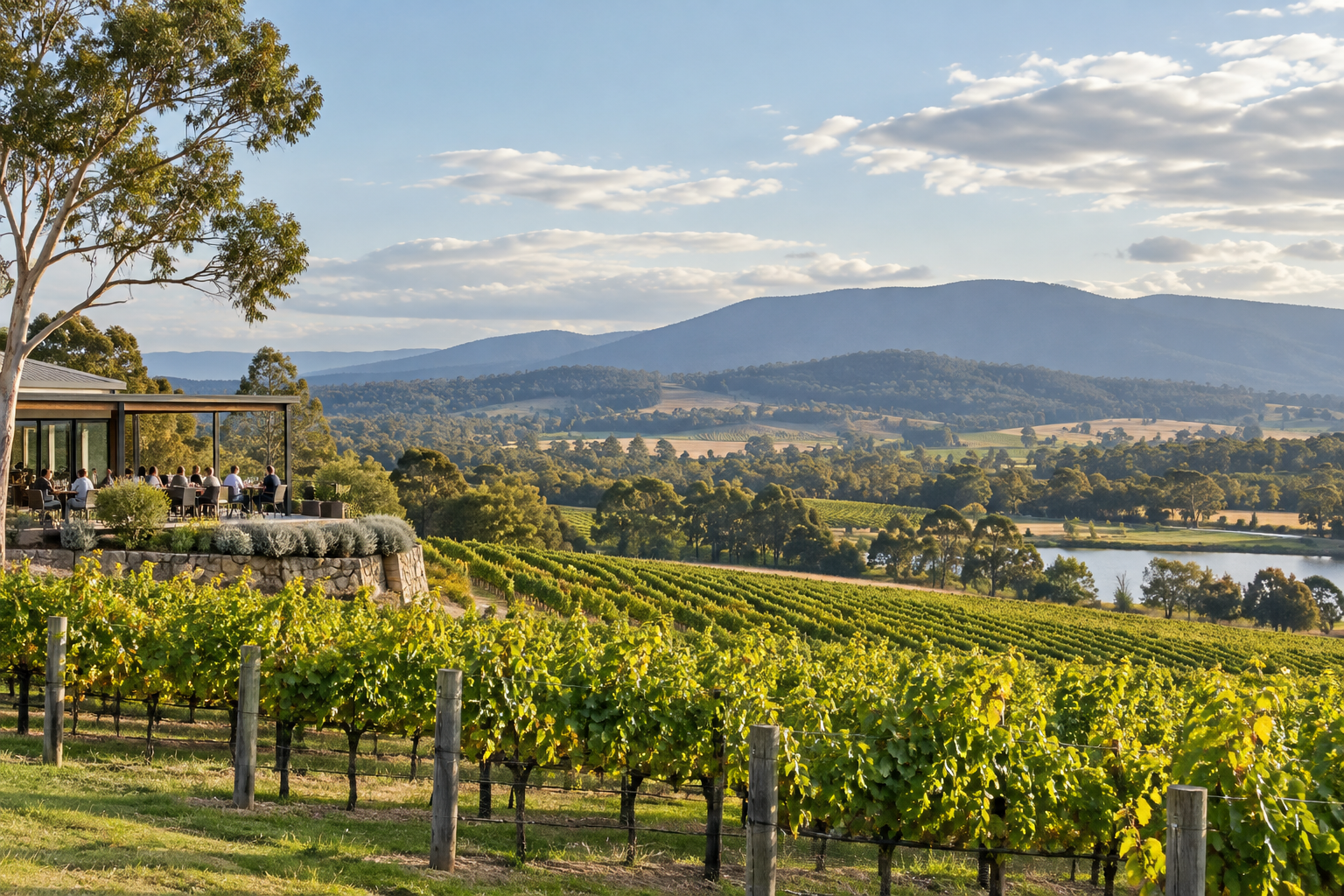
The best vineyard in Yarra Valley for a first visit is arguably Yering Station, thanks to its historic winery setting, landscaped grounds and valley outlook. For different experiences, shortlist Yarrawood for relaxed vineyard views, Killara Estate for an Upper Yarra landscape, or Soumah for Italian-influenced wines near the Warramate Hills. There is no universal winner: the right choice depends on whether scenery, wine, lunch or a manageable driving route matters most.
Best vineyard in Yarra Valley: compare the main contenders
A beautiful vineyard and an excellent cellar door are not necessarily the same thing. Some estates combine vines, tasting facilities and dining in one place; other celebrated producers welcome visitors away from the vineyards that supply their wines.
Start with the experience you actually want, rather than choosing solely from a photograph.
| Vineyard or winery | Location | Landscape and atmosphere | Best suited to |
|---|---|---|---|
| Yering Station | Yering | Historic buildings, landscaped grounds and open valley views | A first visit combining wine, architecture and scenery |
| Yarrawood Estate | Yarra Glen | Vineyard rows across an undulating estate | A relaxed visit centred on the vineyard outlook |
| Killara Estate | Seville East | Sloping vineyards and an Upper Yarra rural setting | Travellers exploring the valley’s southern side |
| Soumah Wines | Gruyere | Vineyard setting near the Warramate Hills | Wine lovers interested in Italian varieties alongside regional classics |
| Oakridge | Coldstream | Contemporary hospitality spaces overlooking vines | A wine-focused visit with a destination dining option |
For the broader regional picture, use our guide to Yarra Valley vineyards and cellar doors alongside this landscape-led comparison.
What makes a Yarra Valley vineyard worth visiting?
The most satisfying vineyard visits usually bring together three things: a setting you enjoy, wines you want to understand and a format that suits your group.
Landscape: Decide whether you prefer open valley views, hillside vines, gardens or a more intimate estate. The Yarra Valley is not one uniform landscape, and vineyards around Coldstream can feel quite different from those around Seville East.
Wine: Chardonnay and Pinot Noir are regional benchmarks, but they are not the whole story. Cabernet Sauvignon, Shiraz, sparkling wine and Italian varieties can all shape a visit.
Experience: A seated tasting, café stop and restaurant lunch involve different commitments. Check which experience is actually offered before organising your day around it.
Also distinguish an estate wine from a single-vineyard wine. The vineyard outside a cellar door may not be the source of every bottle being poured. Asking where a wine’s fruit was grown can make the landscape much more meaningful.
Yering Station vineyard: the strongest all-round starting point
Yering Station suits visitors who want more than a tasting bench. Its history reaches back to a vineyard planted in 1838, while the visitor setting combines heritage buildings with contemporary architecture.
That contrast is its particular appeal. You can appreciate the property’s history, look across the surrounding landscape and make wine the centre of the visit without feeling that scenery is an afterthought.
The Yering Station vineyard experience is especially useful for a first-time visitor travelling with someone whose interests extend beyond wine. Buildings, gardens and the estate setting provide other things to notice and discuss.
When tasting, ask which wines come from estate vineyards and which reflect other Yarra Valley sites. That helps connect what is in the glass with the region beyond the property.
Choose Yering Station if: you want a balanced introduction to the valley, with history and architecture alongside wine.
Consider another estate if: your priority is a smaller-scale atmosphere or a tasting focused on less familiar grape varieties.
Allow time to appreciate the grounds rather than treating the property as a quick stop between bookings.
Yarrawood Estate Winery: put the vineyard outlook first
Yarrawood Estate Winery, near Yarra Glen, is a useful option when your idea of a vineyard visit is closely tied to the view: vine rows, undulating land and a distinctly rural setting.
Its appeal is less about ticking off a famous landmark and more about spending time in the landscape. That makes it worth considering for visitors who prefer an unhurried stop over a densely scheduled tasting day.
Position Yarrawood within a Yarra Glen itinerary rather than combining it automatically with properties on the opposite side of the region. A shorter route leaves more time for the outlook you came to enjoy.
Choose Yarrawood if: scenery and a relaxed pace matter as much as analysing individual wines.
Before building a meal stop around the estate, confirm its current food service and booking arrangements. A scenic property does not necessarily offer the same hospitality format every day.
For photographs, use designated visitor areas; vineyard rows are working agricultural land, not automatically public walking tracks.
Killara Estate Winery: explore the Upper Yarra setting
Killara Estate Winery is in Seville East, making it geographically distinct from the Coldstream–Yering–Yarra Glen cluster. Its sloping vineyards and surrounding rural landscape offer a different perspective on the region.
This is a good choice if you are already exploring the southern side of the valley. It is less practical as a casual extra stop on a day otherwise concentrated around Yarra Glen or Dixons Creek.
Killara’s Italian influence is another point of difference. Rather than expecting the same selection at every cellar door, ask which available wines best express the estate’s identity and how they suit food.
Choose Killara Estate if: you want a hillside vineyard setting and a visit that fits an Upper Yarra route.
Plan it as a destination, not a detour squeezed between distant reservations. Our guide to Killara Estate’s wines, setting and visitor planning provides a more focused starting point.
If lunch is essential, confirm the current dining format before booking transport or another tasting around it.
Soumah Wines: Italian varieties near the Warramate Hills
Soumah Wines is in Gruyere, near the Warramate Hills. Its vineyard setting makes it a compelling option for visitors who want both scenery and a distinctive wine conversation.
Chardonnay and Pinot Noir remain important here, but Soumah’s interest in northern Italian varieties gives you a reason to look beyond the usual regional shortlist. Nebbiolo is one example worth asking about when available.
For a useful tasting, compare a familiar variety with something less familiar. Ask how ripening, acidity and tannin differ, and what those differences mean at the table. You do not need technical knowledge to get more from the experience.
Choose Soumah if: you enjoy discovering varieties and want a vineyard visit with an Italian-influenced identity.
Gruyere also works well for a compact wine-focused outing, with Coldstream Hills another option in the area. Avoid assuming that nearby properties share access roads or entrances.
Read our guide to Soumah’s Italian varieties, estate labels and vineyard visits before deciding which tasting or dining experience to book.
Other Yarra Valley wineries worth comparing
The four headline choices are not the only contenders. These alternatives help clarify what you value most.
Oakridge: wine detail and dining in Coldstream
Oakridge combines a vineyard outlook with a strong wine and food identity. It is particularly appealing if you want to explore Chardonnay and Pinot Noir while making lunch a substantial part of the day.
Its wines also offer a way to understand differences between vineyard sites. Our explanation of Oakridge’s wine range and vineyard sources helps you look beyond the estate view to the origins of individual bottles.
Dominique Portet and De Bortoli: contrasting estate experiences
Dominique Portet in Coldstream brings a French-influenced winemaking identity, with rosé and Cabernet Sauvignon among the styles to explore.
De Bortoli’s Yarra Valley estate in Dixons Creek suits a northern-valley itinerary, with a family wine heritage and Italian-influenced hospitality. These are useful alternatives when the wines or dining style matter more than finding one supposedly definitive view.
Giant Steps: choose it for wine, not a vineyard panorama
Giant Steps in Healesville is an important distinction. Its reputation is closely connected to Chardonnay, Pinot Noir and individual vineyard sites, but a town-based cellar-door visit is not the same as sitting beside those vineyards.
Choose it for understanding wines and their origins, rather than expecting an estate landscape outside the tasting room.
Build your route around geography
A rewarding day generally comes from fewer, better-planned stops. Two cellar doors and lunch can be more enjoyable than repeatedly watching the clock across four or five properties.
For a first visit: Coldstream, Yering and Yarra Glen
Choose a wine-focused stop in Coldstream, such as Oakridge or Dominique Portet, then make Yering Station your principal scenic visit. Yarrawood is an alternative if your priorities lean towards a relaxed vineyard outlook.
Do not automatically include all of them. Decide where you will eat first, then fit tastings around that booking.
For wine discovery: Gruyere
Build a shorter itinerary around Soumah and Coldstream Hills. This keeps the focus on wine while reducing the temptation to cross the valley simply to add another name to your list.
For an Upper Yarra outing: Seville East
Make Killara Estate the anchor of a southern-valley day. Combine it with nearby plans rather than adding a distant northern estate without considering the drive.
Our town-by-town guide to choosing where to spend your winery day can help you turn a shortlist into a sensible route.
Know before you go
Check the details that determine whether a visit will work for your particular group:
- Tasting arrangements: Find out whether bookings are required, what the tasting includes and whether fees apply. A restaurant reservation may not include a cellar-door tasting.
- Food availability: Confirm whether the property offers restaurant dining, café service or lighter food, and on which days. Do not assume every cellar door serves lunch.
- Children and non-drinkers: Ask about suitable food, seating and any relevant restrictions. Open lawns do not automatically mean unrestricted play areas.
- Accessibility: Check parking, gradients, step-free access and accessible toilets directly. A hillside view can involve sloping paths.
- Pets: Confirm the policy before bringing a dog; outdoor seating does not guarantee permission.
- Weather: Vineyard outlooks can be exposed to wind. Bring layers and ask about indoor seating if the forecast is unsettled.
- Timing: Check the last tasting time, not just the property’s closing time. Leave a buffer between reservations.
Arrange a designated driver or pre-booked transport if your day includes drinking. Check that the transport serves your actual stops rather than assuming every estate is covered.
At the property, stay on designated visitor paths. Do not enter vineyard rows, touch grapes or cross barriers without permission. The best photograph is one taken without interrupting farm work or damaging vines.
Support local as you explore
Yarra Valley Pass rewards participation across the Yarra Valley and Dandenong Ranges. Members earn Yarra Credits and redeem them for member rewards on this website. Check current eligibility rather than assuming every winery mentioned in this guide participates.
Which vineyard should you choose?
Start with Yering Station for an all-round introduction, Yarrawood for the vineyard outlook, Killara Estate for an Upper Yarra visit, or Soumah for Italian-influenced wine discovery. Choose the experience first, build a compact route around it and leave enough time to enjoy the place—not just the tasting.
Frequently asked questions
What is the best vineyard in Yarra Valley for a first visit?
Yering Station is a strong all-round choice because it combines a historic winery setting, landscaped grounds, valley views and wine experiences. Yarrawood, Killara Estate and Soumah may suit you better if scenery, an Upper Yarra route or Italian-influenced wines are your main priorities.
Are Yering Station and Yarrawood Estate Winery the same place?
No. Yering Station is in Yering, while Yarrawood Estate Winery is near Yarra Glen. They are separate properties with different settings and visitor experiences.
Should I choose Killara Estate Winery or Soumah Wines?
Choose Killara Estate if you want a sloping vineyard landscape in Seville East and are exploring the Upper Yarra. Choose Soumah if you are planning a Gruyere visit and want to explore Italian varieties alongside Chardonnay and Pinot Noir.
Do all Yarra Valley wineries have vineyards beside their cellar doors?
No. Some cellar doors are on vineyard estates, while others are town-based or separate from the sites supplying their fruit. Giant Steps in Healesville is a useful example of a wine-focused visit that should not be confused with visiting its individual vineyard sources.
How many vineyards should I visit in one day?
Two cellar doors and a planned lunch are a sensible starting point. Choose properties in the same part of the valley and allow time for tastings, meals and travel rather than fitting in as many stops as possible.
Do I need to book Yarra Valley vineyard visits?
Check directly with each property. Booking requirements vary between tastings, restaurants, groups and special experiences. Confirm food service, tasting fees and the last tasting time before finalising your itinerary.
Related reading
- Soumah Wines: Italian varieties, estate labels and visiting the vineyard
- Oakridge Pinot Noir: Willowlake, Henk, Hazeldene and 864 Explained
- Affordable Yarra Valley Chardonnay: entry-level wines compared
- Levantine Hill Pinot Noir: Colleen’s Paddock and 2016–2019 Vintages
- Top wineries in Yarra Valley: 10 benchmark producers and why they matter
- Tokar Estate Tempranillo: Wine Style, Food Pairings and Cellar Door