Levantine Hill Chardonnay: Comparing the Range and 2017–2018 Vintages
· Yarra Valley Pass
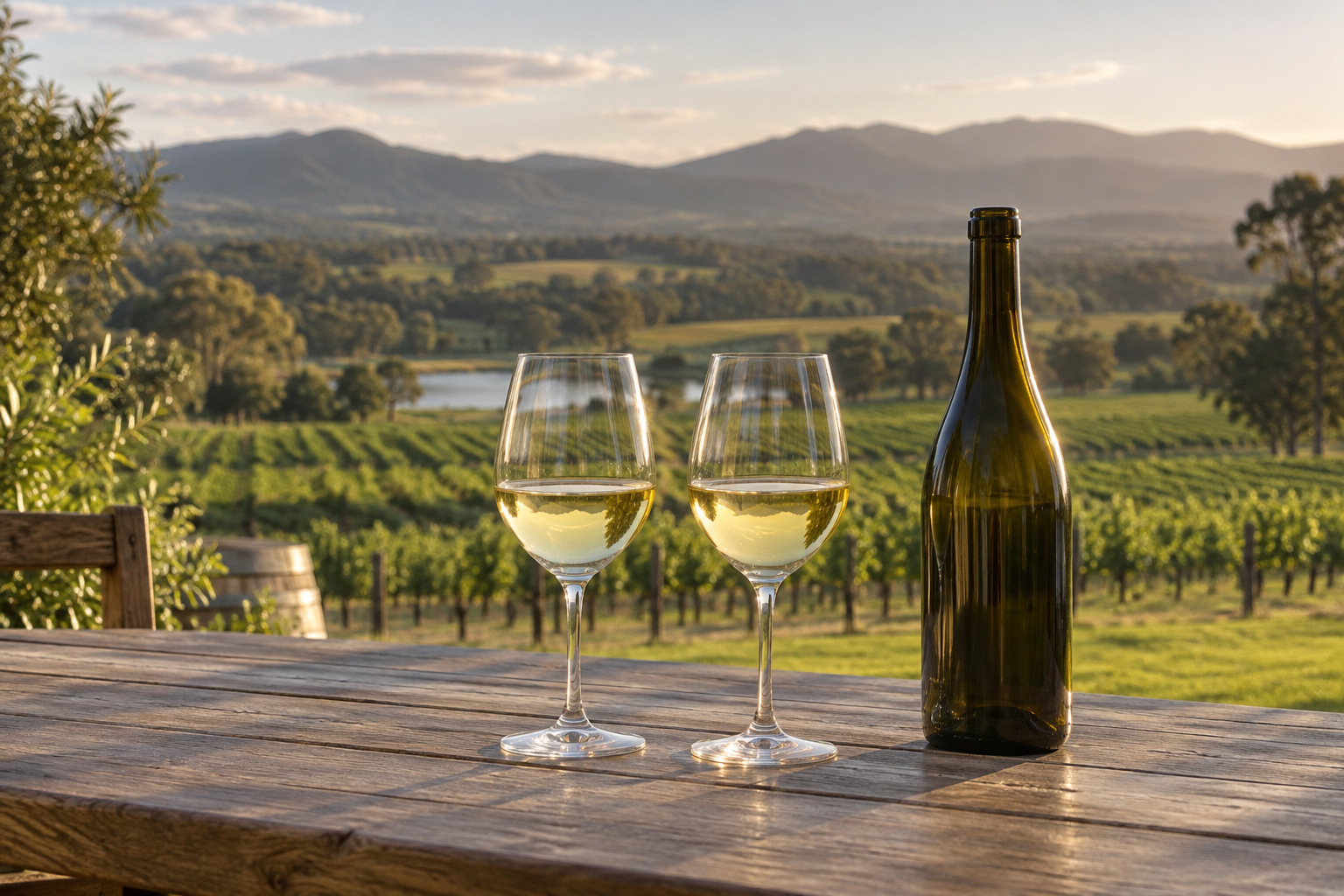
Levantine Hill Chardonnay includes distinct bottlings such as Estate Chardonnay, Katherine’s Paddock Chardonnay and Optume Chardonnay, so compare the exact label before comparing vintages. At a regional level, 2017 was a cooler, later Yarra Valley season than 2018, but that is a guide to possible style—not a guaranteed tasting note. For an older bottle, storage history and condition matter at least as much as the year on the label.
Understanding the Levantine Hill Chardonnay range
A retailer’s heading of “Levantine Hill Chardonnay” may conceal an important distinction: which Chardonnay is actually being offered? The producer’s Estate, named-paddock and Optume labels should not be treated as different packaging for the same wine.
Start with the complete bottle name, ideally confirmed by photographs of both labels. Then establish the vintage, bottle size and condition.
| Chardonnay label | Where it sits in the comparison | What to establish before buying |
|---|---|---|
| Estate Chardonnay | The logical starting point for comparing the producer’s Chardonnay across vintages | Confirm that both bottles are Estate Chardonnay, rather than comparing Estate with a different tier |
| Katherine’s Paddock Chardonnay | A named-paddock bottling, distinct from Estate Chardonnay | Check the vintage-specific information rather than assuming identical fruit selection or winemaking to Estate |
| Optume Chardonnay | A flagship Chardonnay label | Confirm the particular release and its technical information; prestige alone does not establish drinking readiness |
This table identifies the labels, not a promise that every bottling is available in both 2017 and 2018.
Compare like with like first
For the clearest vintage comparison, put 2017 Estate Chardonnay beside 2018 Estate Chardonnay. Comparing a 2017 Estate bottle with a 2018 Katherine’s Paddock bottle mixes vintage differences with differences in selection and production.
Once you understand the same-label comparison, a cross-range tasting becomes more useful. You can ask whether the higher-tier bottle offers greater length, complexity or integration—not simply more weight or more obvious oak.
Do not infer precise vineyard sourcing, new-oak percentages or malolactic conversion from the name alone. Those details require the technical sheet for the specific wine and vintage.
Levantine Hill Chardonnay 2017 versus 2018
Vintage summaries describe growing conditions across a region. They do not replace tasting notes for an individual wine, and they cannot account for everything that happens during maturation and bottle storage.
The useful regional distinction is that 2017 generally favoured a cooler, extended ripening season, while 2018 experienced warmer growing conditions. Site, picking date and winemaking can strengthen—or soften—those differences.
| Comparison point | 2017 regional expectation | 2018 regional expectation |
|---|---|---|
| Growing-season context | Cooler and later ripening | Warmer than 2017 overall |
| Fruit character to look for | Citrus, restrained stone fruit and a fresher impression | Riper stone fruit and a potentially broader impression |
| Structure to assess | Acid line, precision and length | Fruit weight, balance and freshness |
| Main buying caution | Do not assume acidity guarantees longevity | Do not assume ripeness means low acidity or early decline |
| Best comparison method | Taste beside the same 2018 label | Taste beside the same 2017 label |
These are tasting prompts, not authenticated notes for every Levantine Hill release.
Levantine Hill Chardonnay 2017: look beyond “cool vintage”
A sound 2017 bottle is a sensible candidate if you enjoy Chardonnay with a clear acid line and restrained fruit expression. During tasting, assess whether citrus and stone-fruit flavours remain lively beneath any developed nutty or savoury characters.
The key question is not whether the wine tastes young. It is whether its mature flavours still have energy and length.
A cooler season does not automatically make every bottle longer-lived. Fruit concentration, oxygen exposure during production, closure performance and storage all influence how an older Chardonnay presents.
Levantine Hill Chardonnay 2018: assess richness and freshness together
For 2018, look for the relationship between fruit weight and acidity. A broader palate can still be balanced, precise and refreshing; richness and freshness are not opposites.
Do not mistake vanilla, toast or a creamy texture for sweetness. Those impressions can arise from oak influence and maturation without indicating meaningful residual sugar.
If you prefer a fuller Chardonnay, 2018 is a reasonable vintage to investigate. However, choose on the exact bottling and reliable condition information rather than buying solely because a warmer year sounds more generous.
For another perspective on mature regional Chardonnay, see our guide to Yarra Yering Chardonnay, the 2018 vintage and older-bottle buying.
Where it fits within Yarra Valley Chardonnay
Yarra Valley Chardonnay is not one uniform style. Vineyard elevation, aspect, soil, exposure and harvest timing all affect the balance between citrus-like freshness and riper stone-fruit flavours.
Winemaking adds another layer. Barrel fermentation and maturation can contribute texture and oak-derived flavours; lees contact can build savoury complexity; malolactic fermentation can soften the impression of acidity. The extent of each treatment must be checked for the individual wine.
When assessing Levantine Hill, separate three questions:
- Fruit: Is it predominantly citrus-led, white-peach-like or more richly stone-fruited?
- Texture: Does the wine feel taut, rounded, creamy or broad?
- Integration: Do fruit, acidity and oak work together, or does one dominate?
A wine can be rich without being heavy, and restrained without being thin. The most useful comparison is how those elements support the finish.
Our guide to Yarra Valley Chardonnay producers, styles and vintages provides the regional context. For a vineyard-focused comparison, explore Giant Steps Sexton Vineyard Chardonnay versus Applejack.
Buying a 2017 or 2018 bottle: what to check
Both vintages should now be approached as mature-bottle purchases, not automatically fresh current releases. A prestigious label cannot compensate for poor storage.
Ask about provenance before asking about scores
The most useful seller questions are specific:
- Where has the bottle been stored? Look for a credible account of stable, cool storage rather than an unexplained “cellared” description.
- Has it changed hands repeatedly? Multiple owners do not prove damage, but they can make its history harder to establish.
- Can you see the actual bottle? Request photographs showing the label, closure area and fill level—not just a stock image.
- Is there evidence of leakage or damage? Wine staining, seepage or a compromised closure warrants further questions.
- What happens if the wine is faulty? Clarify the seller’s policy before purchasing.
Fill level is one clue, not a complete diagnosis. Bottle shape and closure type affect how it should be interpreted.
Read reviews precisely
Check that any quoted review refers to the same label and vintage. Also note when the wine was tasted: a review written shortly after release describes a different stage of development from the bottle you are buying today.
A predicted drinking window is an informed estimate, not a warranty. Good storage improves the odds, but individual bottles can develop differently.
Recognise maturity without excusing deterioration
Developed Chardonnay can show roasted nuts, toast, savoury complexity and a deeper gold colour while retaining freshness.
More concerning is a combination of tired or bruised-apple aromas, little remaining fruit and a flat, short palate. Colour alone is insufficient: assess aroma, flavour and structure together.
If two bottles differ markedly in provenance, favour the better-documented bottle over the vintage you theoretically prefer.
How to taste the two vintages fairly
A side-by-side tasting is more revealing than opening the bottles on separate evenings with different food and glassware.
Set up a controlled comparison
- Use the same label, bottle size and glass shape.
- Serve both at the same temperature.
- Start around 10–12°C, then let the wines warm gradually in the glass.
- Taste before introducing food, then revisit with a suitable dish.
- If possible, conceal the vintages for the first pass to reduce expectations.
Very cold Chardonnay can seem less aromatic and more sharply acidic. As it warms, fruit, texture and oak become easier to assess.
Avoid automatic long decanting for mature bottles. Pour a small glass first and observe how it changes with air. If it seems fragile or is fading quickly, prolonged aeration is unlikely to help.
Record the differences that matter
Use a short tasting grid: fruit character, acidity, texture, oak impression, developed flavours and finish.
Then ask: Which bottle would I want another glass of, and with what food? That is often more useful than deciding which tastes more expensive.
For another example of why label distinctions matter, read our Oakridge Chardonnay guide covering regional wines, Willowlake and the 864 range.
Food pairings for younger and mature styles
Match the bottle in front of you, not just the variety printed on it.
For a fresher, citrus-led Chardonnay: try grilled fish, roast chicken with lemon, or a vegetable tart with a lightly dressed salad. These dishes leave room for acidity and restrained fruit.
For a broader, oak-influenced Chardonnay: roast poultry, creamy mushroom dishes and fish with a butter-based sauce can work well. Keep the sauce balanced rather than excessively rich.
For a mature bottle with nutty, savoury development: roast chicken with mushrooms, baked fish with a restrained beurre blanc, or a mild aged cheese can complement its complexity.
Avoid very hot chilli or strongly sweet sauces for a comparative tasting. They can make subtle vintage differences harder to identify. If you are opening both years together, roast chicken with lemon and herbs provides a practical middle ground.
Know before you go: planning a Yarra Valley visit
Levantine Hill is on the Maroondah Highway corridor at Coldstream, making it relevant to a broader Yarra Valley wine itinerary. However, a visit does not guarantee that older Chardonnay vintages—or every tier—will be available to taste.
Before travelling, confirm directly:
- Current tasting arrangements and whether bookings are required.
- Which Chardonnay labels are included in the available tasting.
- Whether 2017 or 2018 bottles are offered for tasting or purchase.
- Any tasting fees, dining requirements or conditions attached to the experience.
Keep driving distances realistic. The Yarra Valley and Dandenong Ranges cover a substantial area, and an itinerary combining several cellar doors with a mountain stop can become rushed. Arrange a designated driver or suitable transport if you plan to taste wine.
Yarra Valley Pass partners include Oakridge, Coldstream Hills Cellar Door, Dominique Portet and Giant Steps. Browse the local partner businesses when planning complementary stops, then check availability with each venue.
Yarra Valley Pass members earn Yarra Credits and redeem them for member rewards on this website. Follow the conditions shown for each activity or offer rather than assuming every regional visit or wine purchase qualifies.
Conclusion: choose the label, then the vintage
For Levantine Hill Chardonnay, the strongest buying order is exact bottling, provenance, condition, then vintage preference. Investigate 2017 for its cooler-season context and 2018 for potentially broader fruit expression, but let the individual wine decide. A sound bottle that suits your palate is a better purchase than a more prestigious bottle with an uncertain history.
Frequently asked questions
What is the difference between Levantine Hill Estate, Katherine’s Paddock and Optume Chardonnay?
They are distinct bottlings, not interchangeable names. Estate Chardonnay is the starting point for a same-label vintage comparison, Katherine’s Paddock is a named-paddock bottling, and Optume is a flagship label. Check the technical information for the exact release rather than assuming identical sourcing or winemaking.
Is Levantine Hill Chardonnay 2017 better than 2018?
There is no universal winner. The cooler, later regional conditions of 2017 may appeal to drinkers seeking a fresher profile, while 2018 is worth investigating for potentially broader fruit expression. Compare the same label and prioritise storage history and bottle condition.
Are the 2017 and 2018 Chardonnays still suitable to drink?
Well-stored bottles may still offer enjoyable mature Chardonnay, but neither vintage comes with a guarantee. Check provenance and condition, and expect some developed flavours rather than assuming the wine will taste like a current release.
Does a creamy or vanilla flavour mean Levantine Hill Chardonnay is sweet?
Not necessarily. Oak influence, lees maturation and malolactic fermentation can contribute vanilla-like aromas or a rounded texture without making a wine sweet. Confirm the specific bottling’s technical information if residual sugar is important to your choice.
Can I taste Levantine Hill Chardonnay 2017 or 2018 at the winery?
Do not assume older vintages are part of the current tasting selection. Contact the winery directly to confirm available labels and vintages, booking requirements, and any tasting fees or conditions before travelling.
Related reading
- Soumah Wines: Italian varieties, estate labels and visiting the vineyard
- Oakridge Pinot Noir: Willowlake, Henk, Hazeldene and 864 Explained
- Affordable Yarra Valley Chardonnay: entry-level wines compared
- Levantine Hill Pinot Noir: Colleen’s Paddock and 2016–2019 Vintages
- Top wineries in Yarra Valley: 10 benchmark producers and why they matter
- Tokar Estate Tempranillo: Wine Style, Food Pairings and Cellar Door