Mount Mary Chardonnay: a buyer’s guide to the 2016–2019 vintages
· Yarra Valley Pass
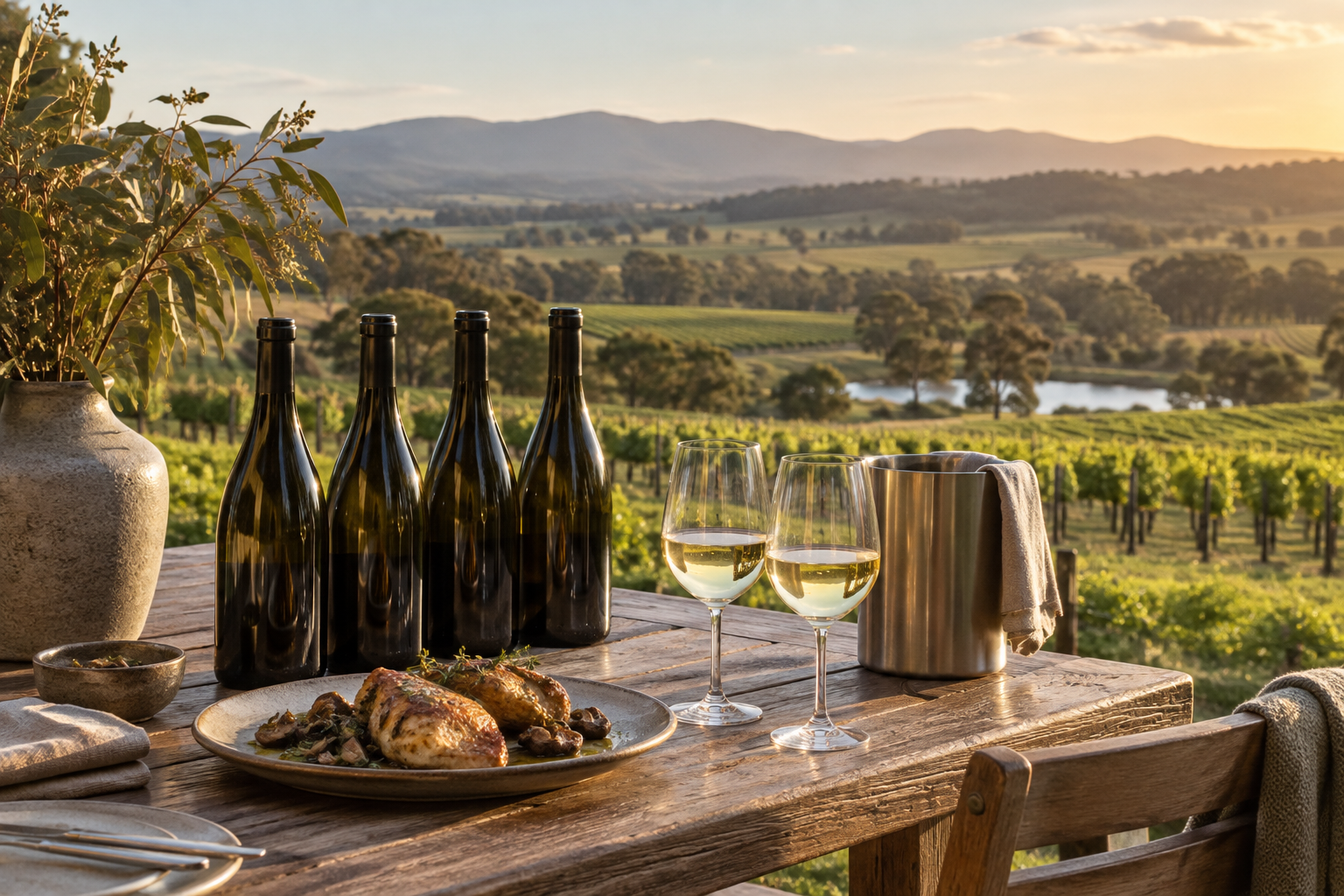
Mount Mary Chardonnay 2018 is a sensible bottle to consider if you want estate-grown Yarra Valley Chardonnay with some maturity, but verified storage should come before vintage reputation. When comparing 2016–2019, use the year to guide your expectations—not to override bottle condition, price or your preference for younger versus developed flavours.
What you are buying with Mount Mary Chardonnay
Founded by John and Marli Middleton in 1971, Mount Mary is a family-owned Yarra Valley estate near Lilydale. Its Chardonnay is an estate wine: you are buying the expression of a particular property, rather than a regional blend assembled from unrelated vineyards.
The style is associated with balance, detail and the integration of fruit and oak. Barrel influence matters, but buying Mount Mary simply because you want an obviously buttery, heavily oaked Chardonnay is not a reliable approach.
Age introduces another variable. A mature Chardonnay can move from citrus and fresh orchard-fruit characters towards nuts, toast and more savoury complexity. That development should still leave the wine with freshness and shape; age alone does not make a bottle better.
For the wider regional context, start with our guide to Yarra Valley Chardonnay producers, styles and vintages.
Mount Mary Chardonnay 2018: how to judge a bottle
The appeal of 2018 is straightforward: it offers an opportunity to buy Mount Mary with bottle age without choosing the oldest wine in this four-vintage group. It is a useful starting point for a comparison, not an automatic winner.
Across the Yarra Valley, 2018 was a warmer-season comparison with 2017. That provides context for potentially more generous fruit expression, but it does not establish the acidity, texture or condition of a particular Mount Mary bottle. Site, harvest timing and winemaking all affect the result.
For a purchase intended for dinner soon, prioritise:
- A clear account of where the bottle has been stored.
- Photographs of the actual bottle, including its fill level and closure.
- A seller who explains what happens if the wine arrives faulty.
- A price justified by condition and provenance, not just scarcity.
Do not expect an older 2018 to taste like a recent release. Equally, do not accept flatness or obvious oxidation as inevitable signs of maturity. Developed flavour and deterioration are different things.
Comparing the 2016, 2017, 2018 and 2019 vintages
Regional weather is useful context, but it is not a substitute for a producer’s vintage report or a recent assessment of a well-stored bottle. These summaries describe broad seasonal tendencies, not guaranteed tasting notes.
| Vintage | Regional seasonal context | Useful buying hypothesis | Main caution |
|---|---|---|---|
| 2016 | Warm conditions and an early harvest | Consider when seeking the most bottle development in this group | Its extra age makes storage history especially important |
| 2017 | Cooler conditions and a later harvest than 2016 | A logical comparison for buyers interested in cooler-year expression | Cooler does not automatically mean better or less developed |
| 2018 | A warmer comparison with 2017 | A sensible starting point for a mature estate Chardonnay purchase | Do not turn a favourable reputation into a guarantee |
| 2019 | A warm, dry season with heat pressure | Consider when choosing the youngest vintage in this group | Younger does not necessarily mean fresher, lighter or safer |
Mount Mary Chardonnay 2016: buy for maturity, not longevity claims
Mount Mary Chardonnay 2016 has had the longest opportunity to develop of these four vintages. If you enjoy savoury complexity and less emphasis on primary fruit, it belongs on your shortlist.
The important question is not whether the wine can age. It is whether this bottle has aged well. A well-stored 2016 may be a more satisfying purchase than a younger bottle with an uncertain history.
Ask for recent photographs and distinguish long-term temperature-controlled storage from a vague claim that the wine was “cellared”. For a single bottle bought for a special meal, reliable provenance is worth more than an optimistic drinking-window estimate.
Mount Mary Chardonnay 2017: the cooler-year comparison
Mount Mary Chardonnay 2017 is the logical neighbouring vintage to investigate if you are interested in the relationship between cool-season ripening, freshness and fruit expression.
The Yarra Valley’s cooler, later 2017 season provides a meaningful contrast with the warmer years around it. However, that does not justify promising that every bottle will taste more mineral, more acidic or more restrained.
If choosing between 2017 and 2018, look for tasting notes made at similar stages of development. A release note for one and a recent note for the other are not equivalent evidence. With comparable provenance, choose according to the style described rather than the highest score.
Mount Mary Chardonnay 2019: youngest is not automatically best
Mount Mary Chardonnay 2019 is the youngest wine in this comparison, which may appeal if you want less elapsed bottle age. Its warmer, drier regional season still needs to be considered alongside the estate’s own growing and harvest decisions.
Avoid assuming that 2019 will be leaner or fresher simply because it is more recent. Equally, a warm season does not mean the finished wine must be heavy or short-lived.
If its storage record is weaker than that of a 2017 or 2018, the age advantage should not decide the purchase. Buy the strongest documented bottle first, then use vintage as the tie-breaker.
A practical checklist for buying older bottles
Older Chardonnay deserves more scrutiny than a current release purchased through a straightforward retail channel. Ask these questions before paying.
Establish the storage history
Find out whether the bottle came directly from the winery, an established retailer, professional storage or a private collection. Ask how long the current seller has held it and whether there were periods in domestic cupboards, garages or other uncontrolled spaces.
“Kept somewhere cool” is less informative than a documented storage arrangement. Long exposure to warmth and repeated temperature fluctuations are warning signs.
Inspect the actual bottle
Request clear images of the label, neck, closure and fill level. Look for evidence of leakage, damaged packaging or a fill level noticeably different from comparable bottles of the same shape and age.
If the glass allows you to assess colour, deep gold is not automatically a fault in mature Chardonnay. Unusually brown colour, especially alongside leakage or poor storage, deserves further questions. Appearance alone cannot certify soundness.
Read the transaction terms
Check the full cost, including delivery and any auction buyer’s premium. Ask whether the seller offers a remedy for faulty wine and what evidence or notification period is required.
Clarify whether photographs show the bottle being sold or a representative image. For delivery, avoid unnecessary exposure to hot weather and make sure someone can receive the parcel.
Our guide to buying older Yarra Yering Chardonnay provides a useful companion framework for evaluating mature Yarra Valley whites.
Drink now or continue cellaring?
There is no defensible universal deadline for every bottle of Mount Mary Chardonnay 2016–2019. Storage, individual bottle variation and personal taste can outweigh the difference between neighbouring years.
If you have one bottle and no reliable recent information about its development, buying it for near-term enjoyment is more practical than assuming another lengthy period in the cellar will improve it.
If you own several bottles with the same storage history, open one before deciding what to do with the rest. That gives you evidence about your own collection rather than someone else’s bottle.
For continued storage, aim for cool, stable conditions away from light and vibration. Do not treat a drinking window quoted at release as a promise that the wine will remain unchanged until its final year.
Serving and food pairing
Serve the wine cool, rather than fridge-cold throughout the meal. Around 10–12°C is a useful starting point; allow it to warm gradually in the glass so texture and developed aromas can emerge.
Open and taste before deciding whether to decant. A mature white does not automatically need prolonged aeration. If it seems expressive already, pour it directly; if it is initially closed, try a small glass with some air before exposing the entire bottle.
Good food options include:
- Roast chicken with a restrained pan sauce.
- Grilled trout or other delicately cooked fish.
- Mushroom dishes without excessive chilli or sweetness.
- Crayfish or scallops with modest amounts of butter.
Choose dishes that leave room for the wine’s detail. Very sweet sauces, aggressive chilli and heavily smoked flavours can overwhelm an older Chardonnay.
Alternatives worth comparing before you buy
If your interest is primarily in vineyard expression, compare Mount Mary with other Yarra Valley producers rather than relying on price as a measure of quality.
Our Giant Steps Sexton Vineyard versus Applejack comparison explores how different sites can shape Chardonnay from the same producer. It is useful when separating vineyard character from vintage character.
The Oakridge Chardonnay range guide helps distinguish regional wines from more specific vineyard selections. Check the exact label and vintage before making any price comparison.
A recent release with excellent provenance can also be a better purchase than a prestigious older bottle with unanswered storage questions. That is particularly relevant if you prefer fresh fruit to mature, savoury flavours.
Know before you go: planning a Yarra Valley Chardonnay visit
Do not assume Mount Mary operates as a conventional walk-in cellar door. Check the winery’s current visitor and purchase arrangements directly before planning a visit, and do not expect 2016–2019 Chardonnay to be available from the estate.
Lilydale is a practical rail gateway from Melbourne, but the valley’s wineries are dispersed. Arrange onward transport and a designated driver or suitable touring option if you intend to taste.
Giant Steps, Oakridge, Coldstream Hills Cellar Door and De Bortoli Wines are among Yarra Valley Pass’s local partner businesses. Check each venue’s current booking requirements and Chardonnay availability; a tasting visit does not guarantee access to a particular back vintage.
Yarra Valley Pass members earn Yarra Credits through participation and redeem them for member rewards on this website. Check the relevant conditions rather than assuming every purchase or visit qualifies.
The buying decision
Start with Mount Mary Chardonnay 2018 if it suits your preference for a wine with bottle age, then compare the alternatives on evidence. Choose 2016 for its greater elapsed age, investigate 2017 for cooler-season context, and consider 2019 without assuming youth guarantees freshness. Above all, buy the bottle with the clearest provenance.
Frequently asked questions
Is Mount Mary Chardonnay 2018 better than 2017?
Not automatically. The warmer regional context of 2018 contrasts with the cooler, later 2017 season, but storage and bottle condition can matter more than the year. Compare recent tasting information and provenance before choosing.
Is Mount Mary Chardonnay 2018 ready to drink?
A well-stored bottle is reasonable to consider for near-term drinking, particularly if you enjoy developed Chardonnay. There is no universal drinking window for every bottle, so use storage history and recent tasting information rather than age alone.
What is the main difference between Mount Mary Chardonnay 2016 and 2019?
The 2016 has three additional years of elapsed bottle age, while 2019 is the youngest vintage in this comparison. Both came from warmer regional seasons, but that does not establish how an individual bottle tastes. A well-stored 2016 can be a better buy than a poorly documented 2019.
Can I buy older Mount Mary Chardonnay at the winery?
Do not assume older vintages are available or that you can purchase them during a walk-in visit. Contact the winery directly about current purchase and visitor arrangements before travelling. Specialist retailers and secondary-market sellers may offer older bottles, but provenance needs checking.
Should I decant an older Mount Mary Chardonnay?
Taste it first. If it is already aromatic and balanced, serve it without a long decant. If it seems closed, test a small pour with some air before deciding whether the whole bottle would benefit.
Related reading
- Soumah Wines: Italian varieties, estate labels and visiting the vineyard
- Oakridge Pinot Noir: Willowlake, Henk, Hazeldene and 864 Explained
- Affordable Yarra Valley Chardonnay: entry-level wines compared
- Levantine Hill Pinot Noir: Colleen’s Paddock and 2016–2019 Vintages
- Top wineries in Yarra Valley: 10 benchmark producers and why they matter
- Tokar Estate Tempranillo: Wine Style, Food Pairings and Cellar Door