Toolangi Chardonnay: Vineyard Sources, Styles and the 2019 Vintage
· Yarra Valley Pass
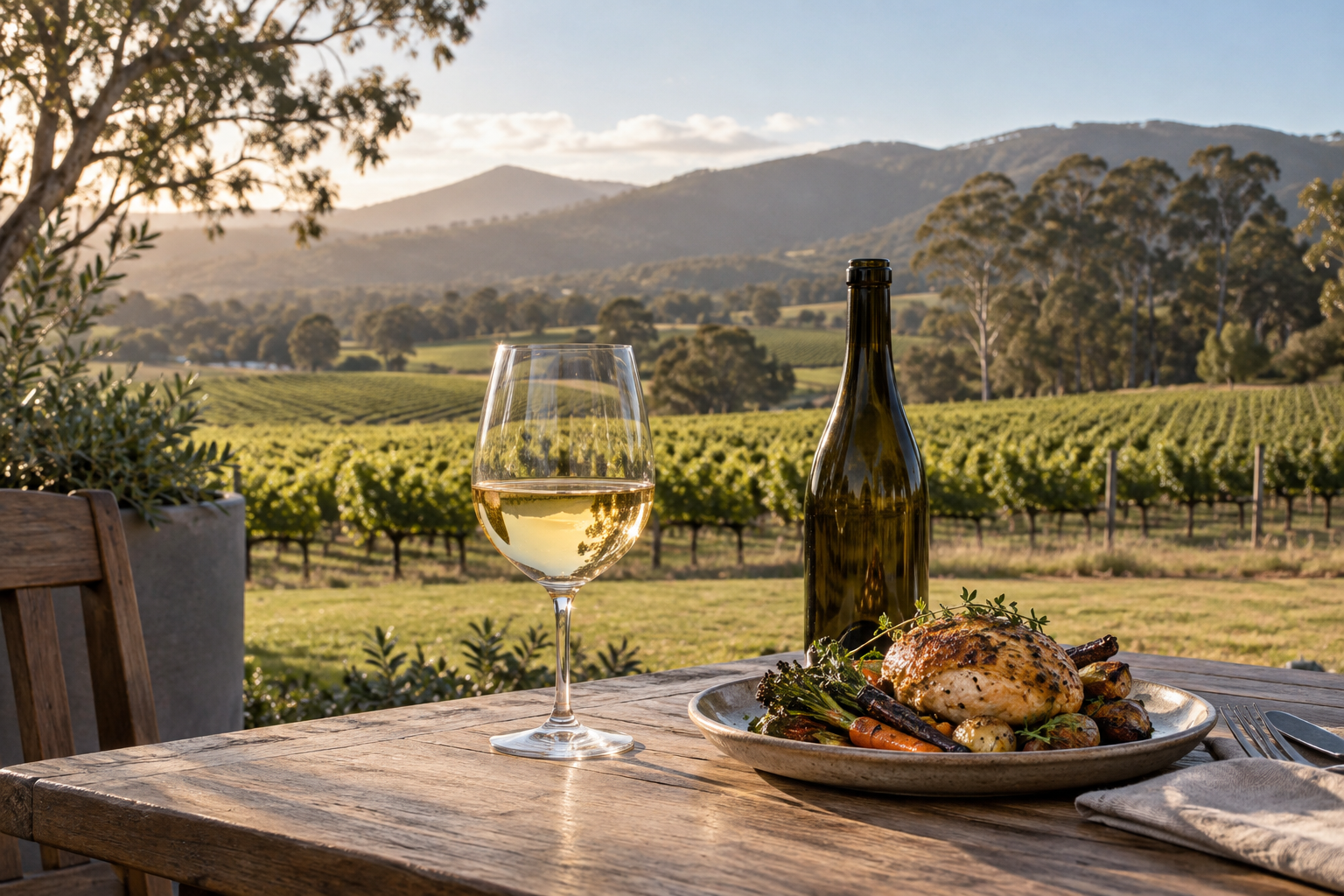
Toolangi Chardonnay is a Yarra Valley wine associated with the producer’s vineyard at Dixons Creek, typically combining citrus and stone-fruit flavours with barrel-derived texture. When buying Toolangi Chardonnay 2019, identify the exact bottling first: the standard Chardonnay, Pauls Lane and historical Reserve releases should not be treated as interchangeable. For an older bottle, storage history matters as much as the vintage’s reputation.
Toolangi Chardonnay: understanding the vineyard source
Toolangi’s home vineyard is at Dixons Creek in the northern Yarra Valley. That distinction is useful both for understanding the wine and for planning a visit: the producer’s name should not automatically send you to the township of Toolangi.
The vineyard provides the geographical starting point for understanding the brand. However, producer identity, regional origin and the source of an individual bottling are three different things.
A label saying “Yarra Valley” identifies the wine’s geographical indication. It does not, by itself, establish that the wine comes from one vineyard, one block or the same fruit selection used in another Toolangi release.
For a particular bottle, look for:
- The complete cuvée name: not simply the producer and grape variety.
- The vintage: vineyard selection and winemaking can change between years.
- An explicit source statement: estate-grown, single-vineyard or a named block, where supplied.
- A matching technical sheet: information for another vintage is not a substitute.
This is especially important with older stock. A retailer may shorten a product title to “Toolangi Chardonnay”, while the photograph shows a more specific bottling. Resolve that mismatch before ordering.
Where Dixons Creek fits into Yarra Valley Chardonnay
The Yarra Valley is not one uniform Chardonnay-growing environment. Elevation, exposure, soil, vine age and harvest timing all influence how fruit develops.
Dixons Creek sits in the northern part of the region, rather than the higher, cooler Upper Yarra districts. That is useful context, but it is not enough to predict richness or acidity on its own. A carefully chosen picking date can produce a fresh, restrained wine from a comparatively warmer site.
For the wider picture, our guide to Yarra Valley Chardonnay producers, styles and vintages explains why regional labels cover such varied wines.
Wine styles and labels: what are you actually buying?
Toolangi is generally associated with barrel-fermented Chardonnay, rather than a deliberately oak-free style. Think of a spectrum involving citrus, apple and stone fruit, with varying amounts of savoury, nutty or creamy texture.
Those are style expectations, not a guaranteed tasting note for every bottle. Vintage, fruit selection, oak treatment and bottle age can all shift the balance.
Toolangi releases have included a main-label Chardonnay and Pauls Lane Chardonnay, while older listings may also show Reserve Chardonnay. Do not assume these names describe identical wine at different prices.
| Wording on the listing | What it tells you | What to confirm |
|---|---|---|
| Toolangi Chardonnay | Producer and variety; often the main-label bottling | Exact vintage and full label wording |
| Toolangi Pauls Lane Chardonnay | A separately named cuvée | Its own vineyard and winemaking information |
| Toolangi Reserve Chardonnay | A Reserve-labelled release appearing in historical listings | The specific vintage and release details |
| Toolangi Chardonnay 2019 | Producer, variety and harvest year | Whether the seller has omitted a cuvée name |
Oak flavour is only part of the story
Barrel fermentation can influence texture without making a wine taste strongly of new oak. Older barrels may contribute little obvious vanilla or toast, while still allowing the wine to develop differently from a stainless-steel-fermented Chardonnay.
Lees contact—the wine resting on spent yeast—can add breadth and savoury complexity. Malolactic fermentation can soften acidity and sometimes contribute buttery characters, but creaminess alone does not prove that it occurred.
Useful questions therefore go beyond “Is it oaky?” Ask whether the wine feels taut or broad, whether oak supports or dominates the fruit, and whether the finish remains fresh.
For another regional reference point, compare the distinctions between regional and vineyard-specific wines in our Oakridge Chardonnay range guide. It is a comparison of buying categories, not evidence that the wines share identical sources or production methods.
Toolangi Chardonnay 2019: vintage context and bottle age
The Yarra Valley’s 2019 growing season included warm, dry conditions and periods of heat. For Chardonnay growers, the important decisions included when to pick and how to balance flavour development with retained acidity.
That context does not mean every 2019 Chardonnay is broad, tropical or ready to fade. Site, crop balance and harvest timing can make wines from the same season taste markedly different.
With Toolangi Chardonnay 2019, separate three questions:
- Which bottling is it? A review of Pauls Lane does not automatically describe the main-label wine.
- How was it stored? Cool, stable storage gives an older Chardonnay a better chance of showing well.
- What drinking experience do you want? Mature savouriness is different from the bright fruit of a young release.
A favourable review written near release can help describe the wine’s original balance. It cannot establish the present condition of a bottle that has spent years in an unknown cupboard or shop display.
What a mature 2019 bottle might taste like
After several years in bottle, Chardonnay can move from fresh citrus and white peach towards flavours resembling baked apple, toasted nuts, honey or savoury pastry. These are possible developments, not a bottle-specific tasting claim.
A successful mature bottle should still have enough fruit and acidity to hold those flavours together. If you prefer crisp, primary-fruit Chardonnay, a younger release may suit you better than a 2019 simply because it has an older vintage on the label.
Conversely, someone who enjoys layered, savoury whites may find a well-stored 2019 more interesting than a current release.
There is no responsible universal “drink until” date without knowing the cuvée and storage history. Our guide to buying older Yarra Yering Chardonnay explores similar provenance and maturity considerations for another Yarra Valley producer.
How to buy Toolangi Chardonnay 2019 sensibly
Treat a 2019 purchase as an older-wine transaction, not just another Chardonnay order.
Ask the seller these questions
- Is the photograph of the actual bottle or a generic product image?
- Does the full label match the product title and any quoted review?
- Has the wine been held in temperature-controlled storage?
- Is there any visible leakage, unusual fill level or closure damage?
- What is the seller’s policy if the bottle is faulty?
For a case purchase, buying one bottle first can be sensible where stock and delivery arrangements allow. It lets you assess condition and personal preference before committing to several bottles from the same parcel.
Do not compare prices until you have matched the vintage, cuvée and bottle size. A discounted main-label wine and a higher-tier release are not necessarily competing offers.
Also distinguish “old” from “rare”. Age alone does not make a Chardonnay more desirable, and an impressive score is less useful if it belongs to another release.
If your main interest is vineyard expression rather than bottle maturity, our comparison of Giant Steps Sexton Vineyard and Applejack Chardonnay offers a useful framework for choosing between explicitly named vineyard wines.
Serving Toolangi Chardonnay well
Serve Chardonnay cool, but not so cold that its texture and aroma disappear. Around 10–12°C is a useful starting point, allowing the wine to warm gradually in the glass.
A mature bottle may become more expressive as it approaches 12–14°C. Avoid leaving it in direct sun or beside a hot stove while preparing dinner.
Use a medium-sized white-wine glass with room to swirl. Pour a small first glass, smell it, taste it, then revisit it after several minutes.
Should you decant a 2019 bottle?
Not automatically. Start with the glass: some wines open up with gentle exposure to air, while fragile mature bottles can lose freshness with prolonged aeration.
A struck-match aroma can be a reductive winemaking character and may soften with air. It is not the same thing as cork taint, which can suggest damp cardboard or a musty cellar.
Likewise, golden colour alone does not prove oxidation. Judge colour alongside aroma and palate: an unexpectedly flat wine with dominant bruised-apple or sherry-like characters may be compromised, especially if little freshness remains.
Food matches: follow the bottle’s weight and maturity
For a fresher, more citrus-led Toolangi Chardonnay, consider grilled fish, roast chicken, prawns or vegetables dressed with lemon and olive oil. These dishes leave space for acidity and fruit rather than overwhelming them.
For a broader or mature bottle, try roast chicken with pan juices, mushroom risotto, baked fish with a restrained butter sauce, or a savoury leek tart. These combinations work with texture and nutty development.
A few practical adjustments help:
- Keep chilli heat modest; it can make wine seem hotter and less balanced.
- Avoid very sweet sauces, which can make a dry Chardonnay taste sharp.
- Use cream or butter as support, not the whole dish.
- Choose a gently flavoured cheese rather than assuming a powerful blue cheese will work.
If opening a 2019 for a special meal, taste it before finalising the sauce. A delicate mature bottle deserves a different pairing from a youthful, assertively oaked wine.
Know before you go: planning a Yarra Valley tasting day
Dixons Creek lies along the Melba Highway corridor, north of Yarra Glen. That makes it a useful geographical reference when organising a northern Yarra Valley wine day.
However, a vineyard address is not a confirmed visitor experience. Before travelling for Toolangi specifically, check current tasting availability, booking requirements and whether the wine you want can be tasted or purchased. Do not assume an older 2019 release will be available.
For a broader Chardonnay outing, Yarra Valley Pass partner businesses include De Bortoli Wines, Oakridge, Coldstream Hills Cellar Door and Giant Steps. Browse the local partner businesses to identify stops, then confirm current arrangements directly with each venue.
Keep the itinerary geographically compact, allow time for lunch and organise a designated driver or suitable transport. If comparing wines, take brief notes on fruit, acidity, texture and oak rather than trying to remember everything at the final stop.
Yarra Valley Pass members earn Yarra Credits and redeem them for member rewards. Check current participation details and available rewards when planning your local visits.
The bottom line
Toolangi Chardonnay is best understood by matching the exact label to its vineyard information and vintage. For a 2019 bottle, prioritise provenance, realistic maturity expectations and your preferred style—not a score or vintage date alone. Start with one well-sourced bottle, serve it thoughtfully and let its condition guide the occasion.
Frequently asked questions
Where does Toolangi Chardonnay come from?
Toolangi’s home vineyard is at Dixons Creek in the northern Yarra Valley. For a particular Chardonnay, check the full cuvée name and its release-specific source information: a Yarra Valley regional designation alone does not establish single-vineyard origin.
Is Toolangi Chardonnay 2019 still good to drink?
A well-stored bottle may offer enjoyable mature Chardonnay characters, but its condition depends on the specific bottling and storage history. Ask about provenance and expect potentially more savoury, nutty development than in a young release.
Is Toolangi Chardonnay heavily oaked?
Toolangi is generally associated with barrel-fermented Chardonnay, but barrel use does not necessarily mean strong oak flavour. The balance of toast, fruit, acidity and texture varies with the cuvée and vintage; consult information for the exact release.
Are Toolangi Chardonnay and Pauls Lane Chardonnay the same wine?
They should not be treated as interchangeable. Pauls Lane is a separately named cuvée, so match the complete label and vintage before comparing prices, tasting notes or reviews.
Can I visit Toolangi to taste the 2019 Chardonnay?
Confirm current visitor arrangements directly with the producer before travelling. A vineyard location does not guarantee walk-in tastings, and an older release such as 2019 may not be available to taste or buy.
Related reading
- Soumah Wines: Italian varieties, estate labels and visiting the vineyard
- Oakridge Pinot Noir: Willowlake, Henk, Hazeldene and 864 Explained
- Affordable Yarra Valley Chardonnay: entry-level wines compared
- Levantine Hill Pinot Noir: Colleen’s Paddock and 2016–2019 Vintages
- Top wineries in Yarra Valley: 10 benchmark producers and why they matter
- Tokar Estate Tempranillo: Wine Style, Food Pairings and Cellar Door