Yering Pinot Noir: How to Identify the Producer and Bottle
· Yarra Valley Pass
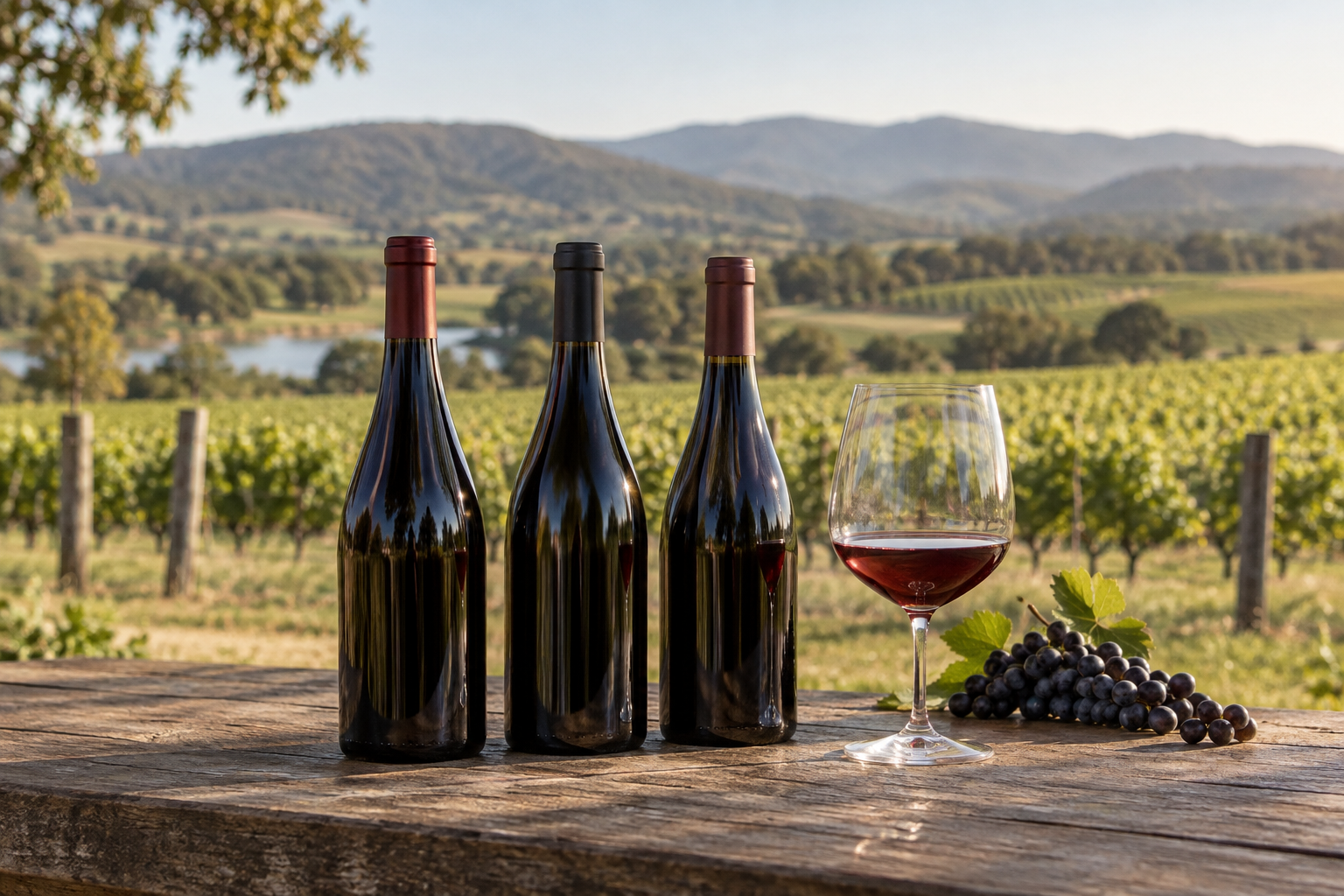
“Yering Pinot Noir” is an ambiguous description, not a reliable identifier for one wine: Yering Station, Yarra Yering and Yeringberg are separate Yarra Valley producers. To identify the bottle, match the full producer name, wine or range name, grape variety and vintage on the label rather than relying on a shortened shop listing.
That distinction matters when you are replacing a favourite bottle, comparing prices or organising a cellar-door visit. Similar names do not mean the same vineyard, winemaking approach or visitor experience.
Yering Pinot Noir: identify the producer first
Yering is a locality in Victoria’s Yarra Valley. It also appears within several winery names, which makes abbreviated wine descriptions easy to misread.
Start with these three producers, but do not treat the list as exhaustive: other wineries also use Yering in their names.
| Producer | Name to find on the bottle | What else to check | Common confusion |
|---|---|---|---|
| Yering Station | Yering Station | Any range designation, such as Village or Reserve, plus the vintage | Assuming every Yering Station Pinot is the same bottling |
| Yarra Yering | Yarra Yering | The explicit Pinot Noir designation and vintage | Confusing Pinot Noir with its numbered Dry Red Wine bottlings |
| Yeringberg | Yeringberg | Pinot Noir as the variety, rather than another estate wine | Assuming any red wine labelled Yeringberg is Pinot Noir |
Yarra Yering’s Dry Red Wine No. 1 and Dry Red Wine No. 2 are not alternative names for its Pinot Noir. Likewise, a Yeringberg red blend is not interchangeable with Yeringberg Pinot Noir.
For wider regional context, our guide to Yarra Valley Pinot Noir producers, vineyards and vintages explains why producer and vineyard identity matter beyond the shared regional name.
How to read the front and back labels
Treat the bottle as a set of identifiers, not just a prominent logo. A clear photograph of both labels is usually more useful than a retailer’s abbreviated title.
1. Find the complete producer name
Look for the exact wording: Yering Station, Yarra Yering or Yeringberg. Do not mentally shorten all three to “Yering”.
If a restaurant wine list says only “Yering Pinot”, ask the staff to confirm the producer and show you the bottle. This is particularly useful when ordering by the glass, where the full label may not be visible.
A back label can help if the front uses a stylised design. Look for the producer’s name and supporting information, while remembering that a bottling or business address is not necessarily the vineyard location.
2. Check the wine or range name
The producer name alone may still leave several possibilities. A range word can distinguish bottles made with different fruit selections or winemaking intentions.
For Yering Station Pinot Noir, record any additional wording exactly. Village, Reserve and The Elms are names you may encounter in listings associated with the producer; they should not be silently dropped when comparing bottles.
Our Yering Station guide to Village, The Elms and vintage labels looks more closely at these distinctions. Product ranges and presentation can change, so match the wording on the actual bottle rather than assuming a current label looks like an older one.
3. Confirm that it actually says Pinot Noir
“Red wine” is not enough. Check the grape variety, especially when browsing Yarra Yering or Yeringberg wines alongside their other reds.
A merchant’s category filter can also be misleading if products have been grouped incorrectly. The bottle label and producer’s description should agree with the listing.
4. Read the vintage separately
The vintage is the grape-harvest year, not the year you bought the wine or necessarily the year it was bottled.
For a listing headed “Yering Pinot Noir 2021”, the year resolves only one part of the identification. You still need the producer and exact bottling. A photograph showing 2020 alongside a title saying 2021 needs clarification before purchase.
5. Check the regional designation
Yarra Valley Pinot Noir identifies a region and variety, not a single winery. It also does not, by itself, mean estate-grown or single-vineyard wine.
Under Australian wine-labelling rules, a single variety, vintage or geographical indication generally requires at least 85% of the wine to match the stated claim. Consequently, those label terms are useful identifiers, but they do not automatically mean every component comes from one vineyard or harvest.
6. Match the bottle size and product details
Compare like with like: the same producer, range, vintage and bottle size. A different format or back vintage can explain an apparent price difference.
If you are replacing a wine you enjoyed, keep a photograph of the original label. Recording the full name is much more reliable than remembering “the Yering one”.
Yering Pinot Noir 2021: what the year tells you
The Yarra Valley’s 2021 season is widely associated with relatively cool conditions and extended ripening. That offers useful regional context, but it does not establish how an individual bottle tastes or whether it suits your preferences.
Vineyard position, picking decisions, extraction, oak use and storage all affect the result. A Yering Station Pinot Noir from 2021 should not be treated as a substitute for a Yarra Yering Pinot Noir from the same year simply because the vintage matches.
For a back-vintage purchase, ask three practical questions:
- Is 2021 the vintage that will actually be supplied? Some retailers use representative photographs or roll listings forward to a newer release.
- How has the bottle been stored? Stable, cool storage matters more than a confident claim that every bottle from a good vintage will age well.
- Is the producer’s description specific to this wine and year? A note about a Reserve bottling should not be used to describe a different range.
Visible leakage, a damaged closure or an unexpectedly low fill level deserves an explanation. A scuffed label may be merely cosmetic, but it does not establish good storage either.
For another perspective on vintage versus vineyard identity, see our Mac Forbes Pinot Noir guide covering regional blends, vineyard wines and 2021.
Comparing styles without making assumptions
The shared word “Yering” tells you very little about flavour. These producers make distinct wines, and differences within a producer’s range can also be significant.
When reading a technical sheet or tasting note, concentrate on information that helps you choose:
- Fruit profile: red cherry, raspberry and strawberry descriptions suggest a different emphasis from darker cherry or plum notes.
- Savoury character: mushroom, earth, dried herbs or spice may appeal if you prefer Pinot beyond straightforward fruitiness.
- Structure: acidity creates freshness; tannin contributes grip. Neither should be confused with sweetness.
- Oak treatment: oak maturation can influence texture and flavour, but “oak-aged” does not necessarily mean strongly woody.
- Whole-bunch use: where disclosed, it can help explain aromatic and textural choices, although the effect depends on how it is used.
These are comparison tools, not guaranteed flavours in every bottle. Serving temperature, bottle age and time in the glass also influence your experience.
Avoid assuming that Reserve always means richer, that an older bottle is automatically better, or that pale colour means weak flavour. Pinot Noir can be relatively pale while still having considerable aroma and structure.
If vineyard identity interests you, our Giant Steps Applejack Pinot Noir guide provides a useful contrast between a named vineyard wine and a broader regional description.
Buying online or ordering in a restaurant
Before paying, make sure the listing provides enough information to identify the wine. A title that says only “Yering Station Pinot” may be convenient shorthand, but it is incomplete if the producer has more than one relevant bottling.
The most useful retailer enquiry is specific:
> Could you confirm the full producer name, range name, vintage and bottle size, and whether the photograph shows the bottle currently being supplied?
For an older bottle, add a question about storage history and the seller’s policy for faulty wine. No retailer can guarantee your preferred flavour profile, but clear product information and purchase conditions reduce avoidable surprises.
At a restaurant, check the vintage before the bottle is opened if that year matters to you. Wine lists can change as stock runs out, and an alternative vintage may be perfectly enjoyable without being the wine you intended to order.
Compare prices only after establishing an exact match. A lower price for a different range is not necessarily a bargain on the bottle you wanted. A critic’s score is similarly meaningful only when it refers to the same wine and vintage.
Serving and food pairings
Serve Pinot Noir slightly cool rather than at a warm Australian room temperature. Around 14–16°C is a useful starting point; allow the wine to warm gradually in the glass if its aromas initially seem restrained.
A short spell in the fridge can help on a warm day. Use temperature and taste as your guide rather than expecting one cooling time to work for every bottle.
Pour a small amount first and assess it before deciding whether to decant. A youthful, tightly wound wine may benefit from air, while a delicate older bottle may be better followed gradually in the glass.
Useful food matches include roast chicken, duck, mushroom dishes and grilled salmon. Choose the preparation as carefully as the ingredient: a gently roasted dish is a different match from one covered in chilli heat or a very sweet glaze. For a more structured Pinot, duck or earthy mushroom flavours can provide a satisfying balance.
Know before you go: visiting the producers
Identifying the producer correctly also prevents a wasted journey. Yering Station is at Yarra Glen on the Melba Highway; Yarra Yering is in Gruyere, while Yeringberg is in the Coldstream area. They are separate destinations, not different tasting rooms at one property.
Before leaving, check each producer’s current visitor information directly:
- Whether tastings are offered on your intended date.
- Whether a booking is required and how group visits are handled.
- Any tasting fee and the wines included.
- Whether the particular Pinot Noir or vintage you want is available to taste or buy.
- Whether food is offered; do not assume every winery has a restaurant.
An estate’s reputation does not establish its opening arrangements. Smaller operations may have limited visiting opportunities, and a cellar door may pour current releases rather than the 2021 bottle you are researching.
Plan transport before tasting, use a designated driver or suitable transport service, and allow time between bookings. If you want a meaningful comparison, take brief notes on acidity, tannin, fruit and savoury character rather than trying to remember every wine afterwards.
For additional stops, browse local partner businesses, including De Bortoli Wines, Coldstream Hills Cellar Door and Giant Steps. Check each business’s current visitor information before adding it to your route.
Yarra Valley Pass rewards participation across the Yarra Valley and Dandenong Ranges: members earn Yarra Credits and redeem them for member rewards on this website. Check the relevant conditions before planning around a reward.
The simplest way to get the right bottle
Start with the full producer name, then confirm the range, Pinot Noir designation, vintage and bottle size. Once those details match, you can make a meaningful decision about style, value, serving and visiting—without mistaking Yering Station, Yarra Yering and Yeringberg for the same wine.
Frequently asked questions
Is Yering Pinot Noir the same as Yering Station Pinot Noir?
Not necessarily. “Yering Pinot Noir” is an incomplete description that could refer to different producers. Check the label for the full winery name, then confirm the range and vintage.
Are Yarra Yering and Yeringberg the same winery?
No. Yarra Yering and Yeringberg are separate Yarra Valley producers, and neither is another name for Yering Station. Match the complete producer name when buying, comparing tasting notes or planning a visit.
How do I identify a Yering Pinot Noir 2021 bottle?
Find the full producer name, any range designation, the words Pinot Noir and the 2021 vintage on the bottle. For an online purchase, ask the retailer to confirm that the title, photograph and bottle being supplied all match.
Does Yering Station Pinot always mean Village Pinot Noir?
No. “Yering Station Pinot” may be shorthand that omits important range information. Check the actual label and listing for wording such as Village or Reserve, rather than assuming every bottle is the same wine.
Can I taste Yering Station, Yarra Yering and Yeringberg Pinot Noir on one trip?
They are separate Yarra Valley destinations. Check each producer’s current tasting availability and booking requirements before building an itinerary, allow time for travel, and arrange safe transport. A specific wine or older vintage may not be available to taste.
Related reading
- Soumah Wines: Italian varieties, estate labels and visiting the vineyard
- Oakridge Pinot Noir: Willowlake, Henk, Hazeldene and 864 Explained
- Affordable Yarra Valley Chardonnay: entry-level wines compared
- Levantine Hill Pinot Noir: Colleen’s Paddock and 2016–2019 Vintages
- Top wineries in Yarra Valley: 10 benchmark producers and why they matter
- Tokar Estate Tempranillo: Wine Style, Food Pairings and Cellar Door