Soumah Chardonnay: Hexham, Equilibrio and the 2018 Vintage Explained
· Yarra Valley Pass
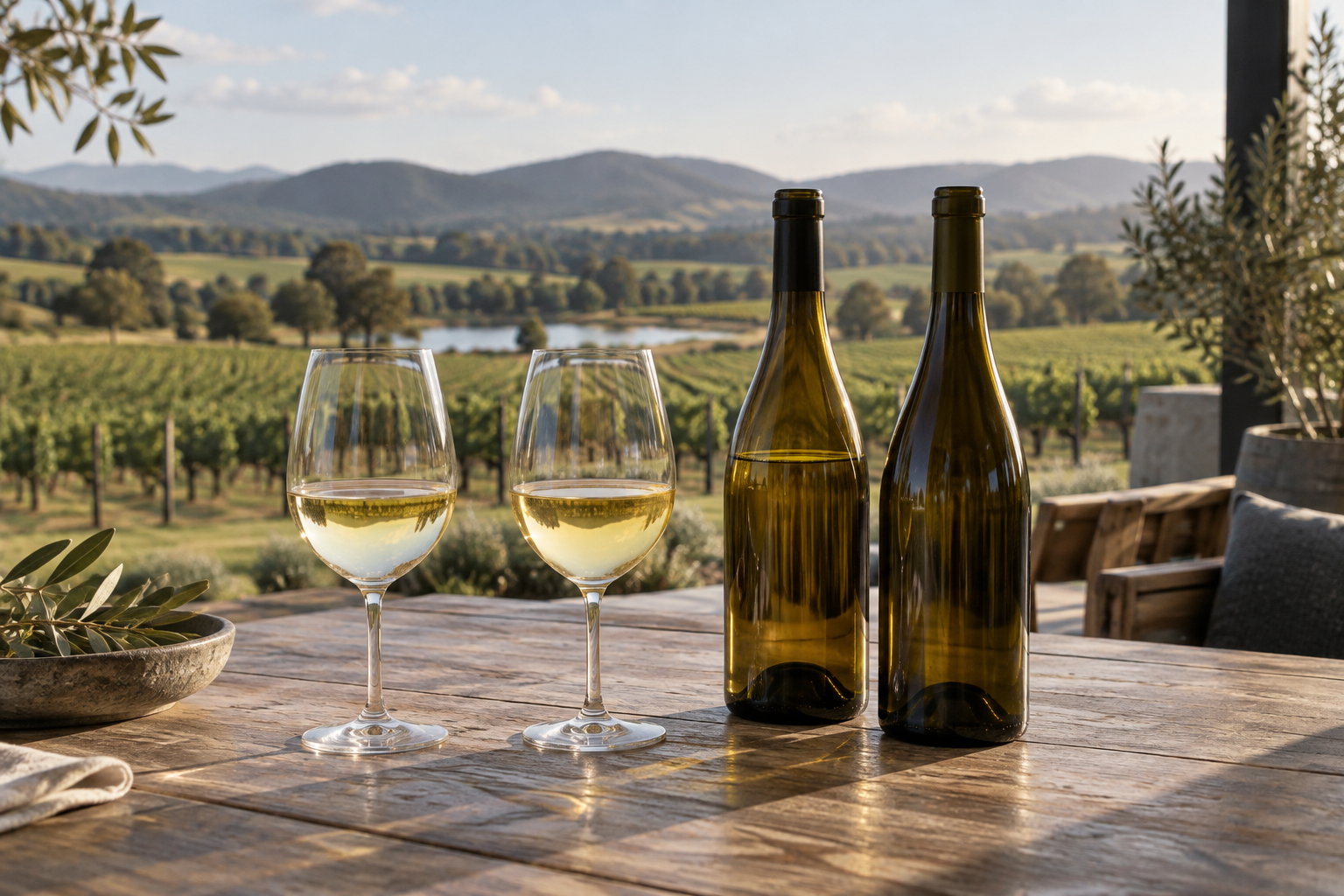
Soumah Chardonnay comes from a Yarra Valley producer based in Gruyere: Hexham identifies its estate vineyard, while Equilibrio identifies a premium selection within the range. The names therefore describe different things—vineyard origin and selection level—not different grape varieties. For a 2018 bottle, compare the exact label and its storage history rather than assuming that vintage or premium positioning guarantees how it will taste today.
Soumah Chardonnay: Hexham and Equilibrio at a glance
Soumah takes its name from “South of Maroondah”, a reference to its location south of the Maroondah Highway. Its wines draw inspiration from northern Italy and south-eastern France, but its Chardonnay belongs firmly in the Yarra Valley conversation.
The distinction between Hexham and Equilibrio is useful because a vineyard name and a premium-range name can overlap in origin without being interchangeable.
| Comparison point | Soumah Hexham Chardonnay | Soumah Equilibrio Chardonnay |
|---|---|---|
| What the name identifies | Soumah’s Hexham Vineyard | A premium selection within Soumah’s range |
| Main reason to consider it | Exploring the estate vineyard’s Chardonnay expression | Exploring the producer’s more selective Chardonnay offering |
| What the name does not establish | A fixed oak recipe or identical flavour every year | A separate vineyard or guaranteed longer drinking window |
| Most useful buying information | Exact vintage, technical notes and bottle condition | Exact vintage, selection details and bottle condition |
| For an older bottle | Assess storage and maturity | Assess storage and maturity; premium status is not protection from heat |
For the wider regional context, our guide to Yarra Valley Chardonnay producers, styles and vintages explains why two wines from the same region can differ substantially.
Soumah Hexham Chardonnay: what the vineyard name tells you
Hexham is an origin, not a flavour guarantee
Soumah’s Hexham Vineyard is in Gruyere, around the foothills of the Warramate Ranges. This is an important local distinction: “Yarra Valley” covers varied elevations, exposures and growing conditions, rather than one uniform Chardonnay landscape.
A bottle labelled Hexham Vineyard gives you a more specific origin than the regional designation alone. It does not, however, tell you everything about picking dates, fermentation, oak maturation or blending decisions.
When buying Soumah Hexham Chardonnay, look for the complete label name and vintage. A retailer’s shortened listing may omit “Vineyard”, while a general “Soumah Chardonnay” listing may not make the range clear. A photograph of the front and back labels is more useful than a thumbnail with an abbreviated title.
How to assess its style
Chardonnay’s character comes from both fruit and winemaking. Citrus and apple flavours can sit alongside riper stone fruit; barrel fermentation and maturation can add texture and savoury complexity.
Rather than expecting Hexham to taste identical every year, ask three practical questions:
- How fresh does it feel? Acidity should support the fruit, not merely make the wine sharp.
- How integrated is the oak? Wood-derived flavours should work with the wine rather than dominate it.
- How persistent is the finish? Look for flavour that continues after swallowing, not just an impressive first sip.
These questions remain useful whether you prefer restrained Chardonnay or a broader, more textured style.
Soumah Equilibrio Chardonnay: what the premium selection means
“Equilibrio” means balance in Italian. In Soumah’s range, it identifies a premium selection rather than a different grape variety or a standalone vineyard name.
The practical comparison is therefore not simply “Hexham fruit versus Equilibrio fruit”. Equilibrio is about selection within the producer’s winemaking programme. Check the vintage-specific information before assuming identical sourcing or production details across releases.
Premium selection can involve choosing components for their concentration, structure, complexity and ability to work together. It does not necessarily mean the finished wine should taste more obviously oaky.
Read the technical notes without getting distracted by numbers
When comparing Soumah Equilibrio Chardonnay with Hexham, these details are worth checking where the producer supplies them:
- New-oak proportion: useful context for wood influence, but barrel size, toast and maturation time also matter.
- Malolactic fermentation: converts sharper malic acid into softer lactic acid and can influence texture and buttery character.
- Lees maturation: time with spent yeast can build palate texture and savoury complexity.
- Fruit sourcing: establishes whether you are comparing the same vineyard origin or a different selection of fruit.
Do not transfer a current release’s technical specifications to a 2018 bottle. A producer may change the proportion of new barrels, fermentation approach or maturation period between years.
The best reason to choose Equilibrio is that you prefer its expression in the glass, or want to explore Soumah’s premium selection—not because the name promises a universally better wine.
Soumah Chardonnay 2018: vintage character, maturity and buying advice
The Yarra Valley’s 2018 growing season was generally warm, providing conditions in which producers could achieve ripe fruit. Nevertheless, vineyard location, picking decisions and winemaking shaped individual wines: a regional vintage description cannot establish the exact flavour of either Soumah bottling.
For anyone searching for Soumah Chardonnay 2018, the more immediate issue is maturity. These are older bottles now, and storage history has become central to their condition.
What ageing can change
A sound mature Chardonnay may move away from primary citrus and fresh stone fruit towards combinations of dried citrus, nuts, toast and more savoury flavours. Its texture may also feel more integrated than it did on release.
Those are possibilities, not promised tasting notes for every 2018 Hexham or Equilibrio. Some bottles retain considerable freshness; others develop faster, particularly after exposure to heat.
Hazelnut or toast alone does not prove oxidation. More concerning is a combination of markedly brown colour, dull cooked-fruit aromas, missing freshness and a flat finish.
Questions to ask before buying a 2018 bottle
- Which wine is it? Confirm Hexham Vineyard or Equilibrio, rather than accepting a generic product heading.
- Where has it been stored? A temperature-controlled cellar is preferable to a warm shop display or domestic room with seasonal temperature swings.
- Can you see the actual bottle? Check for leakage, closure damage and an unexpectedly low fill level.
- Is the tasting note relevant? A release review describes the wine when tasted, not necessarily its condition today.
- What happens if it is faulty? Ask about the seller’s policy before purchasing an older bottle.
A premium label cannot reverse poor storage. A well-kept Hexham may provide a more satisfying drink than an Equilibrio bottle that has spent years in unsuitable conditions.
For broader context, see our guide to the 2018 Yarra Valley Chardonnay vintage and buying older bottles.
Drink or keep?
Without bottle-specific evidence, an older 2018 Chardonnay is better approached as a wine to assess for drinking than as an automatic long-term cellaring purchase.
If you own several bottles, opening one gives you more useful information than relying on a generic drinking window. Taste for remaining fruit, freshness and balance before deciding what to do with the rest. Even then, allow for bottle variation.
Soumah versus Levantine Hill Chardonnay
Levantine Hill Chardonnay is a relevant comparison because it offers another perspective on premium Yarra Valley Chardonnay. However, a useful comparison requires the exact wine and vintage from each producer.
Do not compare Soumah Equilibrio with an unspecified Levantine Hill bottle and assume their positions in the respective ranges are equivalent. Likewise, differences between a mature 2018 and a recent release may reflect age as much as producer style.
For a fair side-by-side tasting:
- Choose the same vintage where possible.
- Serve both wines at the same temperature in similar glasses.
- Taste them before introducing strongly flavoured food.
- Compare acidity, fruit depth, oak integration and finish separately.
- Reveal prices after tasting if you want to reduce expectation bias.
Our Levantine Hill Chardonnay range and 2017–2018 vintage comparison helps establish which bottles you are actually comparing.
Which Soumah Chardonnay should you choose?
Your purpose is a better starting point than the label hierarchy.
Choose Hexham when vineyard identity is the priority. It is the logical starting point for understanding Soumah’s estate Chardonnay and following how that vineyard is expressed across vintages.
Consider Equilibrio when you want to explore the premium selection. Ideally, taste it alongside Hexham from the same year. That makes it easier to judge whether the difference matters to your palate.
For a 2018 purchase, choose provenance first. Good storage, a clearly identified bottle and a sensible seller policy matter more than an attractive description of the wine at release.
For dinner tonight, choose condition and style over prestige. A sound, younger bottle that suits the food may be a better choice than an older premium bottle whose history is uncertain.
Serving Soumah Chardonnay and matching it with food
Temperature and air
Start around 10–12°C, then let the wine warm gradually in the glass. Serving Chardonnay straight from a very cold fridge can suppress aroma and make texture harder to judge.
For a mature 2018 bottle, pour a small sample first. Assess it before deciding whether it needs air; prolonged decanting is not automatically helpful for an older white wine.
Use a medium-sized white-wine glass with enough bowl space to swirl. You do not need a specialised branded glass to compare the wines meaningfully.
Practical food pairings
Match the bottle’s actual texture and freshness rather than its premium status:
- Brighter, citrus-led Chardonnay: grilled fish, scallops, roast chicken with lemon, or courgette dishes.
- Broader, oak-influenced Chardonnay: chicken with a restrained cream sauce, mushroom risotto, or buttery seafood dishes.
- Sound mature Chardonnay: roast poultry, baked fish, mushrooms and nutty hard cheeses can suit developed savoury flavours.
Heavy chilli heat and very sweet sauces can make dry Chardonnay feel harsher or less fruity. If the meal is strongly flavoured, consider whether another wine would serve it better.
Know before you go: tasting Soumah in the Yarra Valley
Soumah is based in Gruyere, so plan it as a specific stop rather than treating every Yarra Valley winery as close together. Allow time for rural roads, the tasting itself and any meal you book.
Before travelling, check directly with the winery for current cellar-door arrangements, bookings, tasting formats and dining availability. Ask specifically whether both Hexham and Equilibrio Chardonnay are being poured: a producer’s full range is not necessarily available in every tasting.
If 2018 is your main interest, enquire about older-vintage availability before visiting. Do not assume the cellar door holds library stock for tasting or sale.
A same-producer, same-vintage comparison is particularly useful. If that is unavailable, write down the vintage of each wine so you do not confuse bottle age with the distinction between the ranges. Arrange a designated driver or suitable transport if you intend to taste across several venues.
To extend your regional itinerary, browse local partner businesses, including Oakridge, Giant Steps and Coldstream Hills Cellar Door. Yarra Valley Pass members earn Yarra Credits and redeem them for member rewards; check the applicable conditions rather than assuming a Soumah purchase qualifies.
The bottom line
Hexham helps you understand vineyard origin; Equilibrio helps you explore Soumah’s premium selection. Compare matching vintages where possible, and put storage history first when buying 2018. The most useful bottle is the one whose identity, condition and style fit what you want to drink.
Frequently asked questions
What is the difference between Soumah Hexham Chardonnay and Equilibrio Chardonnay?
Hexham identifies Soumah’s estate vineyard, while Equilibrio identifies a premium selection within the producer’s range. They are not different grape varieties. Compare the same vintage and consult its technical notes to understand differences in sourcing and winemaking.
Is Soumah Chardonnay 2018 still worth buying?
It can be, but bottle condition and storage history are crucial. Confirm the exact label, ask about temperature-controlled storage and check the seller’s policy for faulty bottles. A release review cannot guarantee how an individual bottle tastes today.
Does Soumah Equilibrio Chardonnay always age longer than Hexham?
No guaranteed drinking window follows from the premium designation alone. Ageing depends on the individual vintage, the wine’s structure, its closure and storage. For older bottles, provenance can matter more than the wine’s position in the range.
How should I compare Soumah with Levantine Hill Chardonnay?
Identify the exact label and vintage from both producers, then taste at the same temperature in similar glasses. Compare fruit depth, acidity, oak integration and finish. Avoid treating a mature bottle and a young release as a straightforward producer-style comparison.
Can I taste Hexham, Equilibrio and the 2018 vintage at Soumah?
Check directly with Soumah before visiting. Tasting selections and older-vintage availability can change, and not every wine is necessarily poured. Ask specifically about both Chardonnay labels and any 2018 bottles, along with current booking requirements.
Related reading
- Soumah Wines: Italian varieties, estate labels and visiting the vineyard
- Oakridge Pinot Noir: Willowlake, Henk, Hazeldene and 864 Explained
- Affordable Yarra Valley Chardonnay: entry-level wines compared
- Levantine Hill Pinot Noir: Colleen’s Paddock and 2016–2019 Vintages
- Top wineries in Yarra Valley: 10 benchmark producers and why they matter
- Tokar Estate Tempranillo: Wine Style, Food Pairings and Cellar Door